 GameWiki

GET YOUR BEARINGS
About Terraria
Terraria combines a destructible sandbox with equipment and boss progression. Digging is useful because it finds resources, accessories, life upgrades, and routes into new areas; building is useful because it creates safe housing and room to fight. Progress accelerates when you connect those activities instead of treating them as separate games.
Start with a safe return point, then expand through small expeditions. Your next improvement might be a movement accessory rather than a stronger sword. This guide explains the systems that make those decisions easier: NPC housing, crafting information, underground preparation, flexible combat loadouts, and the major transition from the opening world into Hardmode.
01 / THE GUIDE
First shelter and NPC housing
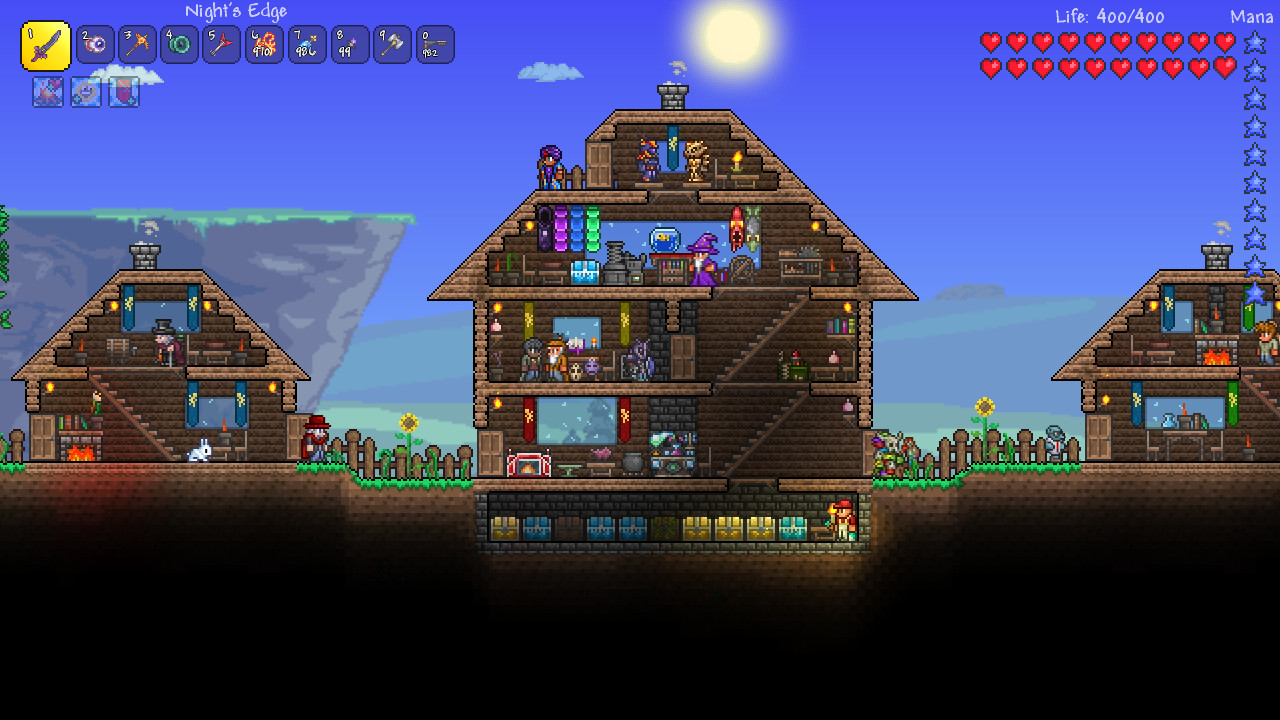
Gather wood, create a workbench, and make an enclosed starting shelter before the first night becomes a distraction. A valid NPC home needs suitable space, player-placed background walls, lighting, furniture, and an entrance. Use the housing menu to check the room instead of expanding a building repeatedly without knowing which requirement is missing.
Housing does more than shelter the Guide. Additional NPCs arrive when their individual conditions are met, bringing shops and services that make travel, equipment, and preparation easier. Leave room to add houses, and make the route between storage, workbench, furnace, and anvil short enough that returning from a cave stays convenient.
- Use the housing query to diagnose invalid rooms.
- Keep the Guide available for crafting questions.
- Place torches where enemies and entrances remain visible.
- Store coins before leaving on a dangerous expedition.
02 / THE GUIDE
Crafting: use material tooltips as a research trail
Terraria has too many recipes to discover by guessing every combination. When an item's tooltip identifies it as a material, show it to the Guide through his crafting option. He can reveal associated recipes and their required crafting stations, turning an unfamiliar drop into a useful explanation of what to build next.
Arrange storage by the decisions you make: ore and bars, potion ingredients, building blocks, weapons, and accessories. Keep items with unusual effects even if their immediate damage looks weak. Accessories and crafting ingredients can matter later, while a readable storage system prevents buying or farming something already sitting in a forgotten chest.
- Ask the Guide about unfamiliar material items.
- Check the required station when a known recipe is missing.
- Keep discovered movement accessories until you understand them.
- Label chests by purpose rather than filling each one randomly.
03 / THE GUIDE
Explore underground with a way home
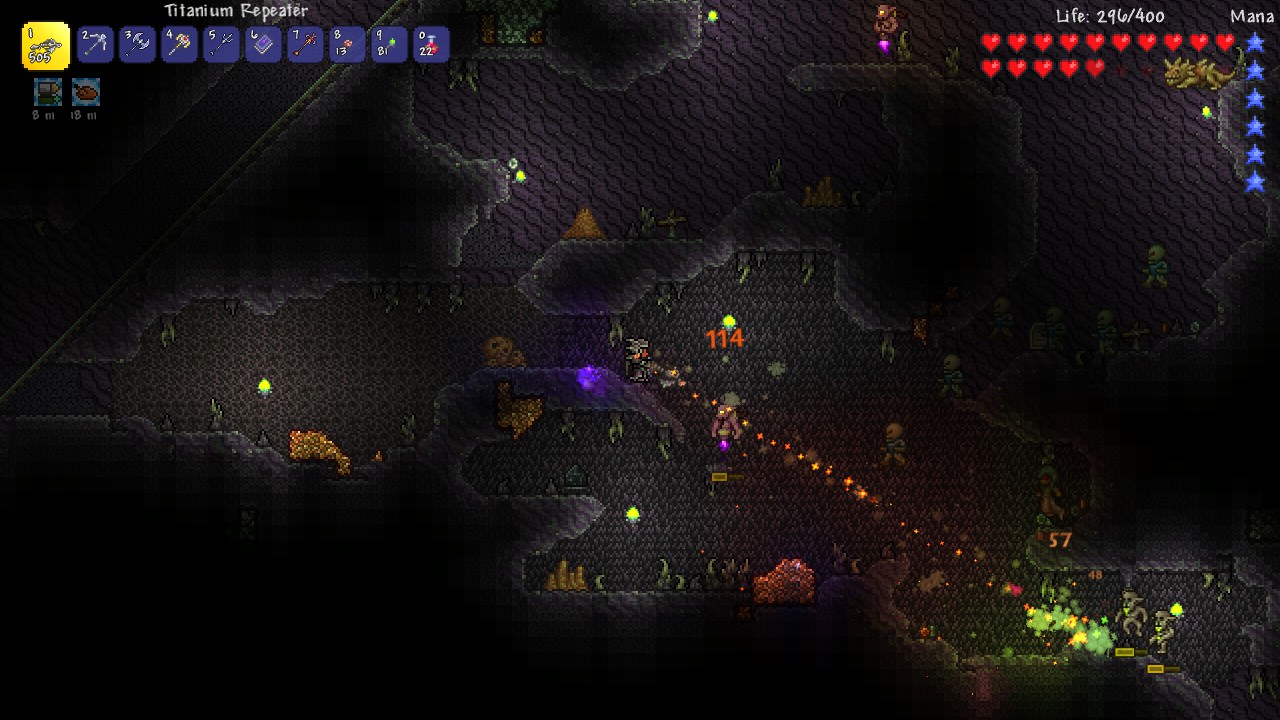
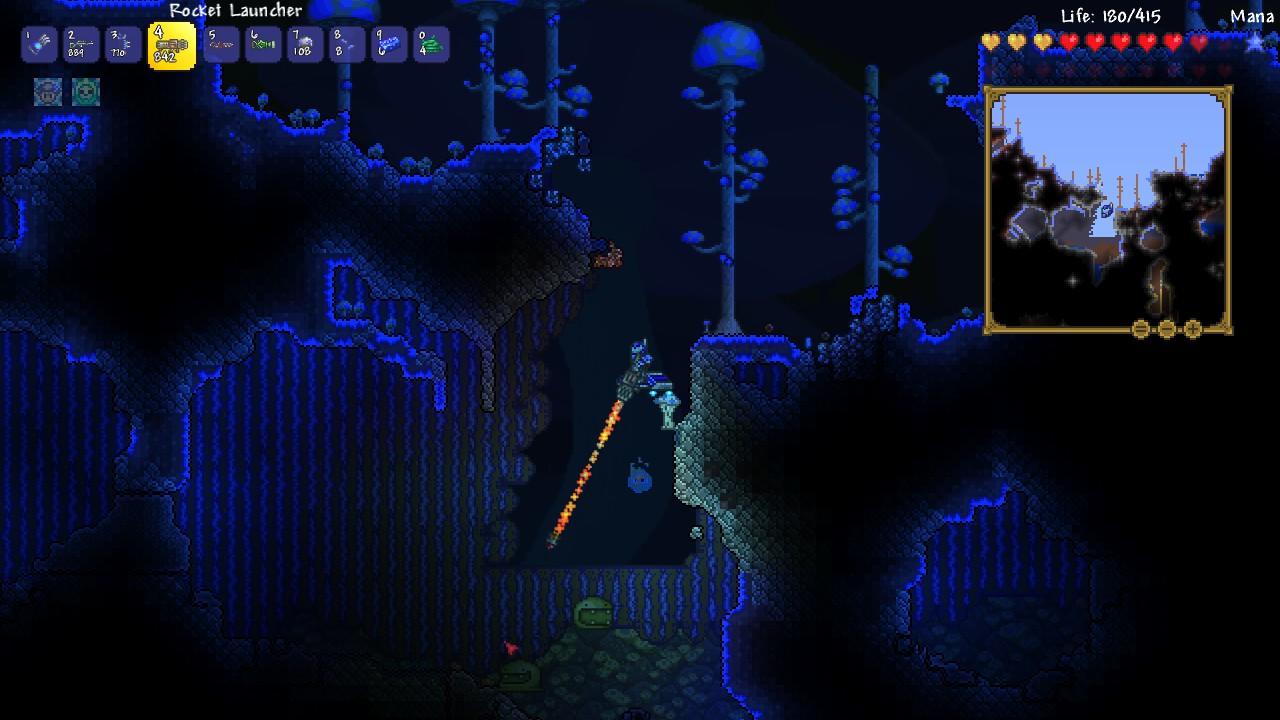
Surface trips establish the shape of your world; cave trips provide many of its most useful early upgrades. Bring light, ropes or platforms, healing, and a return item when available. Mark a safe route down and avoid turning a valuable exploration trip into a fall you cannot recover from.
Watch for chests, life upgrades, ores, suspicious wiring, and changes in the surrounding biome. Progress is not simply the deepest tile you reach. A short trip that adds mobility, health, and a reliable tunnel can be more valuable than descending into enemies your current equipment cannot handle. Return to deposit discoveries before starting another branch.
- Carry blocks and rope for awkward vertical passages.
- Look around a chest before stepping onto nearby devices.
- Keep healing items accessible rather than buried in inventory.
- Stop exploring a new biome when retreat becomes unreliable.
04 / THE GUIDE
Combat loadouts and boss arenas
Melee, ranged, magic, and summoning describe equipment styles rather than an irreversible character choice. Early on, carrying useful weapons from several styles is practical. Later, armor bonuses and accessories make a focused loadout more efficient, so choose equipment that supports the attack you can use consistently while moving.
Build room to dodge before summoning a boss. Platforms, clear sightlines, recovery support, and a safe way to reverse direction often improve a fight more than one additional weapon roll. Check ammunition, mana needs, healing, and relevant buffs first. If a fight fails, separate problems caused by the arena from problems caused by damage or unfamiliar attacks.
- Test weapon range and recovery before spending rare resources.
- Bring enough ammunition for a complete attempt.
- Clear obstacles from your planned fighting route.
- Keep mobility accessories when comparing purely offensive upgrades.
05 / THE GUIDE
Prepare before the Hardmode transition
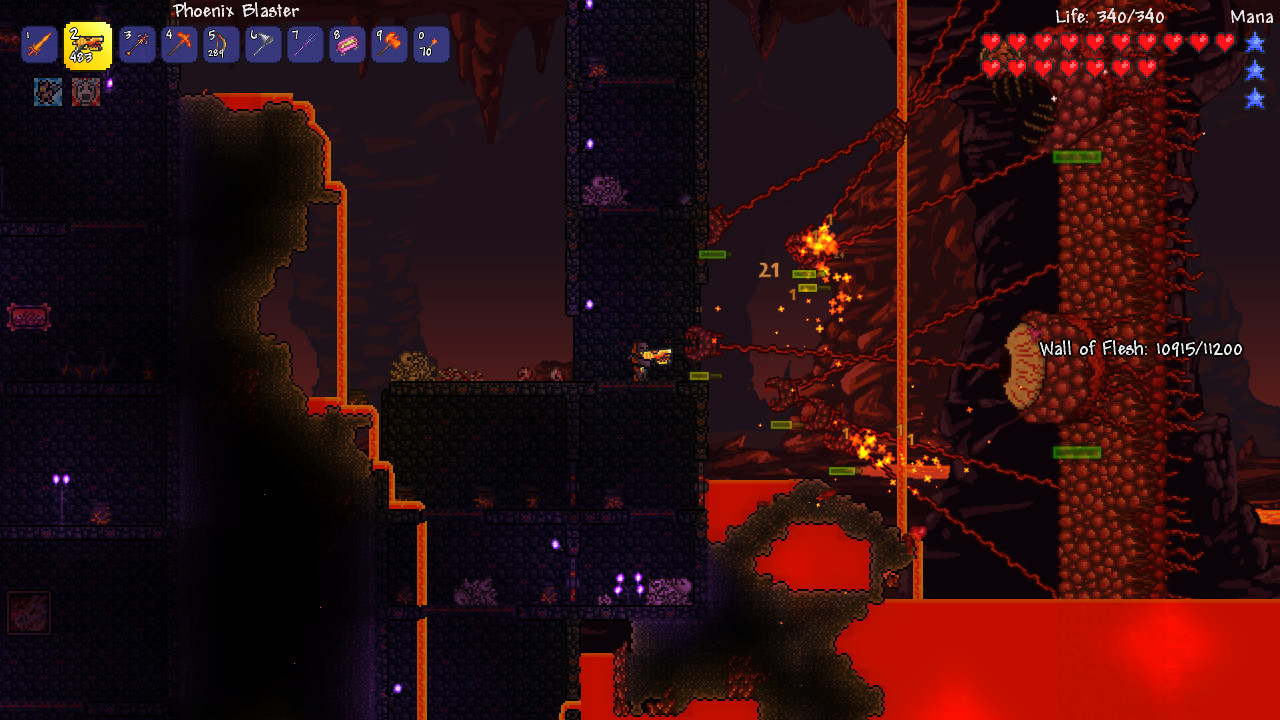
Defeating the Wall of Flesh changes the world into Hardmode. This is a major progression event that introduces stronger threats and new resource paths; it is different from selecting a harder character or world difficulty at creation. Finish a usable base, organize storage, and establish travel routes before triggering that change.
After the transition, reconsider the entire loadout rather than judging new enemies by your previous comfort level. Look for the new crafting and equipment paths, improve survivability and mobility together, and prepare specifically for the next boss. Your existing buildings and routes remain a foundation, but the combat expectations have moved forward.
- Prepare housing and storage before the Wall of Flesh.
- Keep spare equipment and return supplies at home.
- Use the Guide to investigate newly acquired materials.
- Treat the first Hardmode expedition as reconnaissance.

COMMUNITY
Player discussion