 GameWiki

GET YOUR BEARINGS
About Worthy or Not
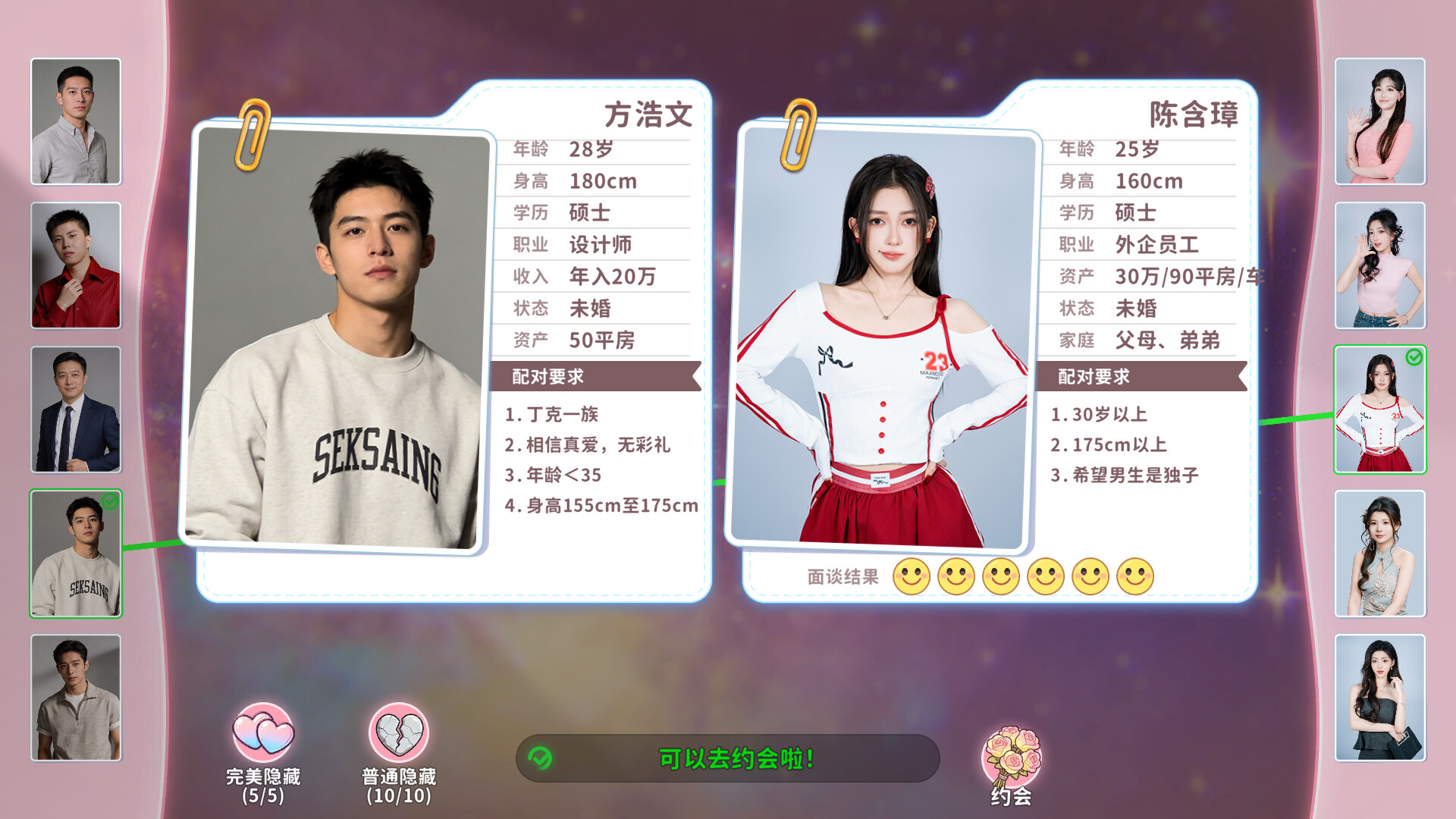
Worthy or Not is an FMV dating‑simulation where you run a matchmaking agency. Throughout the story you face quick‑time events and critical choices that nudge hidden attributes of the clients you counsel. The accumulated attribute shifts determine which of the many possible endings you receive at the final matching stage.
The game tackles realistic relationship dilemmas—salary expectations, family‑origin pressures, housing and car negotiations—through a series of verbal duels. You can either steer clients toward realistic matches or watch them fall into regret, all while collecting clues that reveal deeper story layers.
01 / THE GUIDE
Quick‑Time Events
During play, the game prompts you to complete quick‑time events (QTEs). Successfully hitting the prompt lets the scene continue as written, while missing it forces an alternate outcome. These QTEs are woven into the narrative and can affect later choices.
Because QTEs are mandatory for progression, failing them does not end the game but redirects the story toward a different branch and an alternate ending.
- Pay close attention to on‑screen prompts; timing often aligns with dialogue beats.
- If you miss a QTE, note the resulting branch—it may open unique endings later.
02 / THE GUIDE
Critical Choices
The narrative presents pivotal decisions that directly modify hidden values for each client. These values are not shown to the player but are tracked internally and shape the final matching outcomes.
Each critical choice is framed as a moral or practical dilemma, such as accepting a client’s unrealistic salary demand or confronting family‑origin issues.
- Consider the long‑term implications of each decision, not just immediate dialogue satisfaction.
- Re‑playing scenes with different choices can reveal how hidden attributes shift.

03 / THE GUIDE
Event Responses
Special events in the story offer multiple response options. Selecting a different response can alter the trajectory toward one of the multiple endings available at the game's conclusion.
These responses are distinct from regular dialogue choices and add further variety to the branching story.
- Experiment with varied responses to see how they affect later clues.
- Track which responses lead to more favorable endings for future reference.
04 / THE GUIDE
Clue Collection
Throughout conversations you can gather clues that help you sort out and understand the game’s story and characters. These clues are not items but pieces of information revealed through dialogue.
Collecting clues does not guarantee a specific ending but provides context that can guide your critical choices and event responses.
- Take notes on each clue; they often reference salary, family background, or personal history.
- Re‑visiting earlier dialogues after gathering new clues can clarify earlier decisions.
05 / THE GUIDE
Multiple Endings
The final stage presents several matching plans based on the accumulated hidden attribute changes. Each plan leads to a distinct ending, ranging from successful unions to regretful separations.
Because endings depend on a combination of QTE success, critical choices, and event responses, the game offers high replay value.
- Map out which combinations of choices lead to which endings for efficient replay.
- Focus on a single variable (e.g., always succeed at QTEs) to see its isolated impact.



COMMUNITY
Player discussion