 GameWiki

GET YOUR BEARINGS
About UnReal World
UnReal World blends roguelike role‑playing with survival simulation in a procedurally generated Iron‑Age north. Players choose from nine cultures and pursue any lifestyle—fisherman, hermit, hunter, trader—while navigating a realistic wilderness. The game is turn‑based, open‑ended and focuses on detailed mechanics such as skill use, crafting, combat injuries and interaction with folklore. It runs on Windows, macOS and Linux and has been continuously updated since its 1992 debut.
01 / THE GUIDE
Procedural World Generation
Each new game creates a vast landscape of forests, mires, mountains and waterways that is randomly generated. The terrain is detailed, allowing exploration of diverse northern flora and fauna. The endless variety supports replayability, as no two maps share the same layout or resource distribution.
The world’s procedural nature also influences animal behavior and plant availability, shaping survival strategies for each playthrough.
- Observe the map early to locate water sources before setting up a shelter.
- Compare different regions for resource richness; some areas may yield more berries or game.
02 / THE GUIDE
Cultures and Skill System
Players select one of nine distinct cultures, each providing a unique starting point but no fixed character classes. Skills range from cookery and hideworking to herblore and tracking. Skill use determines success in activities like hunting, crafting and trading with villages.
The system encourages specialization or broad competence, letting you shape a character that fits your preferred survival approach.
- Focus on a few related skills early to improve efficiency in specific tasks.
- Experiment with cross‑cultural techniques to discover unexpected advantages.
03 / THE GUIDE
Survival Mechanics
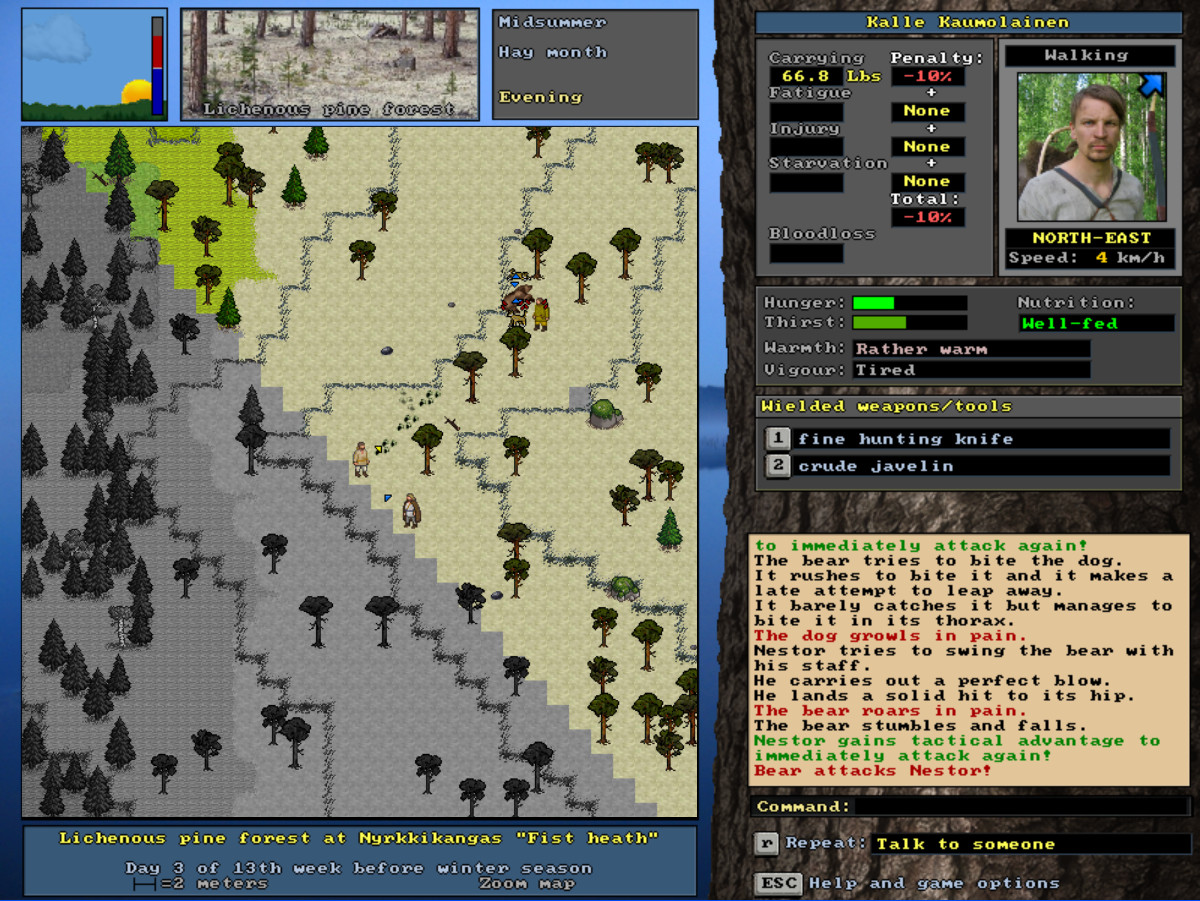
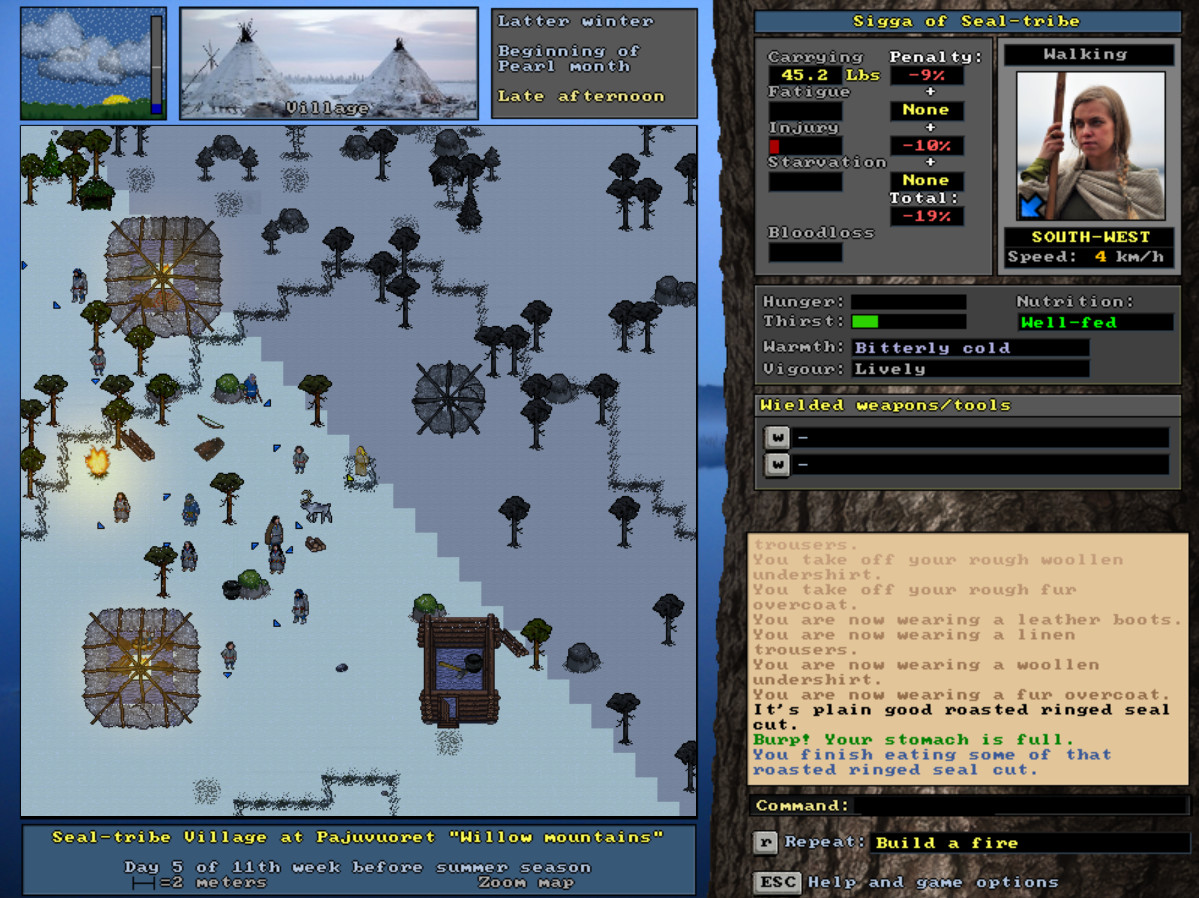
Living off the land involves tracking animals, setting traps, fishing, picking berries, cooking food and managing shelter. Players must also monitor health, as injuries affect physical activity. The game models a convincing northern animal kingdom with species‑specific behavior and feeding relationships.
The spirit world and supernatural guardians of nature add layers of challenge, requiring careful planning for food, warmth and safety.
- Maintain a balanced diet of meat, fish and gathered plants to avoid penalties.
- Regularly check weather forecasts if available to prepare for harsh conditions.
04 / THE GUIDE
Combat and Injury System
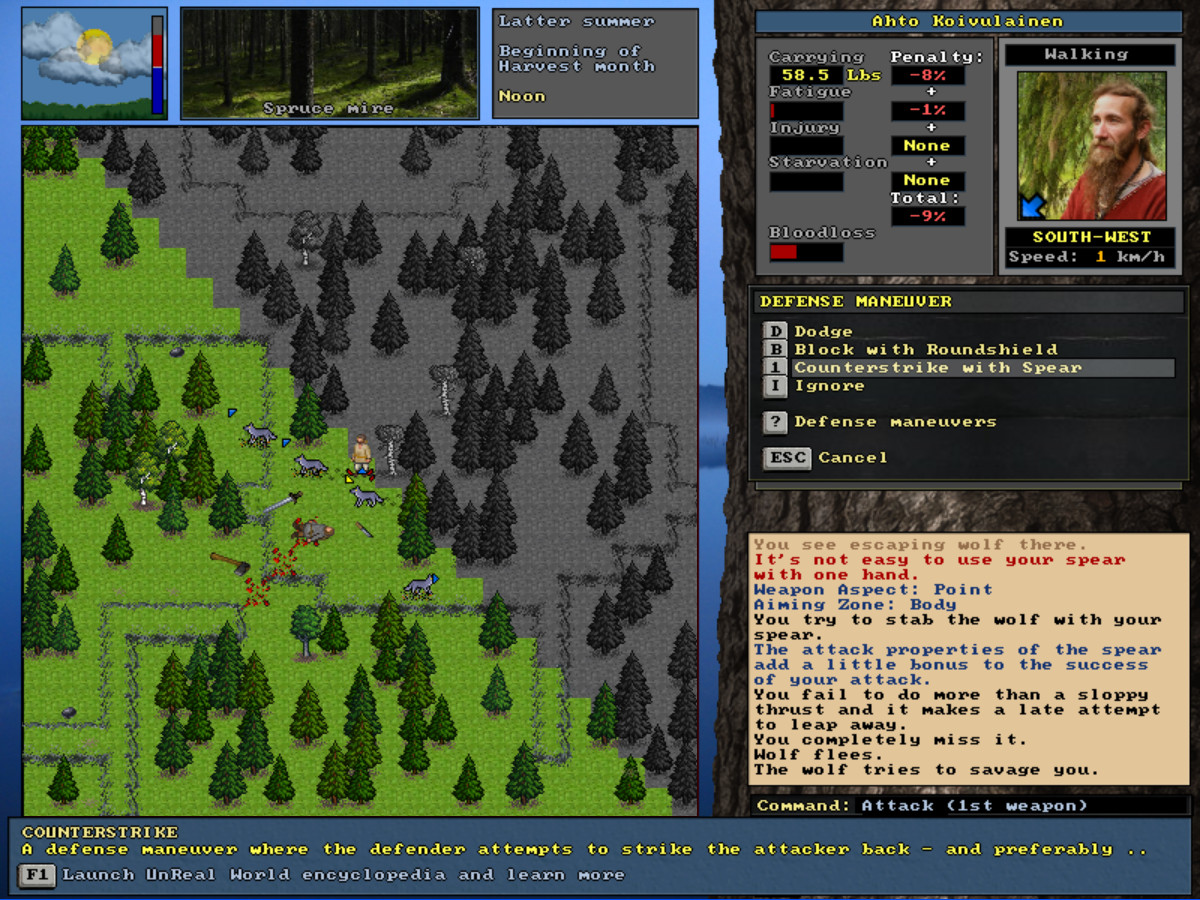
Combat is turn‑based with many tactical options and a variety of weapons. Damage is not expressed as hit points but as specific injuries—bruises, fractures, cuts—assigned to body locations. Injuries are rated for their impact on actions, influencing movement and combat effectiveness.
The detailed injury model creates vivid, rewarding struggles and requires players to treat wounds to stay functional.
- Prioritize treating severe injuries to restore mobility quickly.
- Choose weapons that suit your skill set and the type of enemy you face.
05 / THE GUIDE
Crafting and Construction
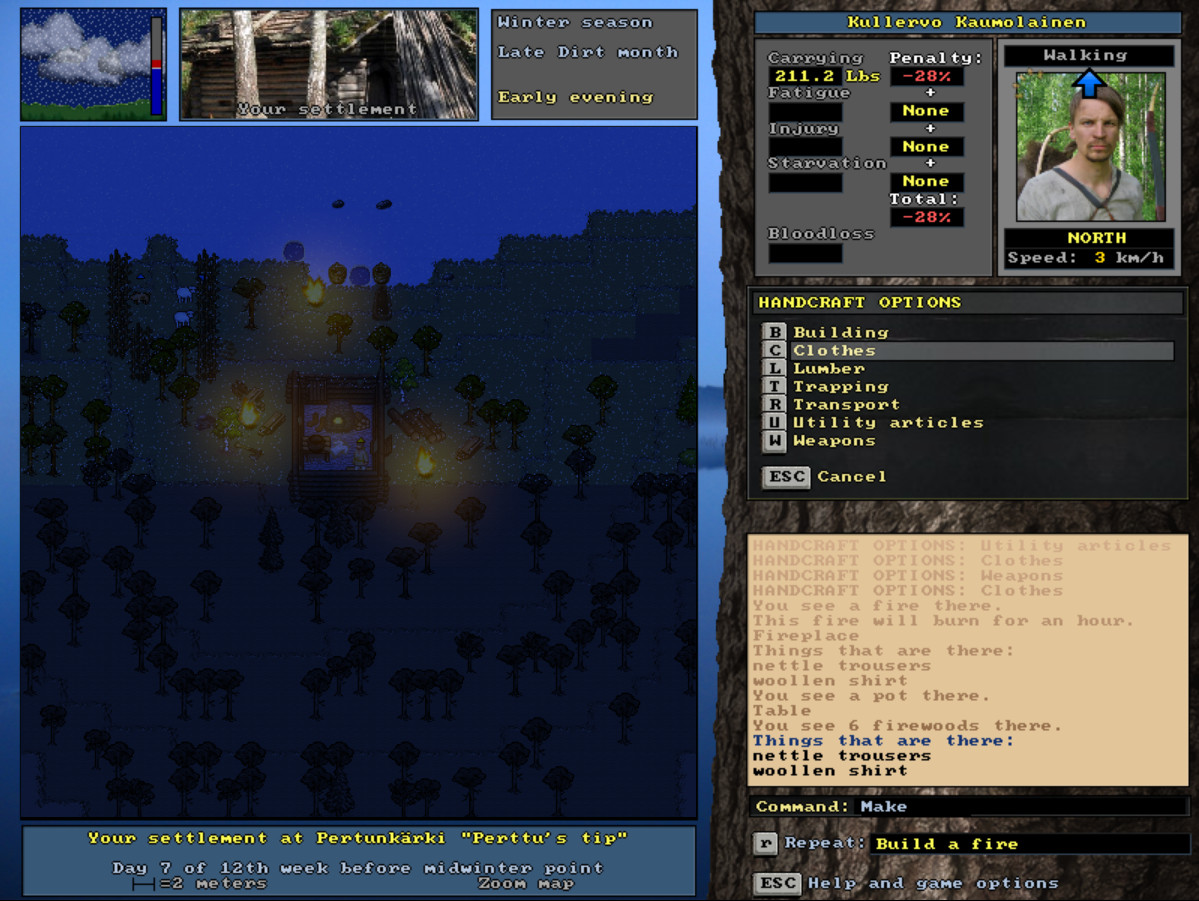
Players can craft items ranging from weapons to traps and construct shelters from temporary lean‑tos to permanent log cabins. Crafting relies on gathered resources and skill levels. The system is moddable, allowing extensions to flora, building techniques and item recipes.
Construction and crafting are essential for long‑term survival, providing protection, tools and trade goods.
- Stockpile raw materials before attempting large constructions.
- Compare the durability of different shelter types to choose the most efficient.
COMMUNITY
Player discussion