 GameWiki
GET YOUR BEARINGS
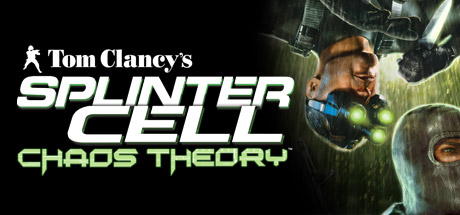
About Tom Clancy's Splinter Cell Chaos Theory
Tom Clancy’s Splinter Cell: Chaos Theory places players in the role of Sam Fisher, a Third Echelon operative, delivering a tense espionage narrative that moves from a Pacific cargo ship to a Tokyo bathhouse. The game earned 2005 Game of the Year and is praised as a top stealth‑action title.
The title relies on high‑tech gadgets, fluid movement, and experimental weapons, all built on an advanced physics engine that creates open‑ended levels. Enemies react intelligently, remembering past events, while the experience is limited to single‑player; multiplayer and co‑op are no longer functional.
01 / THE GUIDE
Story and Narrative
The single‑player campaign follows Sam Fisher on a globe‑trotting mission that includes covert operations aboard a Pacific cargo ship and a notorious bathhouse in Tokyo. The narrative is framed as a tense espionage thriller, emphasizing high‑stakes objectives for the operative.
Mission briefings and in‑game cutscenes convey Fisher’s role within Third Echelon, keeping the player focused on objectives while the pacing shifts between distinct locations, maintaining a consistent spy‑thriller tone throughout.
- Read each briefing carefully for clues about mission goals.
- Notice location changes to anticipate new enemy layouts.
02 / THE GUIDE
Stealth Mechanics
Chaos Theory continues the series’ tradition of high‑tech gadgets and signature techniques to stay unseen. Players can execute fluid moves, perform brutal takedowns, and employ experimental weapons while remaining hidden.
The level design rewards careful timing and positioning, allowing players to bypass enemies or eliminate them silently. This encourages a methodical approach, letting the player choose between avoidance and precise, quiet takedowns.
- Use gadgets to distract or disable enemies before moving.
- Practice timing takedowns to avoid alerting nearby foes.

03 / THE GUIDE
Enemy AI and Behaviors
Enemies possess personal attributes and reactive behaviors, making them aware of their surroundings and capable of remembering past events. This AI design forces players to consider the consequences of each action.
When an enemy spots a disturbance, they react according to their awareness level and may alert others. Their memory of previous incidents adds a strategic layer for planning future encounters.
- Watch enemy sight lines to stay out of view.
- Plan routes that avoid areas where enemies have already been alerted.
04 / THE GUIDE
Level Design and Physics
Powered by an advanced physics engine, the open‑ended levels provide many interactive opportunities. The environment offers a wealth of interactive opportunities, encouraging creative problem solving.
The physics‑driven environment supports multiple approaches to each objective, allowing players to experiment with different tactics while maintaining immersion in realistic settings.
- Experiment with movable objects to create alternate routes.
- Use environmental hazards to your advantage when possible.
05 / THE GUIDE
Multiplayer and Co‑op Status
The original release included multiplayer and co‑op modes, but online features for Chaos Theory are no longer supported. Consequently, those modes cannot be accessed through the game.
Players can still enjoy the full single‑player campaign, which remains accessible through the standard launch process.
- Focus on the single‑player campaign for a complete experience.
- Check community forums for historical information about the discontinued modes.


COMMUNITY
Player discussion