 GameWiki
GET YOUR BEARINGS
About The Walking Trade
The Walking Trade blends store management with zombie‑survival action. Players design a shop, arranging shelves, setting prices, and keeping customers satisfied while the undead threaten the premises. The game lets you balance commerce and chaos in a post‑apocalyptic setting.
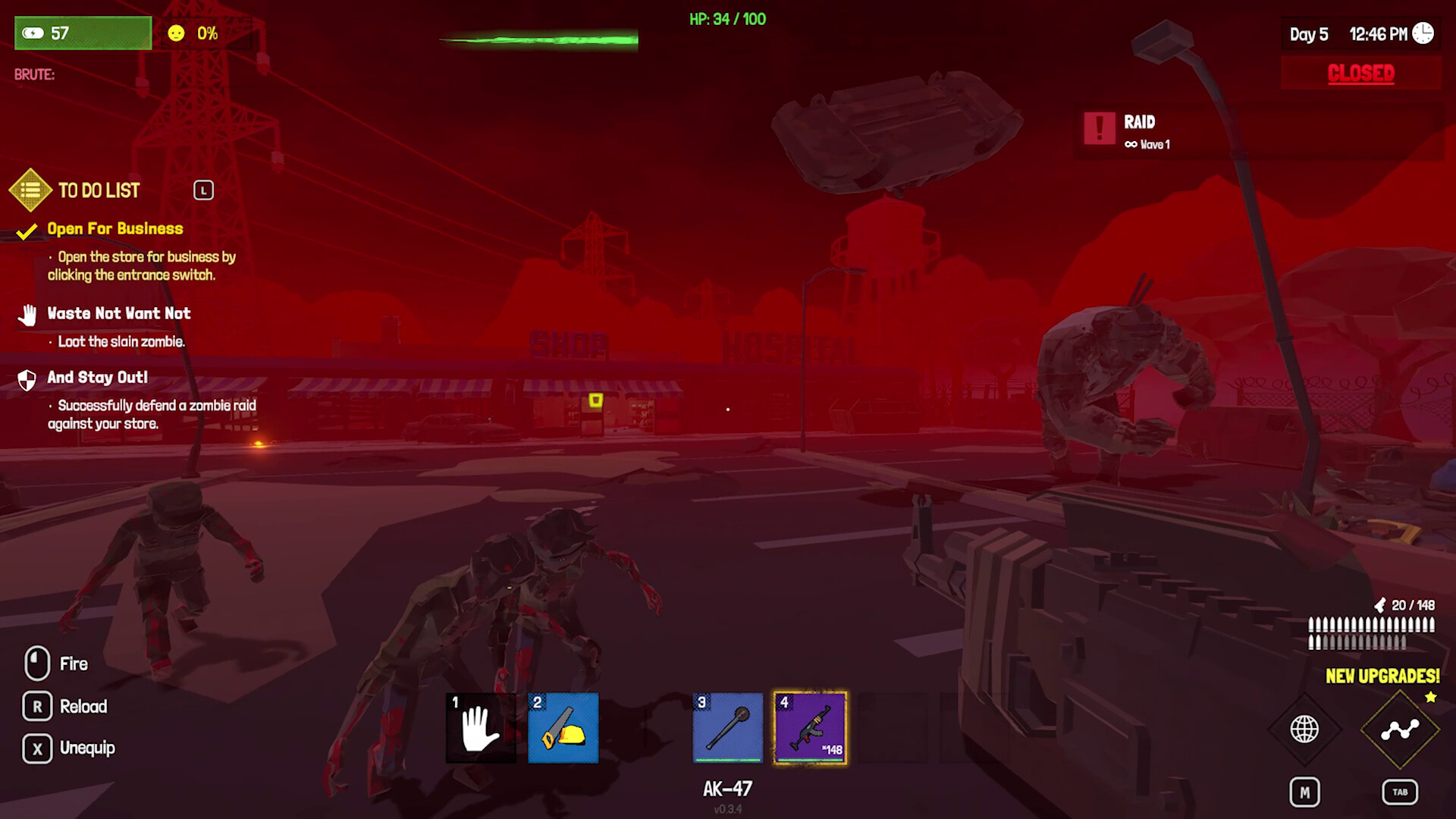
Combat is handled with melee weapons, firearms, or improvised tools as raids and hordes attack. Hiring survivors to scavenge, serve, or guard adds depth, and crafting stations let you produce weapons, tools, and shop upgrades. Your choices shape reputation and survival.
01 / THE GUIDE
Shop Design
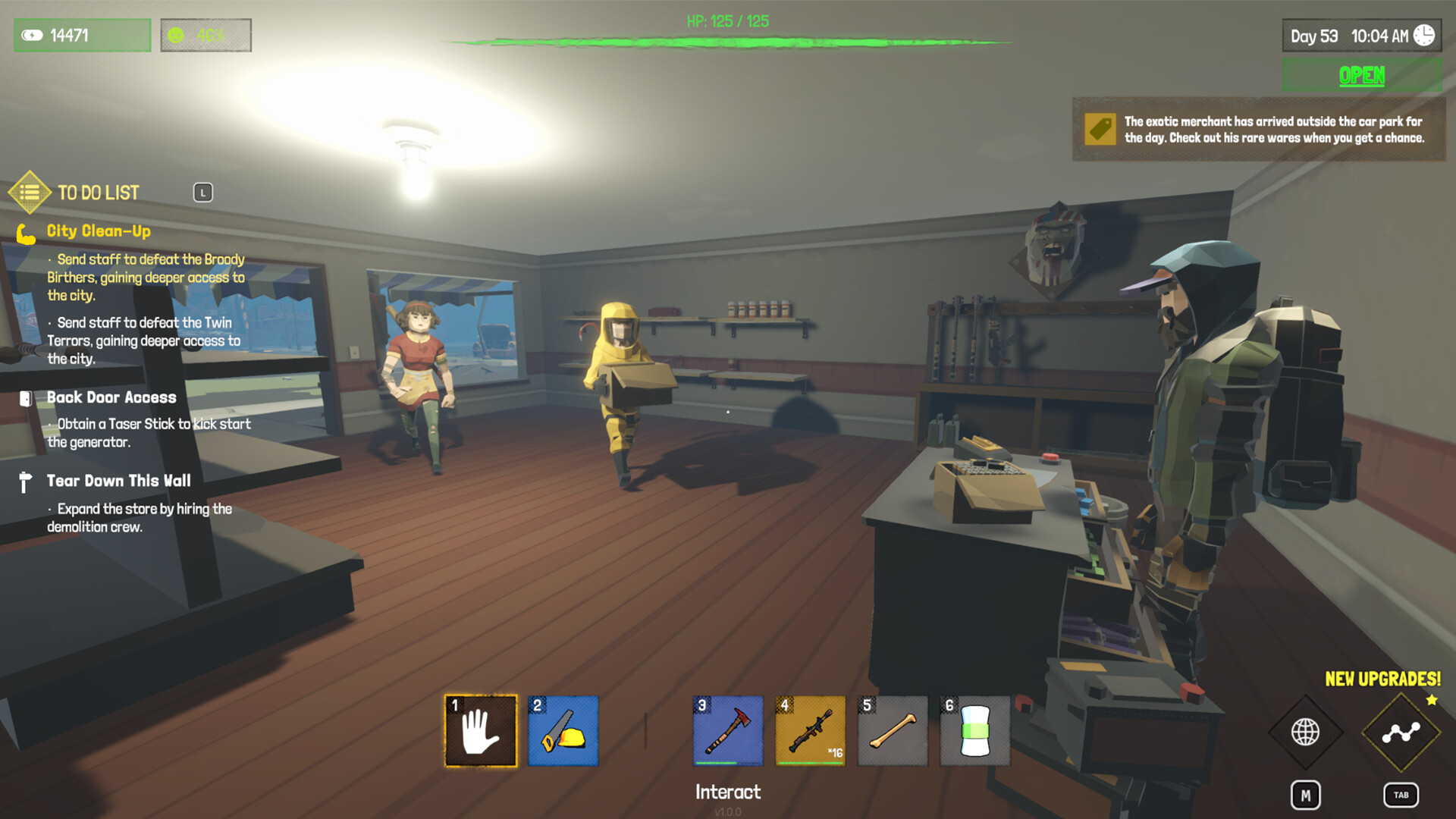
Designing your shop involves arranging space, aesthetics, and functionality. You place shelves, set prices, and aim to keep customers happy—or at least alive. The layout directly influences how efficiently you can serve and protect patrons.
Balancing aesthetics with practicality is key; a well‑organized shop can improve customer flow and make defending against zombies easier. Consider where barricades and traps will fit without blocking essential pathways.
- Experiment with different shelf arrangements to see which layout eases both sales and defense.
- Place traps near high‑traffic areas to maximize their effect without hindering customers.
02 / THE GUIDE
Combat
When zombies invade, you can wield melee weapons, firearms, or any found object to defend the shop. Raids and hordes provide dynamic combat scenarios that test your preparedness.
Defensive structures like barricades and makeshift traps can be built to supplement your fighting style. Choosing the right weapon for each wave helps maintain control of the shop.
- Mix melee and ranged weapons to adapt to varying zombie distances.
- Build traps early to create a safety net during larger hordes.
03 / THE GUIDE
Hiring Survivors
You can hire survivors to scavenge supplies, serve customers, or guard the shop. Each survivor can be equipped and motivated to increase their effectiveness.
Managing survivor roles influences both your resource flow and defensive capability. Properly equipped guards can reduce the pressure of zombie attacks while scavengers bring in needed materials.
- Assign survivors to roles that match their strengths for better efficiency.
- Keep guard survivors well‑equipped to lessen damage during raids.
04 / THE GUIDE
Crafting & Upgrades
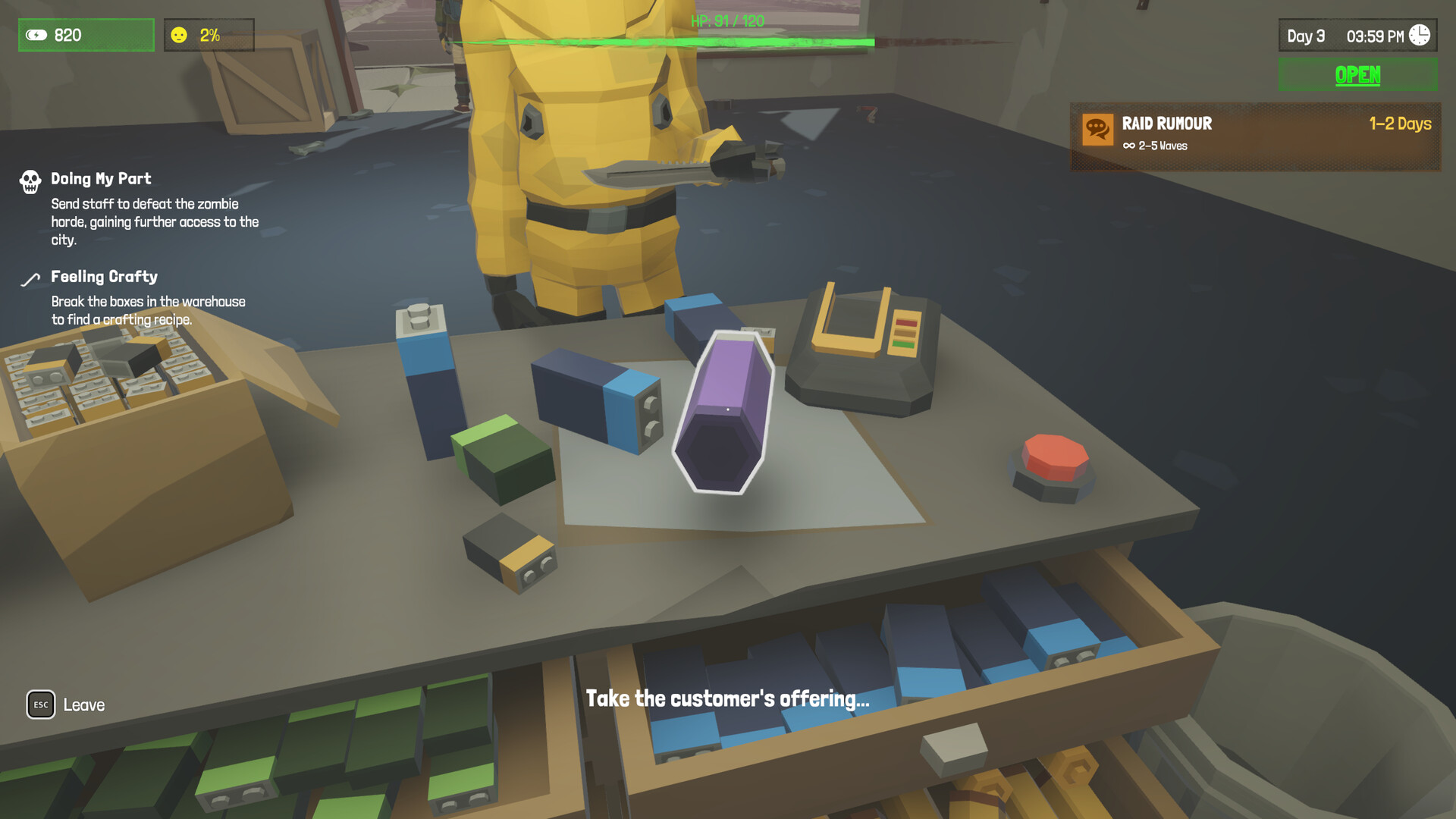
Unlock crafting stations to create weapons, tools, and shop upgrades. These stations expand your ability to produce defensive gear and improve shop functionality.
Crafted items can be used by you or your hired survivors, enhancing both combat and daily operations. Upgrades to the shop itself can also affect customer satisfaction and safety.
- Prioritize crafting stations that produce defensive tools early on.
- Upgrade shop utilities that improve both sales and protection.
05 / THE GUIDE
Reputation
Your reputation determines who visits your shop. You can act benevolently, price gouge, or sabotage settlements for profit, each affecting how the community perceives you.
Reputation impacts the flow of customers and who comes knocking at your shop. Choosing a path that aligns with your playstyle will shape the long‑term survival of your business.
- Consider the long‑term effects of price gouging on customer return rates.
- Balancing community help with profit can maintain a steady customer base.

COMMUNITY
Player discussion