 GameWiki

GET YOUR BEARINGS
About The Sinking City 2
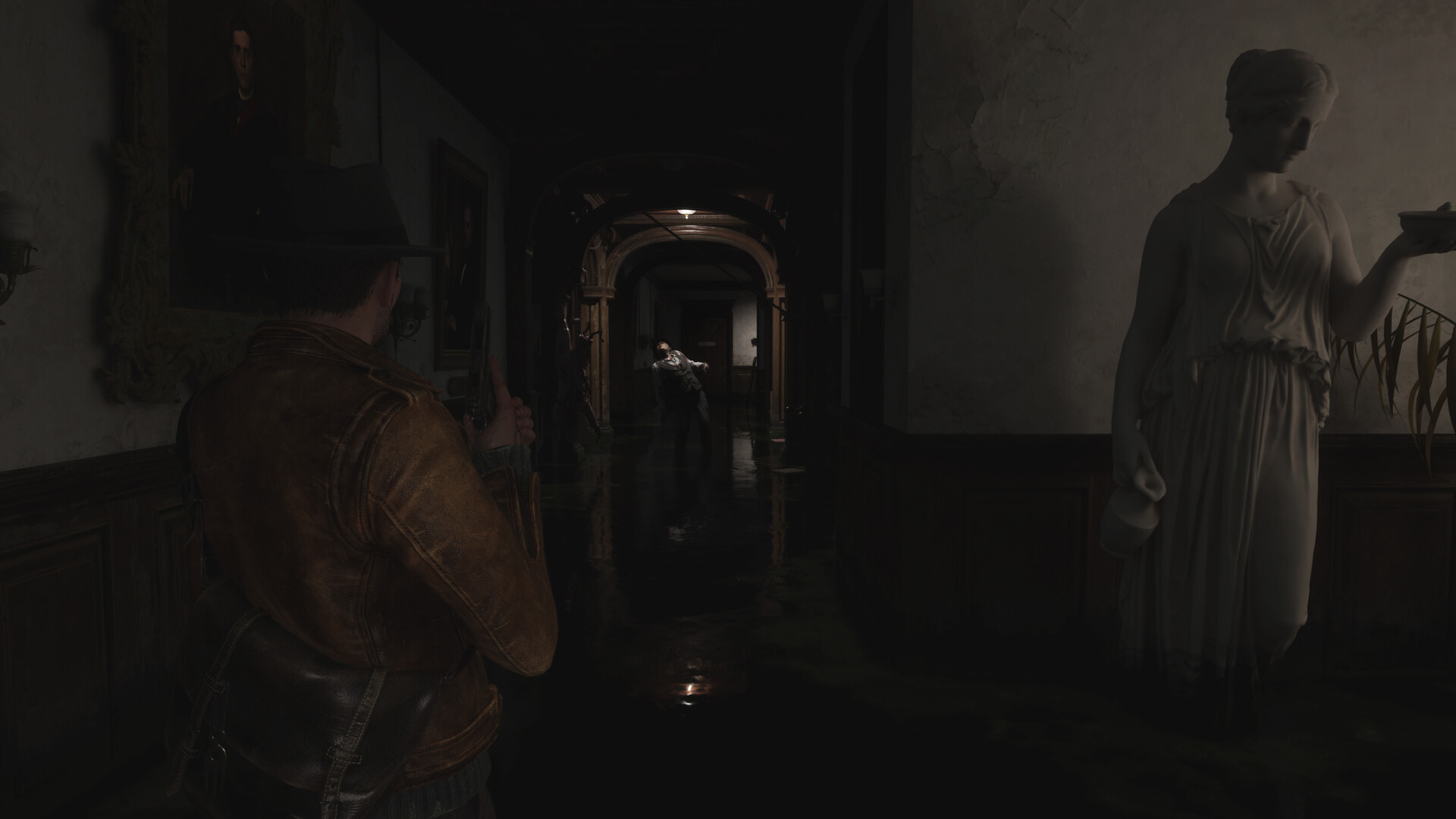
The Sinking City 2 is a third‑person survival horror set in 1920s Arkham, a New England port city drowning under a supernatural flood. The atmosphere is tense and resource‑lean, with brief refuges offering relief as fear must be managed through careful inventory and puzzle solving.
Players pursue a personal rescue mission: a ritual gone wrong trapped a loved one’s soul in the Dreamlands, and malevolent forces now occupy her body. Exploration, investigation, and optional upgrades shape how you survive the eldritch threats that lurk beneath the tide‑stained streets.
01 / THE GUIDE
Arkham’s Flooded Landscape
Arkham is depicted as a roaring ’20s port city, its avenues stained by tide and its Art Deco architecture battered by water. Districts feel lived‑in, with footpaths, skiff routes, and shortcuts behind collapsed seawalls offering hidden passages.
Key locations include a hospital where science hides its face, a fish market where the merchandise bites back, and deep subterranean areas where eldritch horrors stir. The environment’s water‑worn look reinforces the survival‑horror tone.
- Compare foot routes with skiff routes to gauge travel safety.
- Note where shortcuts appear behind collapsed walls for future supply runs.
02 / THE GUIDE
Rescue Mission in the Dreamlands
A ritual gone wrong trapped a woman's soul in the Dreamlands, and malevolent forces have stolen her body. The player’s primary objective is to navigate the catastrophe‑ridden city to reach the flood’s source and rescue her.
The narrative drives the player forward, intertwining personal stakes with the broader supernatural disaster, making each encounter feel purposeful within the Lovecraftian setting.
- Focus on story clues that reference the Dreamlands to stay on track.
- Treat each encounter as a step toward the flood’s source.

03 / THE GUIDE
Fearsome Foes
Enemies include the Slither, which animate the dead, Deep Ones that surge from dark water, and shifting Shadows that bend space and test nerves. Some battles require direct confrontation, while others are best avoided until better equipped.
Optional investigations can yield upgraded weapons, allowing tougher foes to be met head‑on, whereas retreating to rearm is sometimes the safer choice.
- Observe enemy behavior to decide when to fight or retreat.
- Consider investigating optional cases for weapon upgrades before challenging tougher foes.
04 / THE GUIDE
Exploration and Unlockable Shortcuts
Exploration is essential; exploration involves reading ritual residues, sifting through clues, and decoding journals that shouldn't exist. Unlocked shortcuts provide safer paths, hard supplies, and upgrades that affect future encounters.
Optional cases never gate progress but reward players with better routes and resources, reinforcing the importance of thorough investigation.
- Mark discovered shortcuts on a personal map for quick reference.
- Prioritize optional cases that promise supply caches.
05 / THE GUIDE
Adjustable Difficulty and Resource Management
The game features adjustable difficulty, allowing players to tailor the tension of resource scarcity. Inventory management is deliberate; fear builds as you push deeper, and relief comes in brief refuge moments.
Balancing fear, supplies, and upgrades is central to survival, encouraging strategic retreats to rearm or retune your build before re‑engaging.
- Experiment with difficulty settings to find a comfortable fear‑resource balance.
- Use refuges to regroup and assess inventory before venturing further.



COMMUNITY
Player discussion