 GameWiki

GET YOUR BEARINGS
About Subway Builder
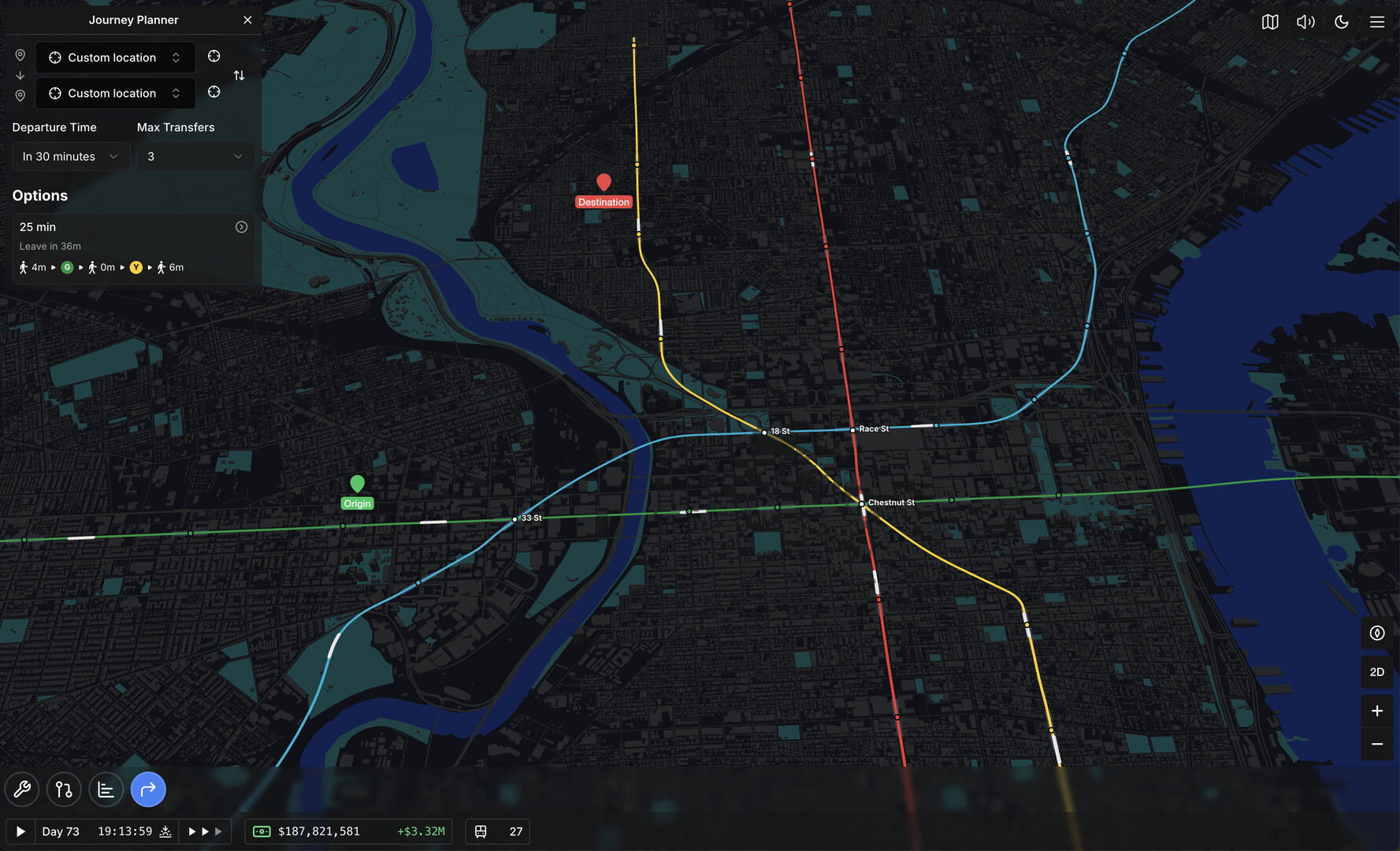
Subway Builder lets you craft subway networks using live census and transportation data from dozens of real‑world cities. You place stations, set train frequencies and watch millions of simulated commuters choose routes based on wait times, cost and personal income.
The game models how delays, overcrowding and transfer dynamics affect each commuter’s daily decision. By analysing these patterns you can fine‑tune your system to move the most people quickly while keeping construction and operating costs in check.
01 / THE GUIDE
Authentic Geographic Data
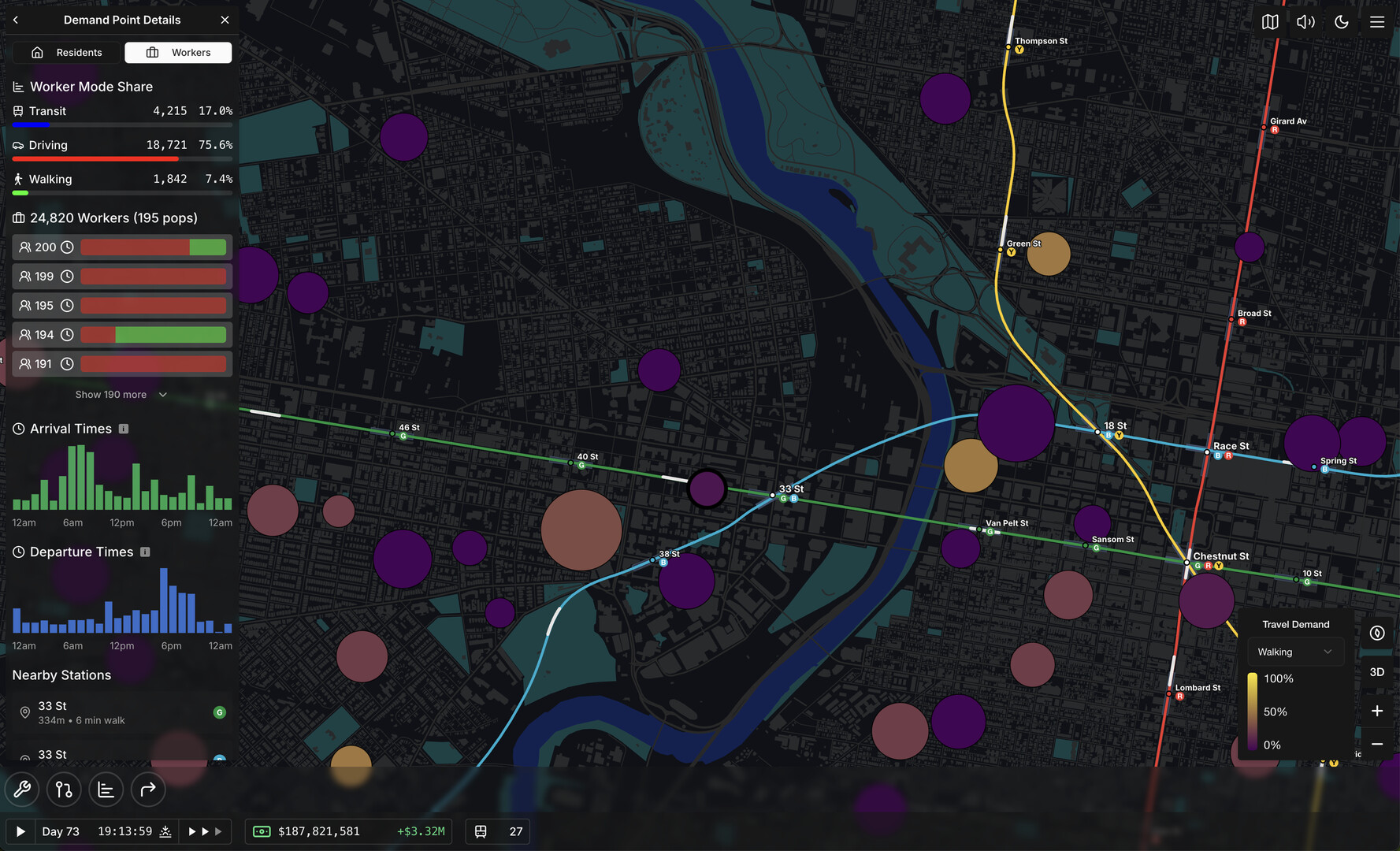
The simulation draws home and workplace locations from census records across the US, UK, Ireland, France, Switzerland, New Zealand and Japan. A distance‑based gravity model then assigns each commuter a workplace, mirroring real‑life settlement patterns.
Because the data updates via a broadband connection, the commuter pool reflects current population distributions, including college student counts from federal data and airport traffic from FAA statistics.
- Compare commuter origins in different cities to see how urban density influences station placement.
- Observe how the same route performs when you switch between a European city and a US city.
02 / THE GUIDE
Million‑Commuter Pathfinding
Each commuter follows the same pathfinding algorithms found on smartphones, weighing wait times, transfers, cost and personal time value. Income differences cause varied sensitivities to price and delay.
College and airport commuters are simulated separately, reflecting distinct income distributions and travel schedules, which adds layers to the overall traffic flow.
- Watch high‑income commuter routes to identify premium‑price tolerance.
- Track airport commuter patterns to gauge peak‑hour spikes.
03 / THE GUIDE
Designing Efficient Networks
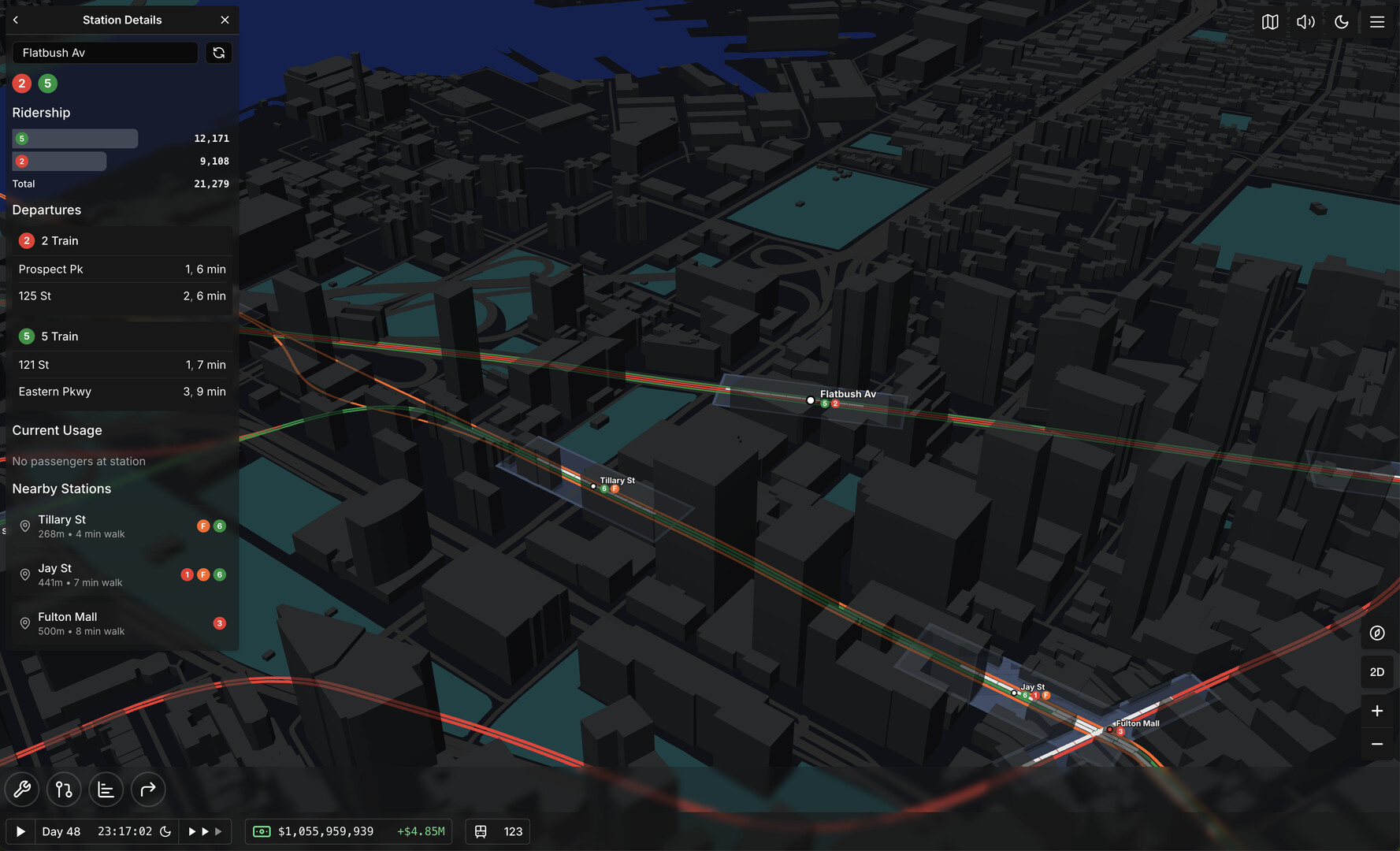
Your core task is to place stations and set train frequencies so commuters reach destinations quickly. Transfer dynamics and line overlap affect overall speed and ridership.
Over‑staffing a line or creating overcrowded stations can trigger delays, so balancing service levels with passenger volume is essential for smooth operation.
- Start with a hub‑and‑spoke layout to reduce transfer counts.
- Adjust frequency on busy segments after observing commuter bottlenecks.
04 / THE GUIDE
Balancing Cost and Travel Time
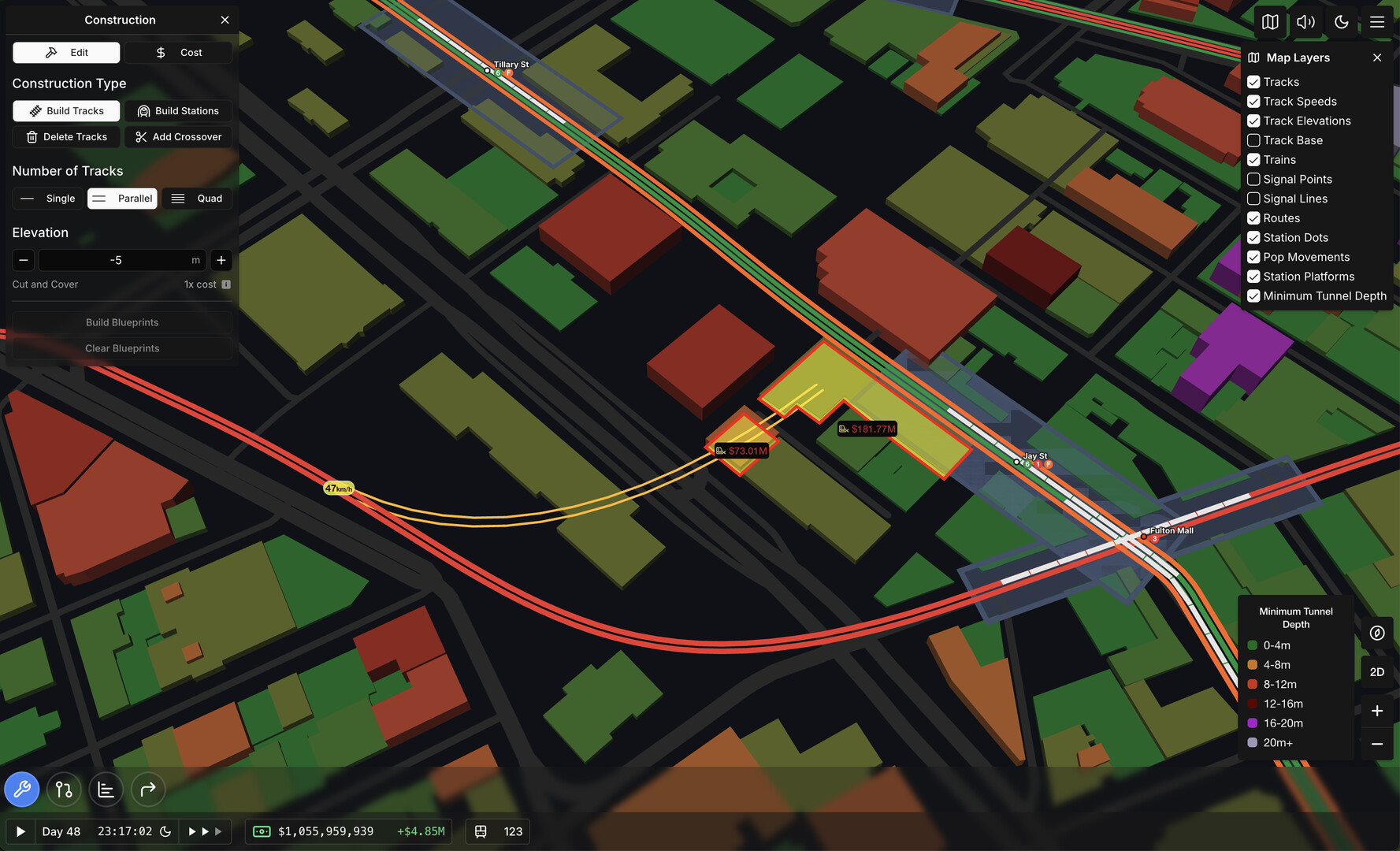
Every new line or increased frequency adds expense. The game asks you to weigh construction and operating costs against the time savings commuters experience.
Too many trains on a line may cause congestion, while too few increase wait times, so finding the sweet spot is key to optimal performance.
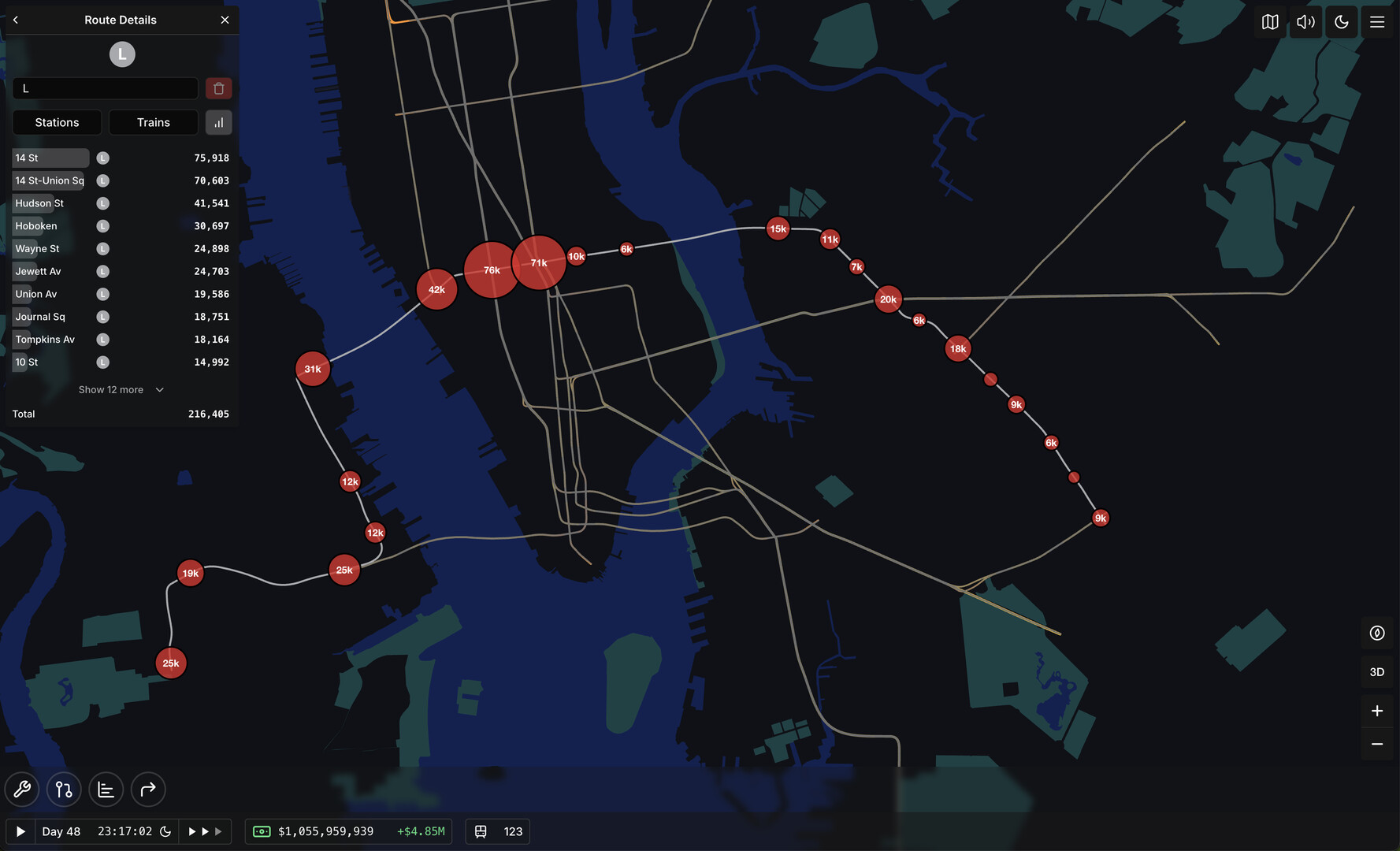
- Use the in‑game analysis tools to compare cost per minute saved.
- Prioritize upgrades on routes with the highest commuter density.
05 / THE GUIDE
Supported Cities
Subway Builder includes a roster of North American, European, Asian and Oceanic cities, each with its own geographic constraints and commuter profiles. The list spans major metros like New York and Tokyo to smaller hubs such as Wellington.
Each city’s unique layout influences station placement strategy, making cross‑city comparison a valuable learning tool.
- Experiment with a compact city first to master basic mechanics.
- Switch to a sprawling city later to test scalability of your network.
COMMUNITY
Player discussion