 GameWiki
GET YOUR BEARINGS
About Strategos
Strategos lets players recreate massive ancient battles with thousands of troops moving in real‑time. It spans nearly a thousand years of Mediterranean warfare, from early hoplite clashes to the later Sasanian confrontations, and offers both historic and speculative match‑ups.
The game focuses on deep tactical systems such as formation movement, morale shocks, fog of war, terrain effects and command‑and‑control mechanics, delivering a tabletop‑style experience in a digital format while allowing extensive customisation of armies and scenarios.
01 / THE GUIDE
Historical Battles
Strategos includes a roster of well‑known engagements such as Issos, Trebia, Ilipa, Magnesia, Zama, Adamclisi, Bibracte, Carrhae, Marathon and Raphia. These are the historical battles currently included, letting players recreate the outcomes of famous ancient conflicts.
These battles can be played with adjustable difficulty and AI aggression, letting players tailor the challenge to their skill level while preserving the historic context of each engagement.
- Test several AI aggression levels to see how they affect enemy tactics.
- Review the unit composition of each side before committing to a strategy.
02 / THE GUIDE
Unit and Faction Variety
The game features over 250 unique units and nearly 120 factions, ranging from Hoplites and Immortals to Sasanian cavalry and Roman legions. Factions include major powers such as Rome, Carthage and Persia as well as smaller groups like the Umbrians and Thracians.
Factions are distinguished across different eras, providing distinct tactical options. Players can select units when building custom battles, enabling both authentic and speculative army compositions.
- Compare faction unit lists to identify complementary strengths before building an army.
- Consider historical era when mixing units to keep custom armies authentic to a period.
03 / THE GUIDE
Advanced Command and Control
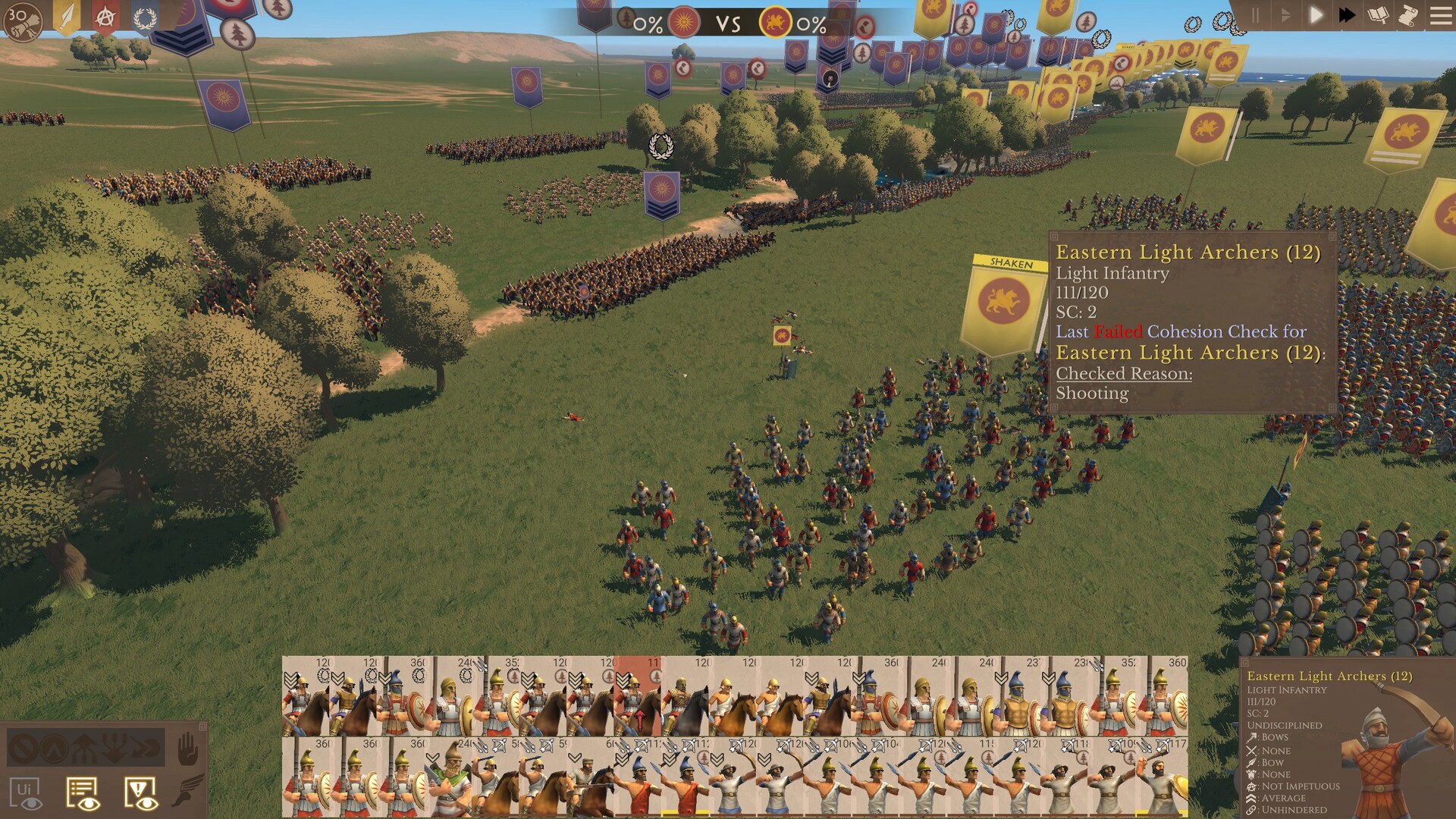
Strategos simulates command chains by allowing players to position generals, send couriers and provide morale support while also fighting directly. Balancing these roles is essential to maintain order and avoid routing or morale shocks during battle.
The system encourages thoughtful timing of orders; committing a general too early can limit later influence, while delaying can reduce their impact on morale and tactical flexibility.
- Place generals near key units to maximise morale influence.
- Balance sending couriers with giving orders, providing morale support and fighting directly.
04 / THE GUIDE
Custom Battle Options
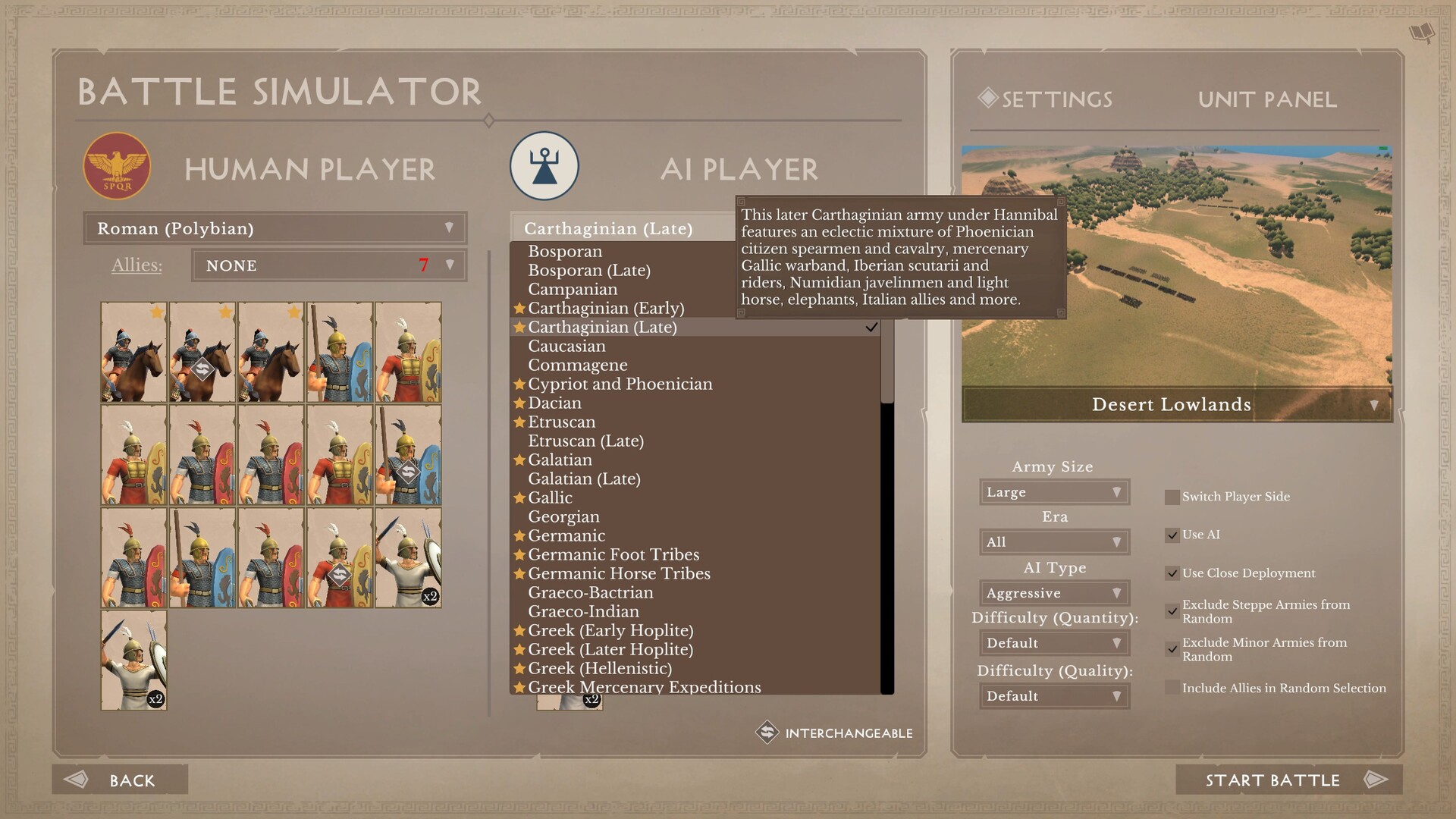
Players can tailor battles by selecting army lists, allies, unit counts, era, map, deployment distance, difficulty, AI type and aggression. Options also include randomising army lists with filters for era, importance and steppe status.
These settings let you craft scenarios that match historical parameters or explore speculative match‑ups, giving control over both strategic depth and the scale of the engagement.
- Use the random army filter to discover unexpected unit combinations.
- Adjust deployment distance to test different tactical approaches.
05 / THE GUIDE
Campaign Modes
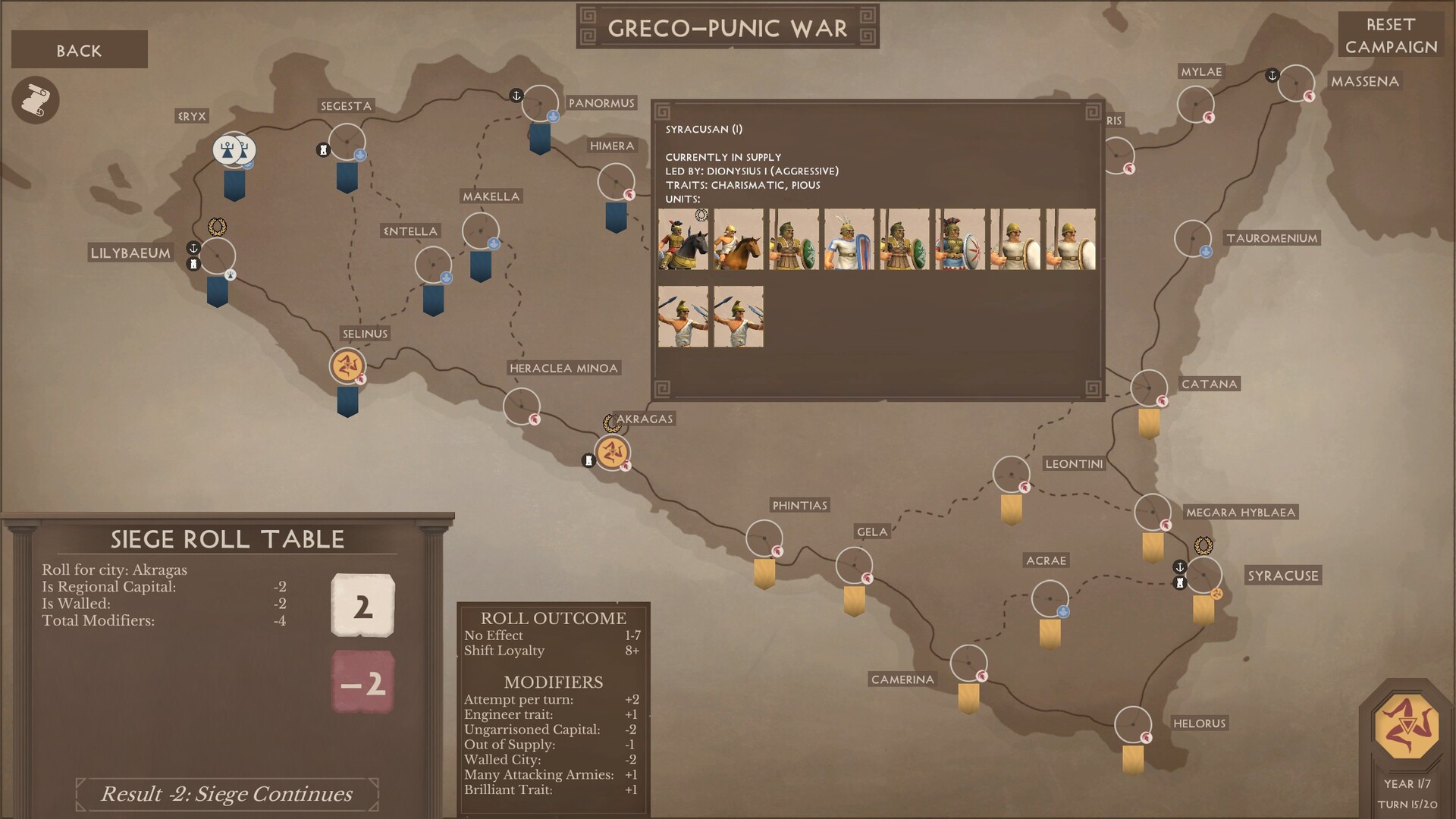
Strategos offers text‑based campaigns covering Alexander, Hannibal, the Wars of the Diadochi, Roman Civil Wars, Early Rome and the Peloponnesian War. Map‑based campaigns include the First Punic War, Greco‑Punic War, Pyrrhic War, Second Macedonian War and Greco‑Persian War.
Each campaign provides a structured progression through multiple battles, reflecting the strategic context of the era and allowing players to experience a broader narrative beyond single engagements.
- Follow the campaign narrative to understand the historical flow of each war.
- Compare outcomes of text‑based and map‑based campaigns for varied strategic insights.


COMMUNITY
Player discussion