 GameWiki
GET YOUR BEARINGS
About Strategic Command WWII: War in Europe
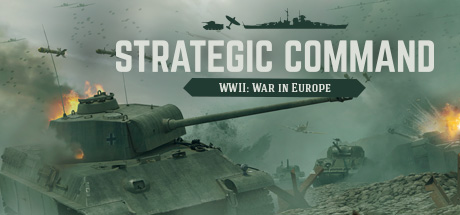
Strategic Command WWII: War in Europe puts you in charge of the Axis or the Allies, letting you direct every nation in your coalition. You allocate resources, set research priorities, and coordinate land, sea, and air operations across a continent‑wide war.
The game uses a top‑down hex map with fog of war, diplomatic tools, and a large AI opponent. You can also craft your own scenarios with the built‑in editor, and play both solo and against other players online or locally.
01 / THE GUIDE
Coalition Command
You control an entire coalition, choosing which nation to prioritize and how to balance its strengths, technology, troops, and industrial capacity. Each nation contributes its own assets to the overall war effort.
The AI reacts to weak points and sets traps, forcing you to consider both short‑term needs and long‑term strategy to stay ahead of the enemy.
- Compare the industrial output of each nation before allocating production.
- Watch AI counter‑moves to identify which of your fronts need reinforcement.
02 / THE GUIDE
Hex Map and Fog of War
The game is played on a top‑down hex map where each hex covers 20 miles, showing cities, railroads, logistical centers, and maritime routes. This layout provides a clear strategic overview.
A realistic fog of war limits your knowledge of enemy positions, requiring decisions based on partial information.
- Use known logistical hubs to plan supply lines.
- Consider the fog of war when timing offensives; hidden enemy forces can alter outcomes.

03 / THE GUIDE
Research and Upgrades
Research lets you improve units across many categories, such as infantry weapons, rockets, anti‑submarine warfare, and amphibious warfare. Choices affect both immediate combat and long‑term capability.
Upgrades are tied to each nation’s technology level, so you must balance research spending with other demands.
- Prioritize upgrades that complement the dominant unit types of your strongest nations.
- Track enemy tech trends to counter their advancements.
04 / THE GUIDE
Diplomacy and Espionage
Diplomacy lets you influence neutral powers, encouraging them to join your side or denying resources to the enemy. Espionage provides intelligence to undermine opponent plans.
Both tools are essential because the war cannot be won by military force alone.
- Target neutral nations with resources you lack for maximum impact.
- Use espionage to reveal enemy movements before committing forces.
05 / THE GUIDE
Scenarios and Editor
Beyond the Grand Campaign starting in 1939, the game includes scenarios from 1940 to 1944, alongside more than 100 unique strategic level Decision Events. This variety offers focused challenges.
A built‑in editor lets you create custom “what‑if” scenarios or design new maps and campaigns from scratch.
- Experiment with alternate historical outcomes using the editor’s map tools.
- Test new scenarios in single‑player before trying them with others.


COMMUNITY
Player discussion