 GameWiki
GET YOUR BEARINGS
About States of Power
States of Power is a Grand Strategy wargame that puts you in charge of a World War II‑era nation’s armies, economy, and diplomacy. The game drops you onto the map quickly, letting you make meaningful decisions within minutes while still offering deep strategic depth for veterans.
It supports both single‑player and multiplayer matches, includes a built‑in Scenario Editor for creating and sharing custom worlds, and runs on Windows with features such as adjustable difficulty, mouse‑only control, and save‑anytime functionality.
01 / THE GUIDE
Gameplay Basics
The title is described as easy to start yet hard to master, meaning you can begin playing without hours of tutorials and still find long‑term challenges. A full match is intended to fit within a single session, encouraging concise play.
Both single‑player and multiplayer modes are built for smooth experiences. Features like camera comfort, custom volume controls, and the ability to save at any time give players flexibility in how they approach each game.
- Start a short match to become familiar with the interface.
- Use the save‑anytime option to experiment without penalty.
02 / THE GUIDE
Unit Management
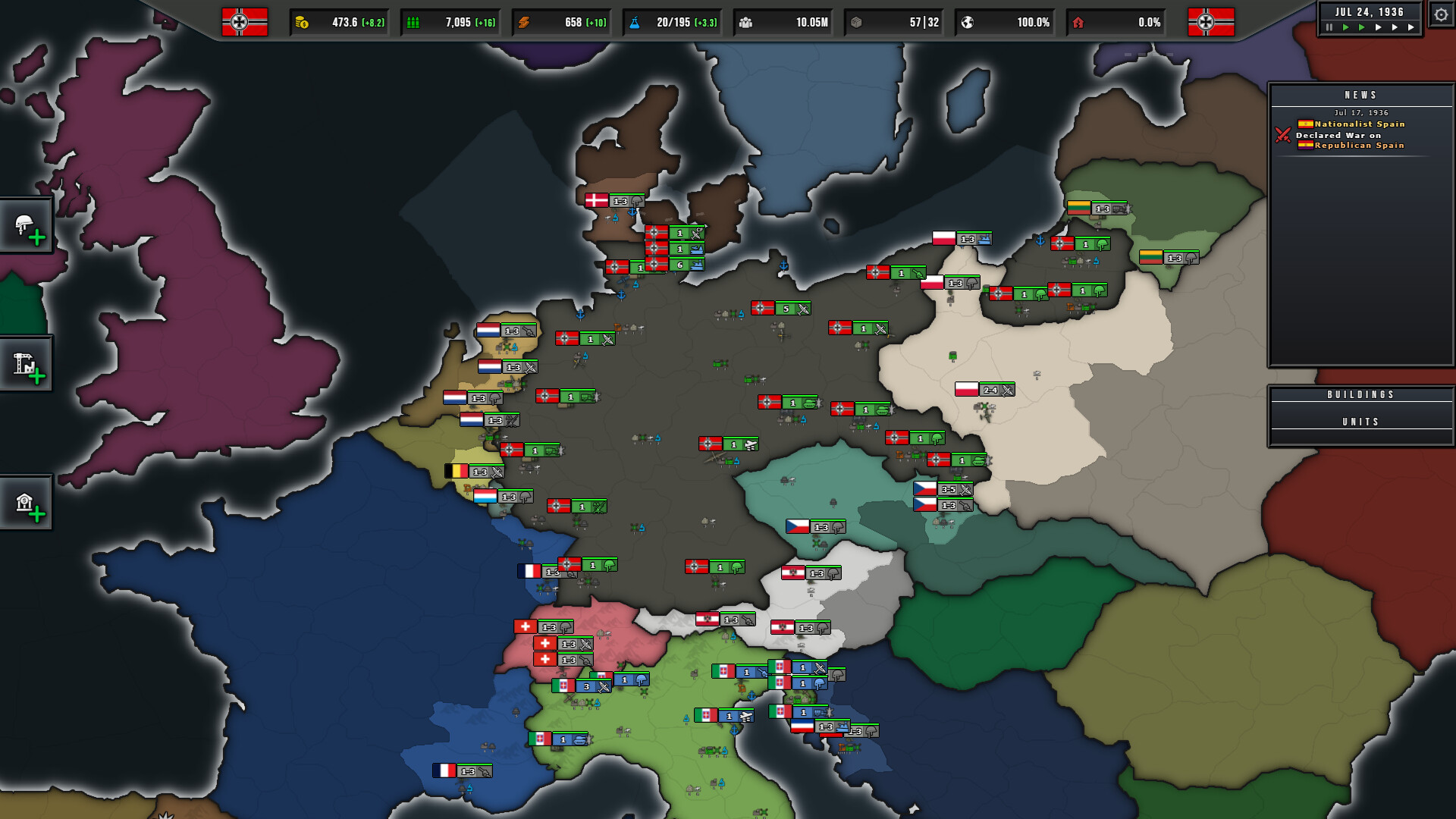
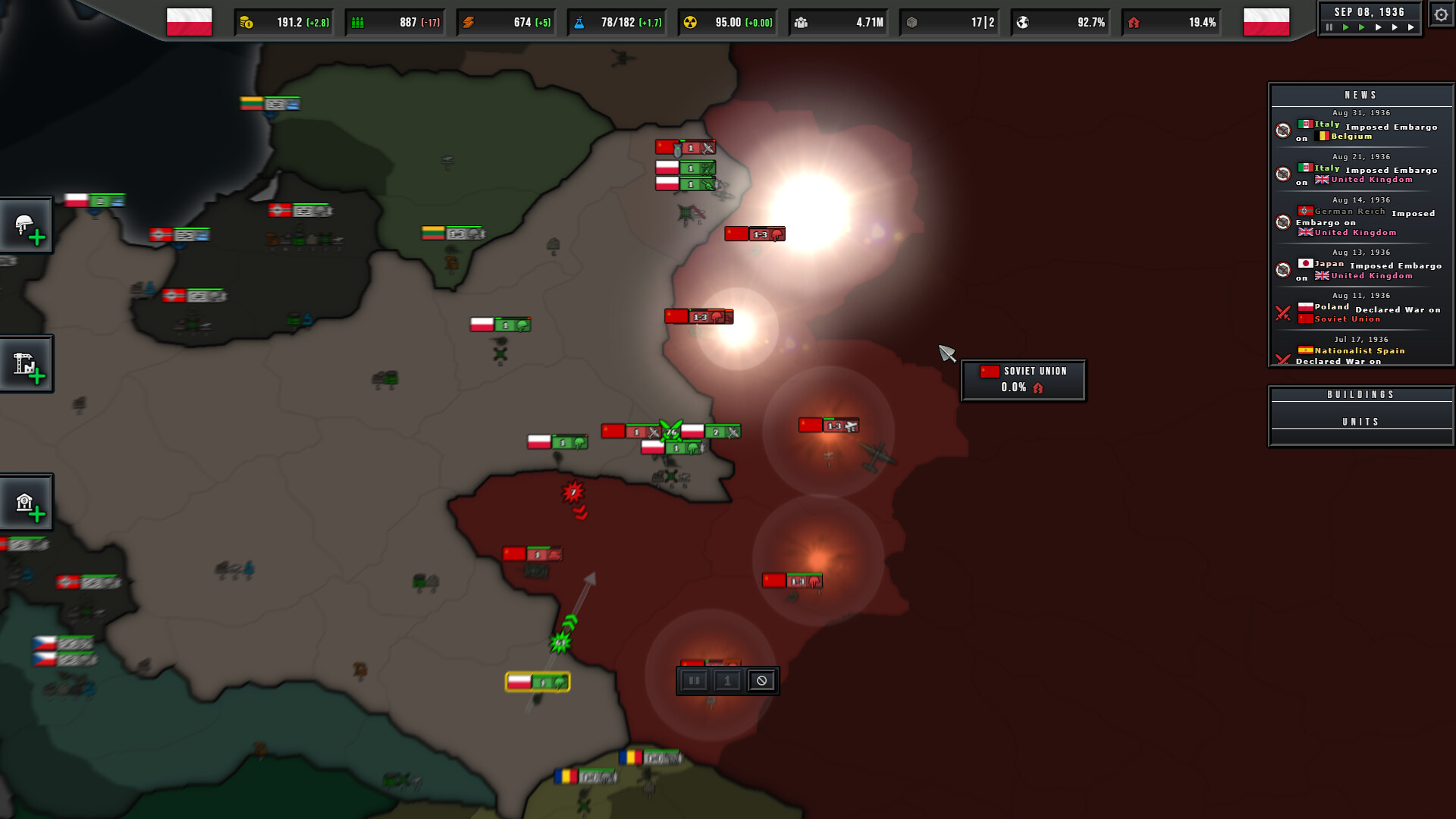
You command every division directly and can build armies from infantry, tanks, artillery, fighter planes, and other units. Each unit type is said to excel against some opponents and falter against others, so composition matters.
Frontlines shift during play, so you must adapt your forces and watch supply lines to avoid overstretching. Maintaining adequate supply helps keep units effective across the map.
- Mix unit types to cover a range of strengths.
- Check supply line status regularly.
03 / THE GUIDE
Economy & Technology
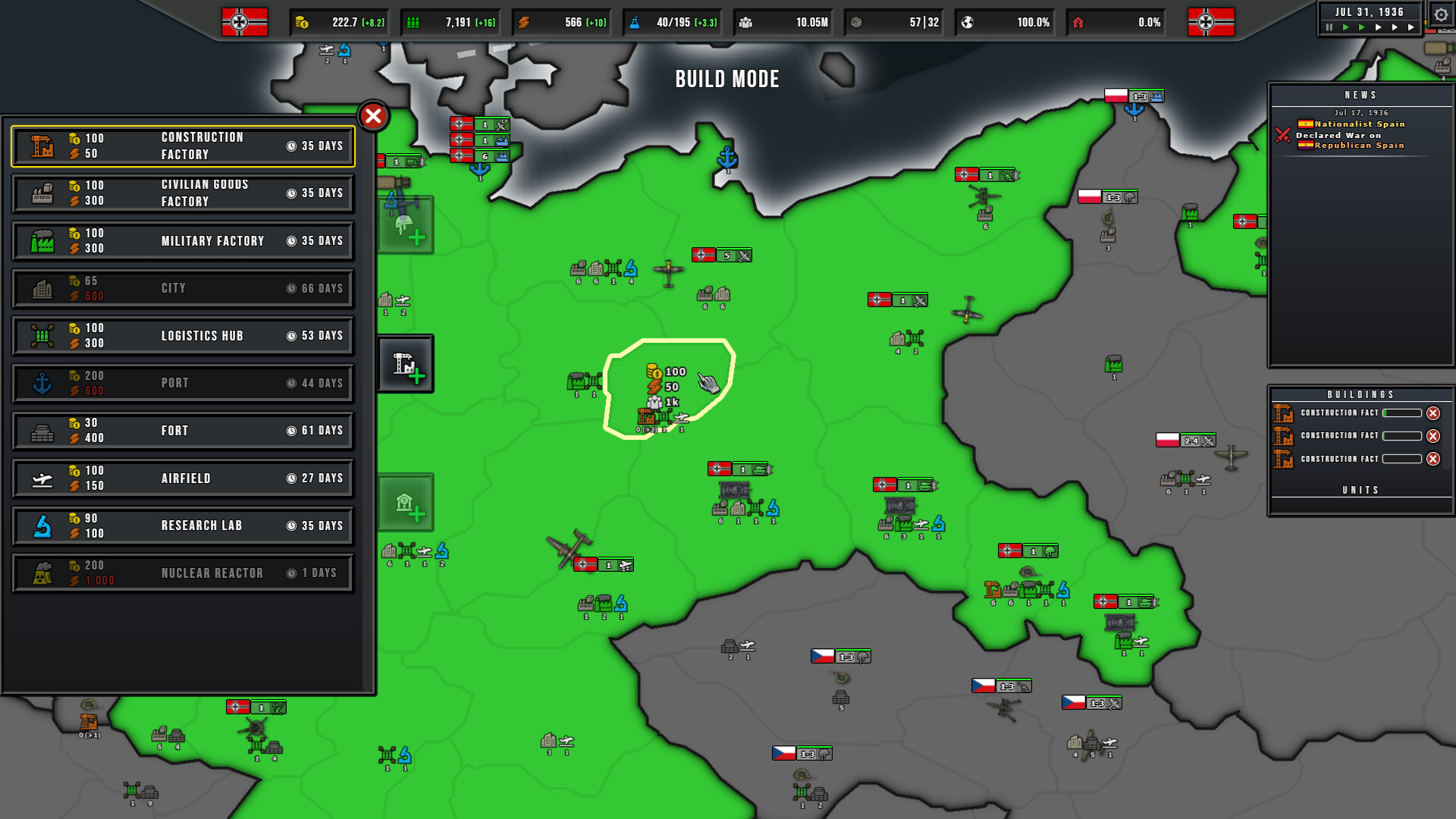
Provinces can be developed with factories, research labs, ports, and infrastructure. Managing construction, goods, military supplies, and manpower lets you balance the economy, while loans and world‑market trade provide additional funding options.
A technology tree spans from early‑war infantry weapons to the atomic bomb. Choosing an ideology—Democratic, Authoritarian, Communist, or Fascist—affects internal reforms and can even lead to civil war.
- Invest early in factories to boost production later.
- Diversify trade partners to reduce reliance on a single market.
04 / THE GUIDE
Diplomacy
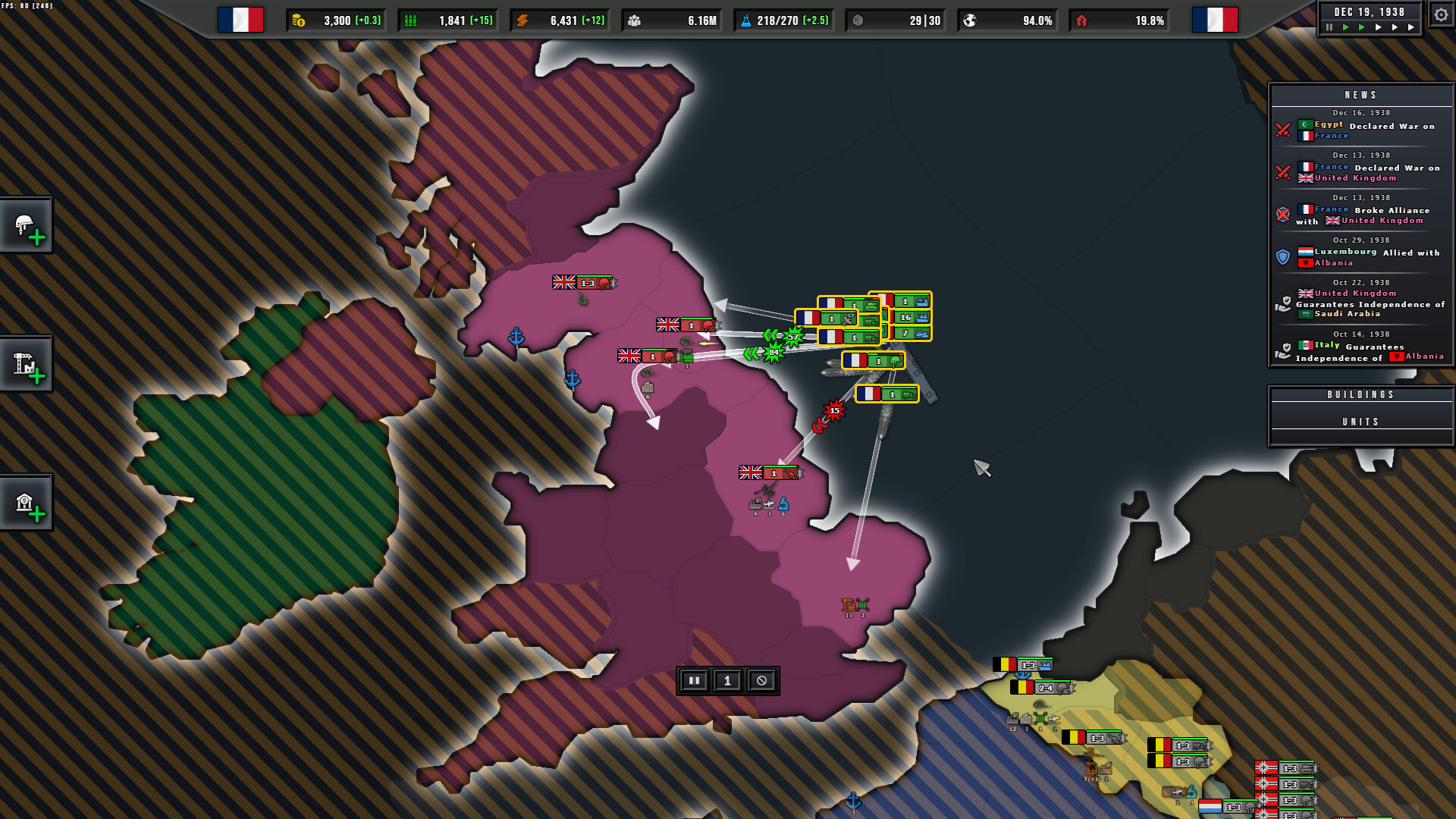
Players can form alliances, sign non‑aggression pacts, send volunteers, or manipulate others before betraying them. These actions let you guarantee independence or set the stage for future conflict.
Multiplayer diplomacy includes global and private messaging, meaning communication itself becomes a strategic tool alongside military moves.
- Use private messages for secret negotiations.
- Track alliance commitments to avoid surprise wars.
05 / THE GUIDE
Scenario Editor
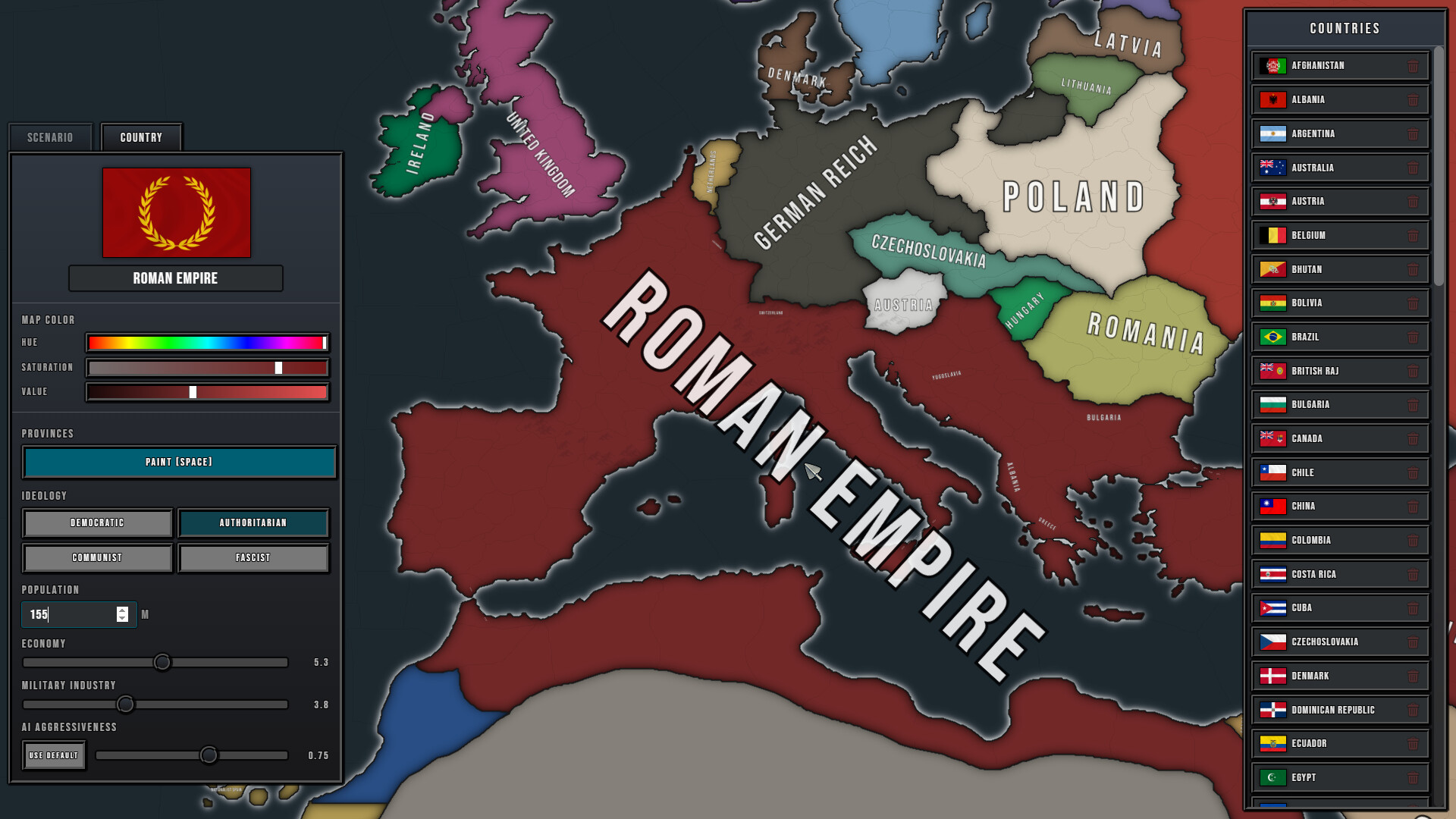
The built‑in Scenario Editor lets you create custom countries, redraw borders, design whole scenarios, and script events without needing external tools. This supports alternate histories, what‑if conflicts, and fantasy settings.
When a scenario is finished, you can publish it to the Scenario Browser where the community can download, rate, and play it, extending the game’s replay value.
- Begin with a simple border change before adding complex events.
- Test your scenario locally to catch balance issues before publishing.
COMMUNITY
Player discussion