 GameWiki

GET YOUR BEARINGS
About Spellsworn
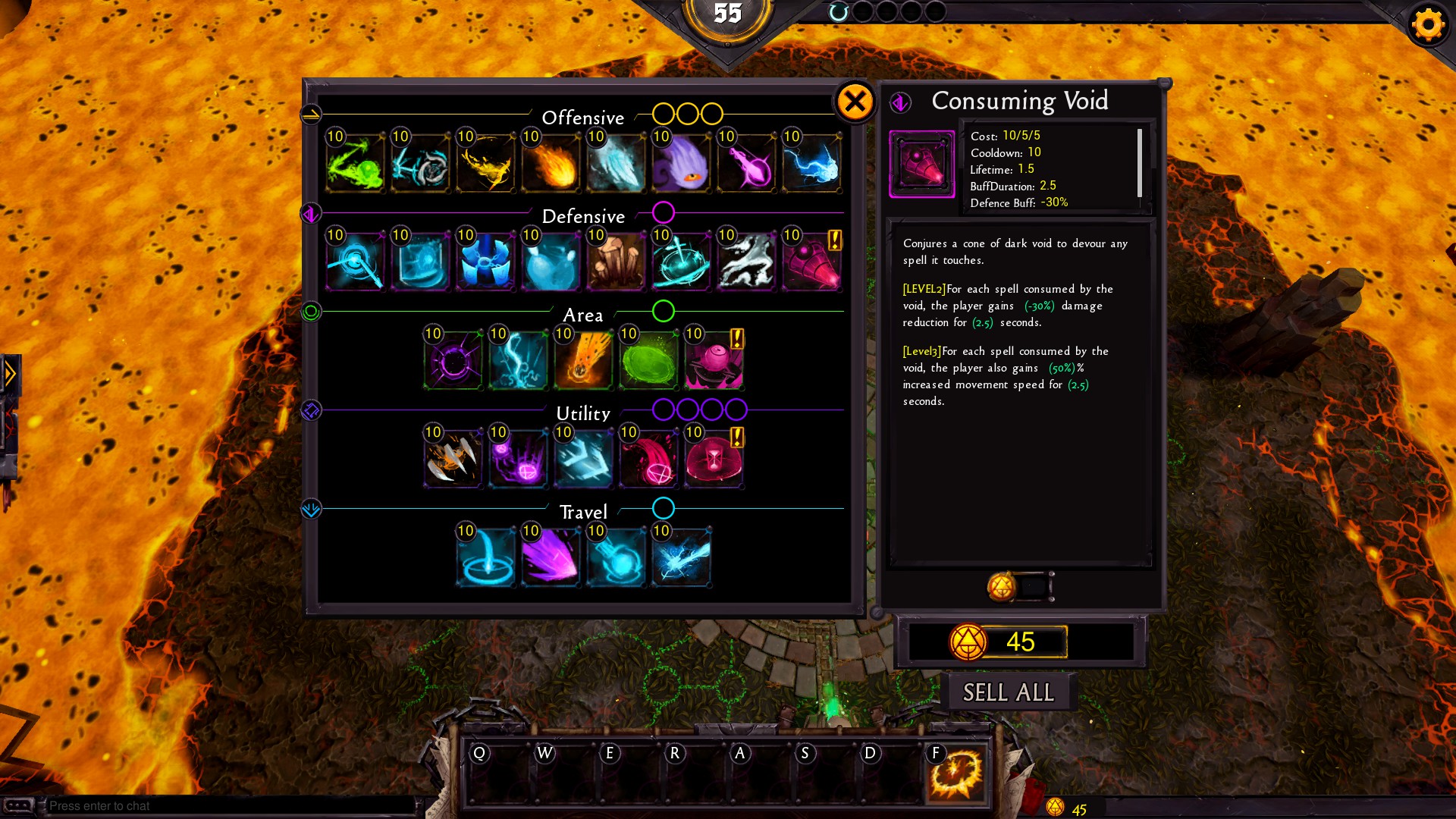
Spellsworn is a free‑to‑play PvP arena where spellcasters duel using magic and reflexes. Players select spells from five disciplines and compete across three arenas that each present distinct hazards. Currency earned during a match can be spent on spells, influencing strategy for each of the five rounds.
Matches support up to eight online participants, allowing solo or team play on Windows and Linux. Experience gained from combat raises player level, unlocking cosmetic skins, weapons and other items as the player progresses.
01 / THE GUIDE
PvP Match Structure
A match consists of five rounds in which each participant tries to reduce the opponent’s health to zero. The description notes that a limited amount of currency increases throughout the game, requiring players to decide which spells to purchase for each round.
Each round takes place in an arena that can present environmental threats. Because the arena itself is described as a source of danger, players must adapt their spell choices to both opponent actions and the changing surroundings.
- Watch how much currency you have at the start of each round to plan purchases.
- Notice any arena cues that indicate upcoming hazards.
02 / THE GUIDE
Spell Loadout Disciplines
Loadouts are built from five named disciplines: Offensive, Defensive, Area, Utility, and Travel. The source lists example spells such as Fireball, Meteor, Windwalk and Counter Pulse, showing the variety available within those categories.
Choosing spells from one or multiple disciplines determines how a player can respond to opponents and arena effects. The description emphasizes that the decision of which spells to equip is a core part of each match.
- Experiment with at least one spell from each discipline to see how they interact.
- Include a Travel spell if you need quick repositioning.

03 / THE GUIDE
Arena Variety
Spellsworn features three unique arenas, each described as having its own dangers and demands. These environmental factors can pose a threat to players during combat.
Because each arena presents different hazards, learning the layout of each map helps players anticipate threats and position themselves more safely while casting spells.
- Spend an early round observing arena geometry before committing to aggressive spells.
- Use Utility spells to mitigate arena‑specific hazards.
04 / THE GUIDE
Multiplayer Capacity
The game supports up to eight players online, allowing matches to be played alone or in teams. Cross‑platform multiplayer lets Windows and Linux users compete together, as stated in the feature list.
Player count influences match dynamics: larger games tend to be more chaotic, while smaller games focus more on individual skill and spell timing.
- When playing with a full roster, coordinate spell types to cover multiple threats.
- In solo or small‑team games, prioritize spells that offer both offense and self‑defense.
05 / THE GUIDE
Progression and Rewards
Combat awards experience points that contribute to an overall player level. The description notes that leveling up unlocks skins, weapons and other items, as part of the game's progression system.
Because rewards are tied to battle performance, consistent participation in matches is the primary way to acquire new rewards and increase the player’s level.
- Track your win‑loss record to gauge how quickly you are gaining experience.
- Review unlocked items after each level to plan future cosmetic goals.



COMMUNITY
Player discussion