 GameWiki
GET YOUR BEARINGS
About Space Manager
Space Manager is a sandbox simulation where you run an aerospace empire, handling finances, research, and launch operations. You choose launch sites, accept contracts, and design missions while watching realistic space‑flight simulations. The game emphasizes strategic planning, data collection, and custom engineering. A large R&D skill tree lets you improve safety, costs, and data handling, while a community on Discord offers feedback and updates.
01 / THE GUIDE
Launch Centers
Choosing a launch center on Earth starts your journey. Each site provides unique geographic, weather, and regional bonuses that affect launch efficiency and cost. These strategic differences require you to weigh the advantages of each location before committing resources to a mission.
- Compare regional bonuses to match the payload type you plan to launch.
- Consider weather patterns when scheduling launches to reduce risk.
02 / THE GUIDE
Contracts and Missions
Contracts provide income, reputation, and XP, making them essential for funding expensive launches. You can send satellites to orbit Earth, the Moon, or other planets to fulfill these contracts. Successful missions reward cash and experience, encouraging you to balance risk and reward across multiple tasks.
- Prioritize contracts that match your current technology level.
- Track reputation gains as you complete contracts.
03 / THE GUIDE
Planet Scanning and Data
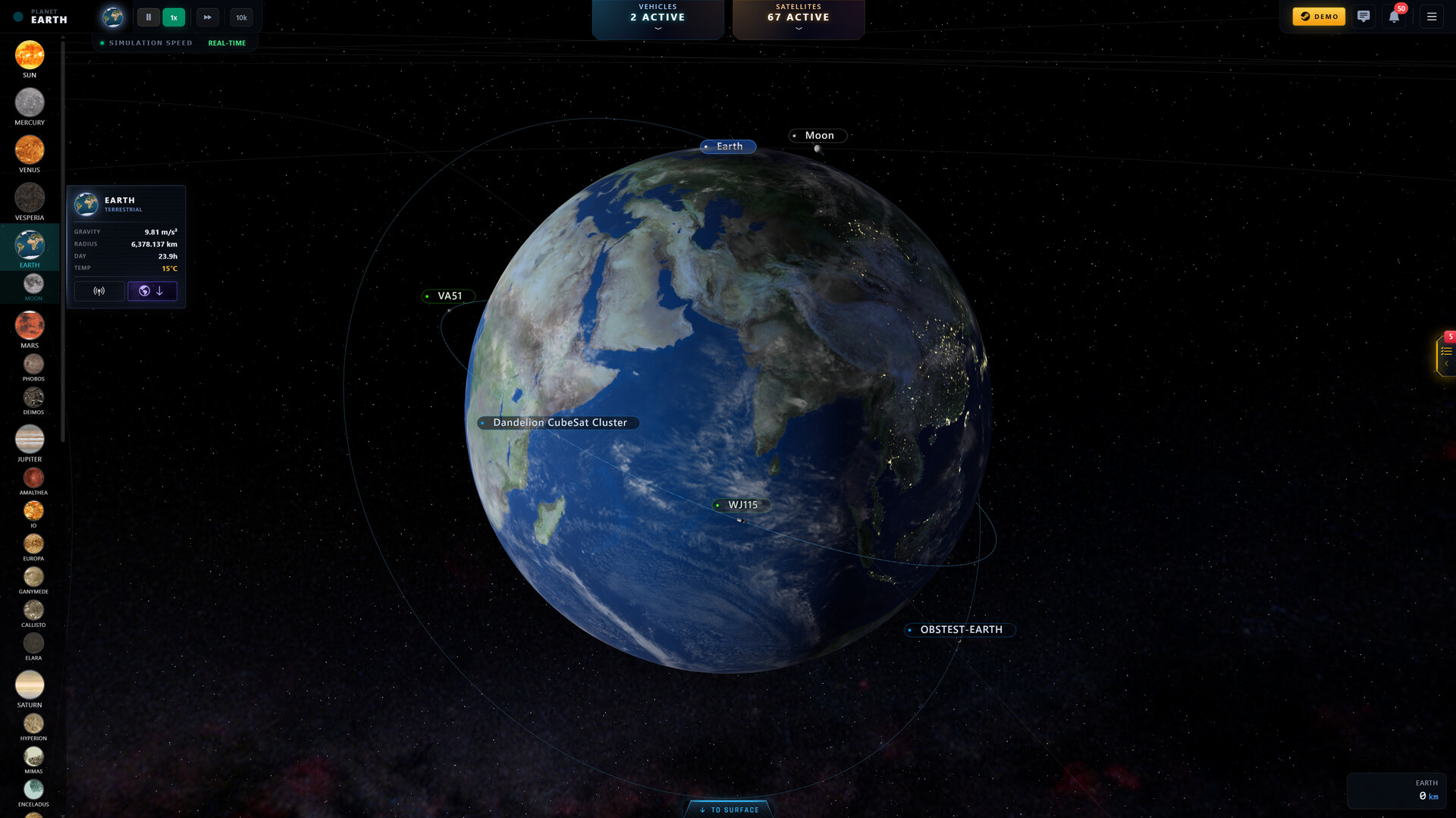
Scanning planets gathers valuable data such as radio emissions, atmosphere, magnetosphere, and temperature. Sensors and telescopes capture this information, which can be sold through data centers. The market for data provides another revenue stream, encouraging investment in scanning equipment and storage capacity.
- Install sensors to gather a variety of data about planets.
- Build data centers early to maximize auction profits.
04 / THE GUIDE
Research & Development
Hiring a chief research developer unlocks a skill tree that improves many aspects of your empire. Examples include reducing launch failure risk, lowering procurement costs, and expanding data storage. Investing in R&D smooths exploration by providing long‑term efficiencies and new capabilities.
- Focus on safety upgrades if launches are failing frequently.
- Invest in negotiation skills to cut procurement expenses.
05 / THE GUIDE
Custom Engine Engineering
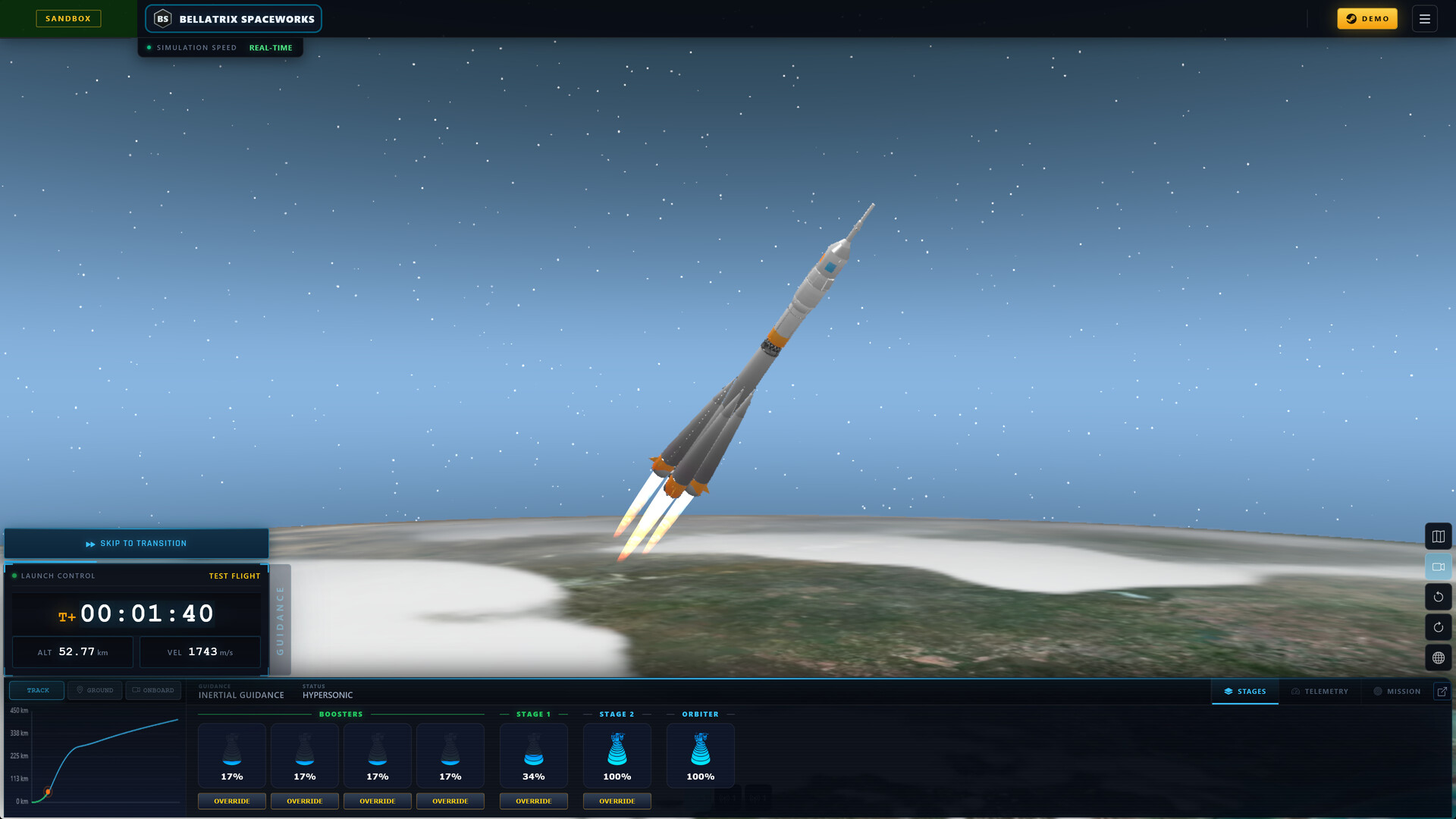
You can design and test engine profiles using parameters like thrust, efficiency, endurance, and overdrive. This sandbox element lets you experiment with propulsion to suit specific mission goals. Testing different configurations helps you optimize performance and manage risk before committing to a launch.
- Run multiple simulations to compare thrust versus efficiency trade‑offs.
- Test different profiles to find one suited to similar missions.

COMMUNITY
Player discussion