 GameWiki

GET YOUR BEARINGS
About Sim Companies
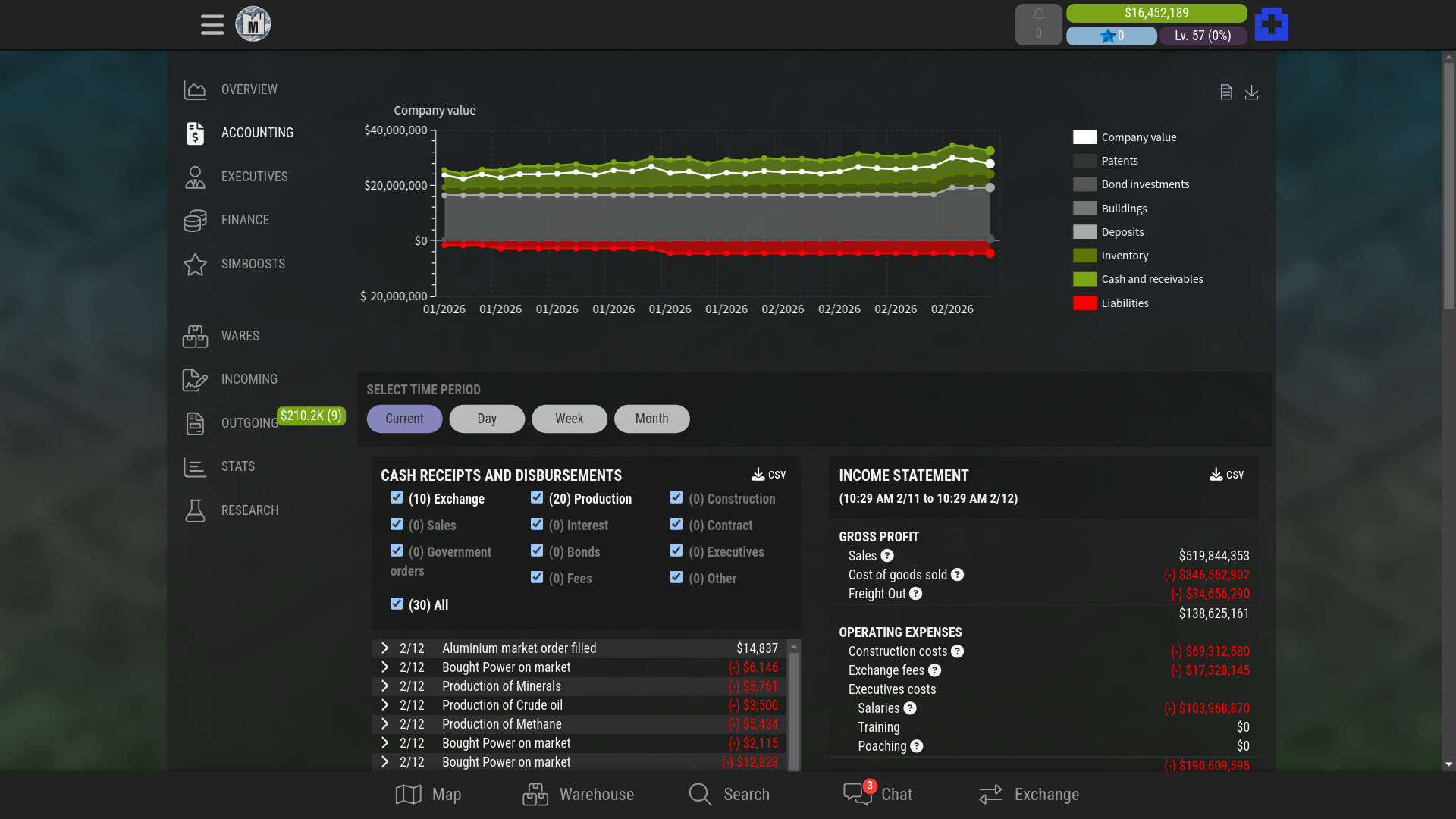
Sim Companies lets players launch a modest startup and expand it into a worldwide corporate empire. By constructing factories, farms, stores and research hubs, you create products and sell them in a live marketplace where thousands of participants set prices. The game blends supply‑chain depth with real‑time market analysis, requiring strategic decisions on production, cash flow and partnerships. Its free‑to‑play model runs on Windows, macOS and Linux, supporting cross‑platform multiplayer and a range of achievement and sharing features.
01 / THE GUIDE
Player‑Driven Economy
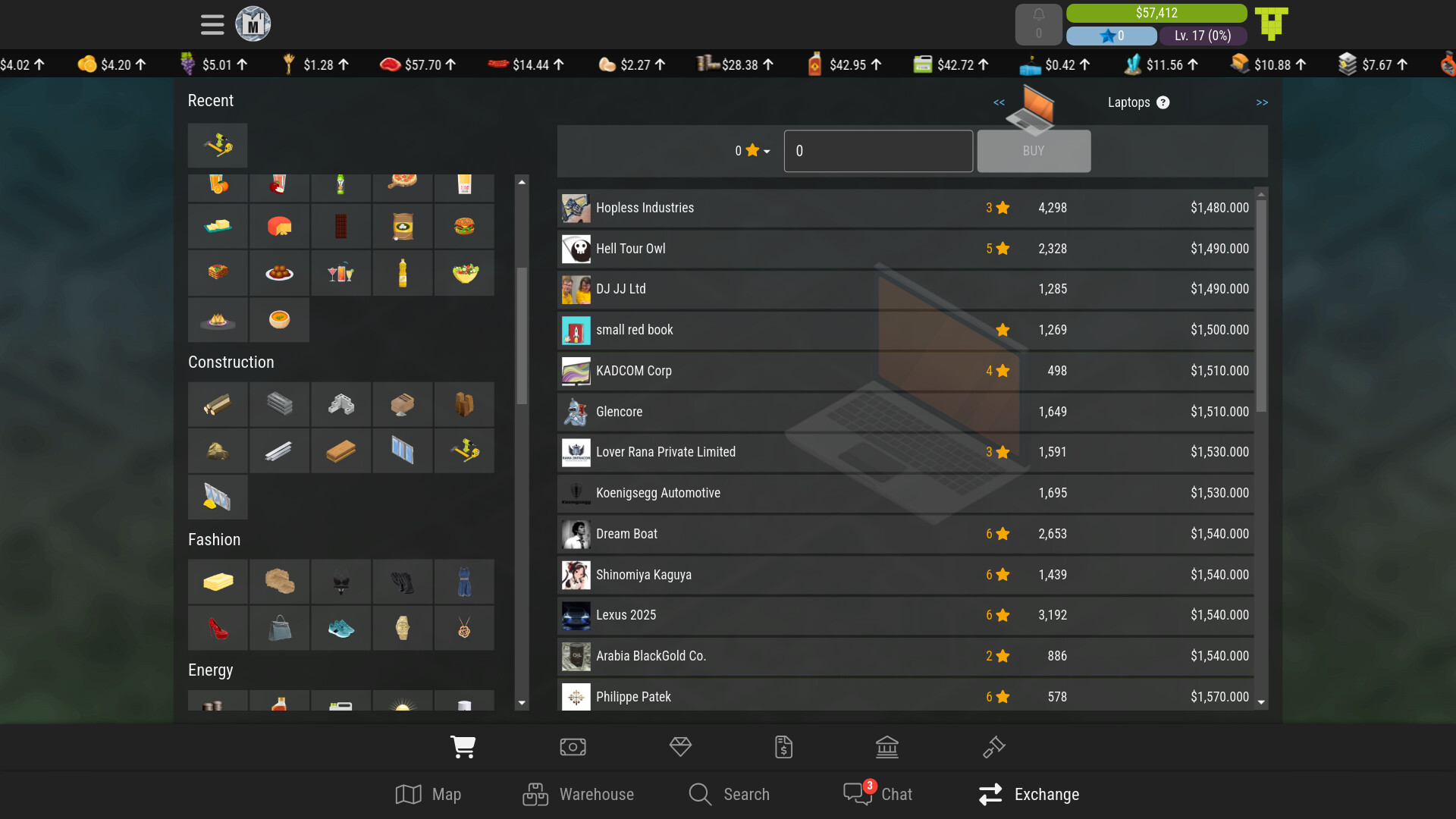
All goods are bought and sold in a live marketplace whose prices reflect the activity of other players. This means supply and demand fluctuate based on collective production and consumption choices, creating a dynamic trading environment.
Because prices are not fixed, players must monitor market trends and adjust their output or pricing strategies to stay profitable. Successful traders can influence market conditions through volume and timing.
- Track price changes over several in‑game days before committing large production runs.
- Consider diversifying product lines to hedge against sudden market drops.
02 / THE GUIDE
Deep Supply Chains
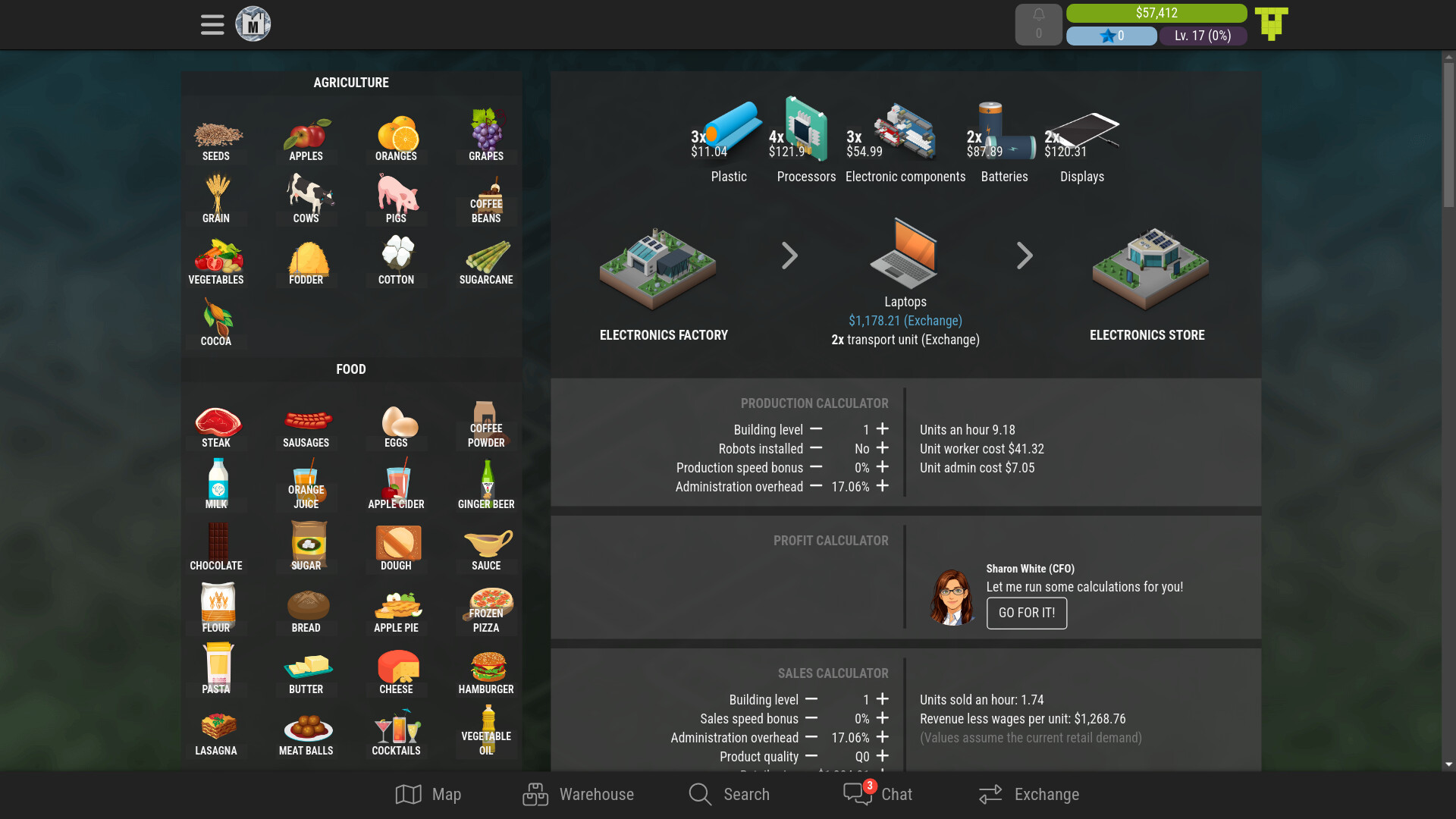
Raw materials are transformed into advanced products via multi‑step production chains that span several industries. Each step may require its own facility, such as a farm for crops or a factory for assembly.
Managing these chains involves coordinating input availability, facility capacity and timing to avoid bottlenecks that could stall final product output.
- Map out each required input before expanding a new product line.
- Balance the number of facilities at each stage to keep the chain flowing smoothly.

03 / THE GUIDE
Multiple Industries
Players can operate in sectors ranging from agriculture and energy to fashion, automotive and aerospace. Each industry offers distinct raw materials, production methods and market demands.
Choosing an industry influences the types of facilities you’ll need and the competitive landscape you’ll face against other players specializing in the same field.
- Start in an industry with lower entry costs to build capital before moving to high‑tech sectors.
- Observe which industries have fewer competitors for potentially higher margins.
04 / THE GUIDE
Multiplayer Trading
Long‑term partnerships can be forged by negotiating contracts with other players, creating a network of reliable suppliers and buyers. These relationships can stabilize income and reduce market risk.
Contracts are flexible, allowing players to set terms that suit their production capacity and cash‑flow needs, fostering a collaborative economy.
- Maintain open communication with trade partners to adjust contracts as market conditions shift.
- Diversify your trading partners to avoid over‑reliance on a single source.
05 / THE GUIDE
Cross‑Platform Multiplayer
Sim Companies runs on Windows, macOS and Linux, allowing players on any of these operating systems to interact in the same persistent world. This broad compatibility expands the pool of potential trade partners.
The game’s multiplayer focus means all economic activity is driven by real players, regardless of their platform, ensuring a consistently active market.
- Join community forums to find players on your preferred platform for smoother coordination.
- Take advantage of the larger player base to discover niche market opportunities.

COMMUNITY
Player discussion