 GameWiki
GET YOUR BEARINGS
About Seven Blasphemies
Seven Blasphemies is a traditional turn‑based roguelike where each move advances a single tile and each turn invites the world to react. A doom calendar adds a permanent curse—called a Blasphemy—each dawn, stacking until the seventh ends the game.
The game features six distinct classes, lethal monsters, and minimalist pixel art that emphasizes scarcity and consequence. Permadeath, grid‑based movement, and high‑stakes decision‑making create a relentless crawl toward extinction.
01 / THE GUIDE
Doom Calendar & Blasphemies
Each dawn may trigger a new Blasphemy, a permanent curse that alters the rules of the current run. These curses stack, making the world progressively harsher as you survive longer.
When the seventh Blasphemy arrives, the world ends, terminating the run regardless of player actions. The calendar forces a balance between exploration and the inevitability of increasing difficulty.
- Observe how each new Blasphemy changes a core mechanic before committing to risky actions.
- Plan resource use early, anticipating that later curses may weaken healing or visibility.
02 / THE GUIDE
Playable Classes
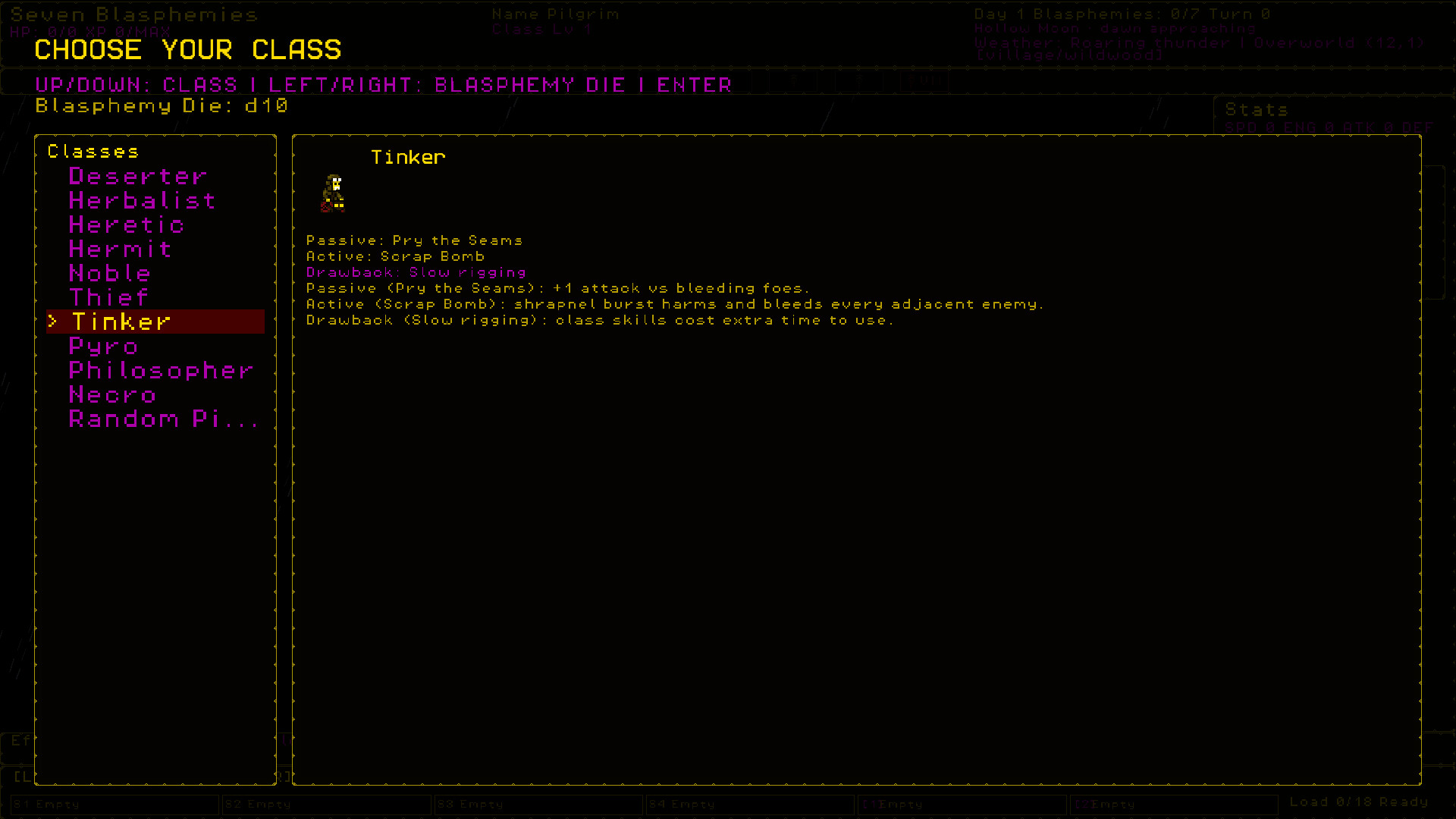
Seven Blasphemies offers six classes, each built around a distinct style of play. No class is safe; each is doomed in its own way, encouraging varied strategies.
Choosing a class shapes your style of play and influences how you respond to the accumulating curses, but all classes face the same ultimate threat.
- Experiment with multiple classes to discover which playstyle aligns with your risk tolerance.
- Consider how a class’s strengths might offset specific Blasphemies you expect to encounter.
03 / THE GUIDE
Monsters and Decision‑Making
Enemies are designed to be readable and mechanically distinct, presenting different problems such as when to fight, flee, or spend resources.
Understanding each monster type’s threat pattern is crucial, as the world’s growing hostility amplifies the consequences of misjudgment.
- Take note of monster behaviors early; they often dictate whether a fight is worth the risk.
- Use positioning to mitigate threats, especially as visibility may shrink under later Blasphemies.
04 / THE GUIDE
Turn‑Based Roguelike Fundamentals
The game follows classic roguelike fundamentals: grid‑based movement, turn‑based decisions, procedural danger, permadeath, and lethal consequences. Every action gives the world a chance to answer.
Scarcity of resources and high‑stakes choices mean each turn can be decisive, reinforcing the theme of crawling toward extinction rather than glory.
- Treat each turn as a potential pivot point; pause to evaluate all options before moving.
- Conserve scarce resources early to maintain flexibility when later Blasphemes increase difficulty.
05 / THE GUIDE
Minimalist Pixel Art & Atmosphere
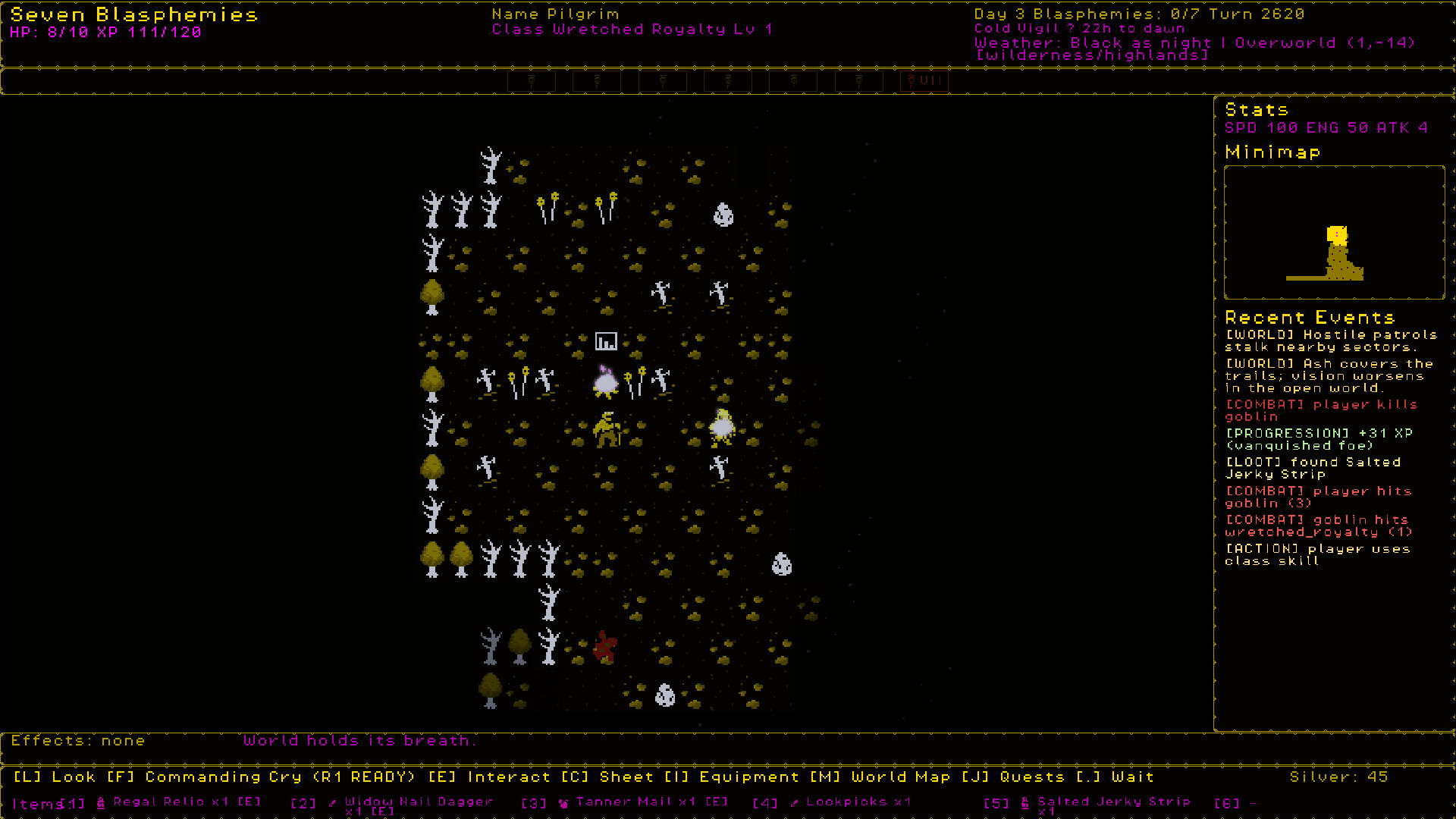
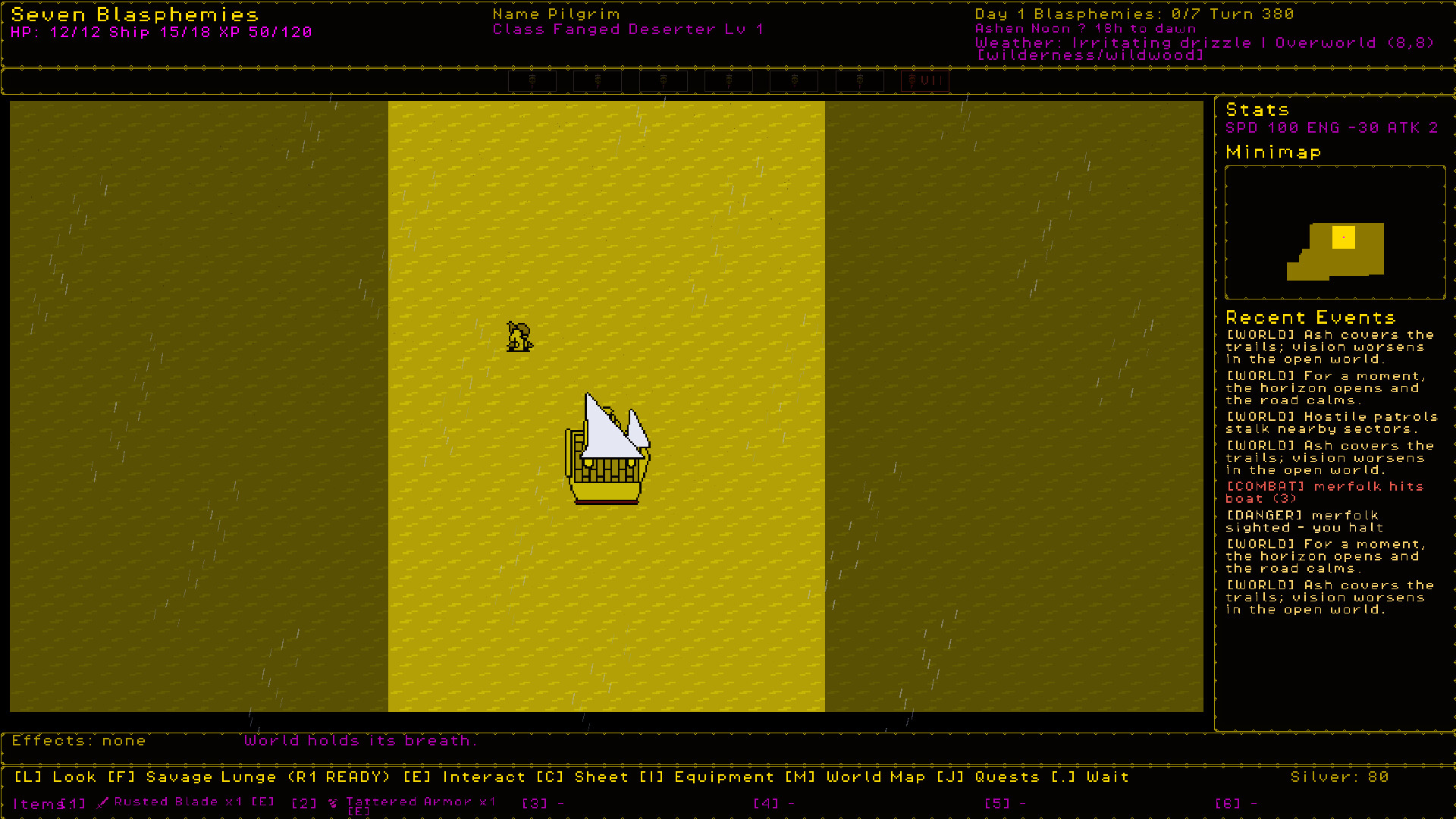
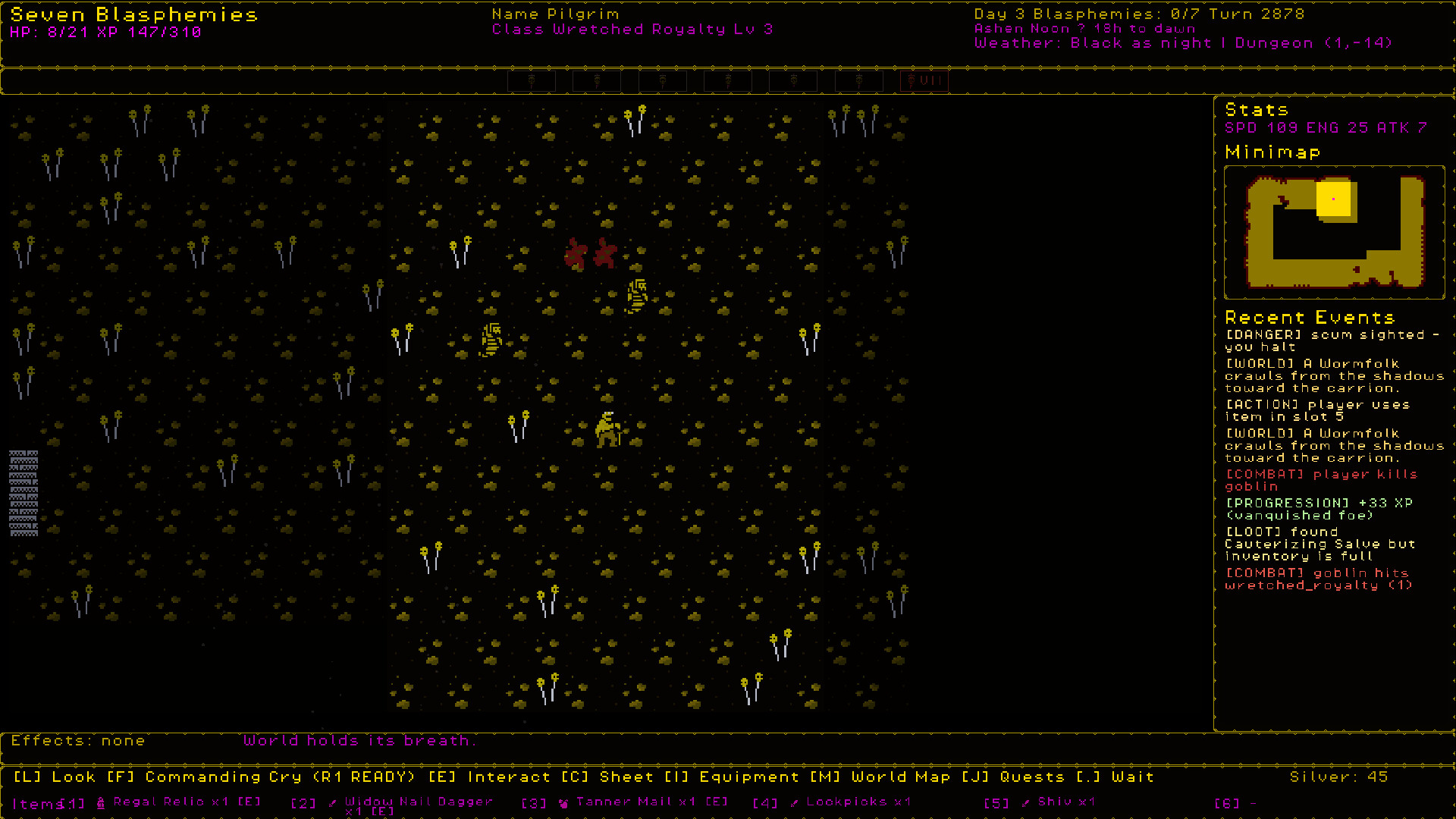
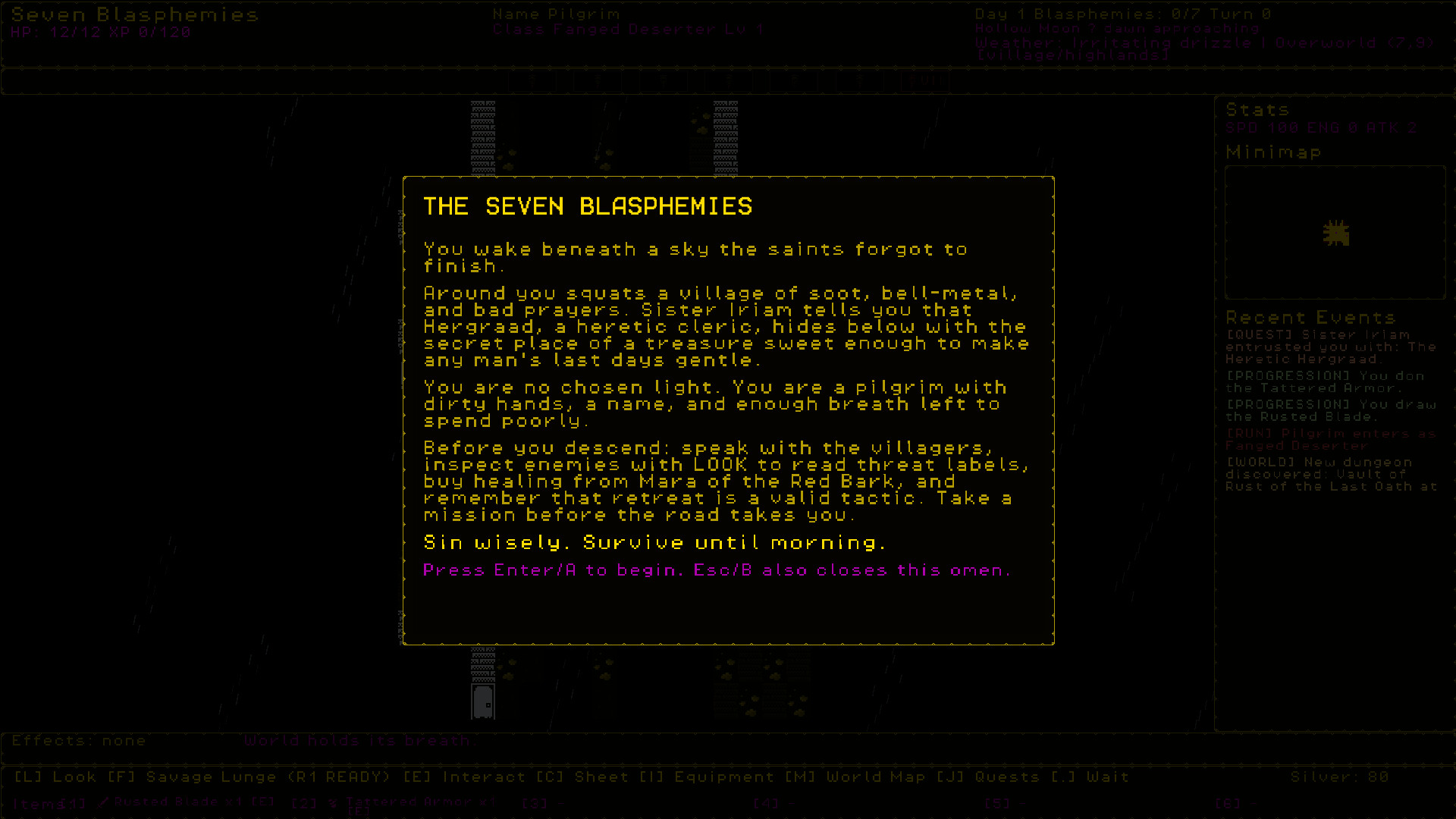
The visual style uses limited‑color pixel art to create a stark, apocalyptic atmosphere while keeping the battlefield readable. The world’s decay is reflected in the palette.
This aesthetic supports the game’s focus on scarcity and danger, ensuring that visual cues remain clear even as visibility may shrink.
- Pay attention to color cues; they often indicate environmental changes tied to Blasphemy effects.
- Use the readability of the art to plan tactical positioning, especially in tight corridors.
COMMUNITY
Player discussion