 GameWiki

GET YOUR BEARINGS
About RimWorld
RimWorld is a colony simulation shaped by the needs and histories of its people and by events chosen by an AI storyteller. A colony can have stocked rooms and impressive walls while still struggling because nobody has time to cook, treat wounds, or carry ingredients to a workbench. Survival depends on connecting your building plan with the work your actual colonists can perform.
Begin with the scenario, biome, difficulty, and expansions you have selected. Those choices change the colony's resources and challenges, so this guide does not prescribe one universal opening blueprint. It focuses on keeping essential work visible, protecting recovery capacity, and expanding at a pace that your food production and defenses can support.
01 / THE GUIDE
Start with shelter that supports daily work
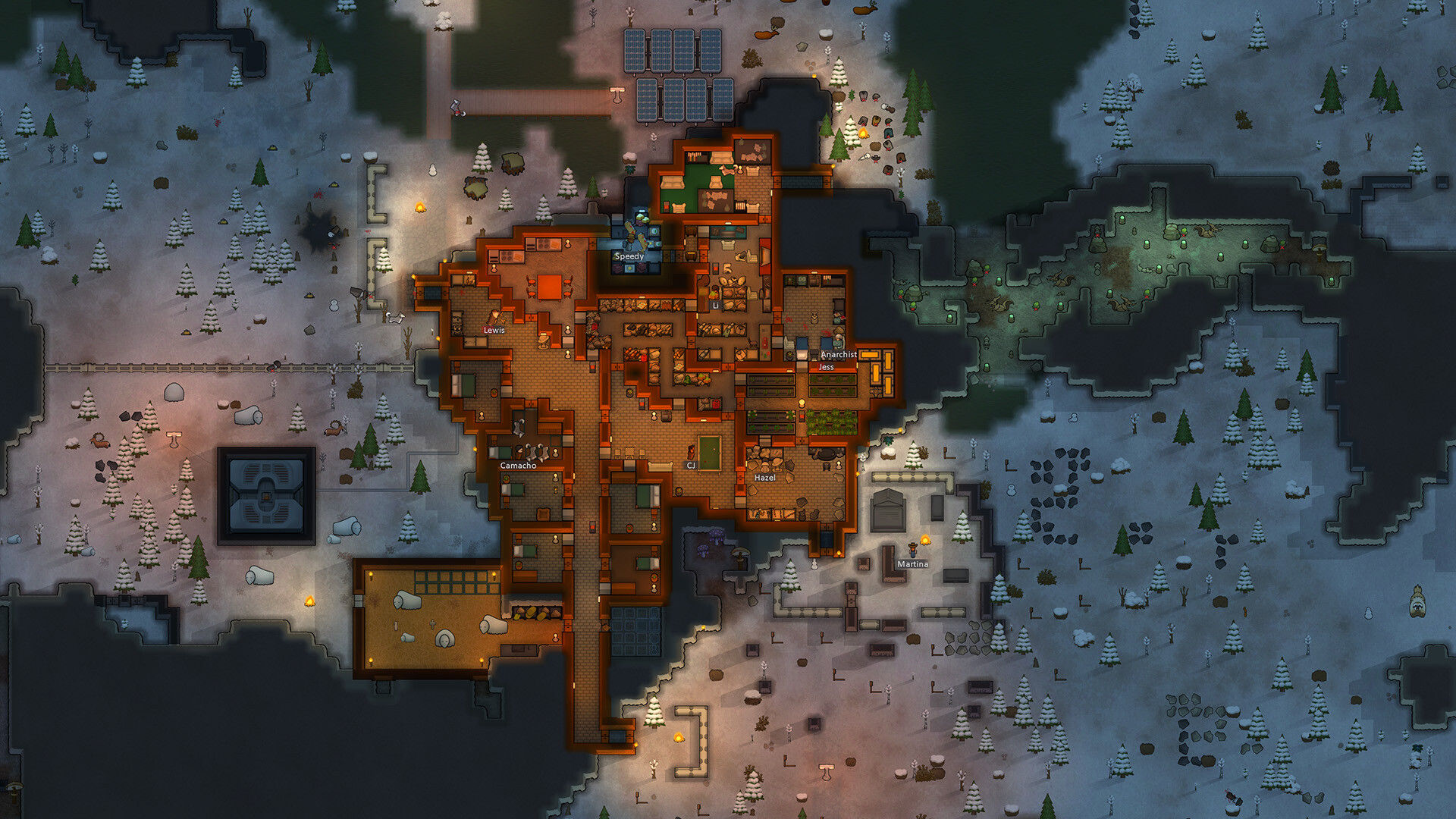
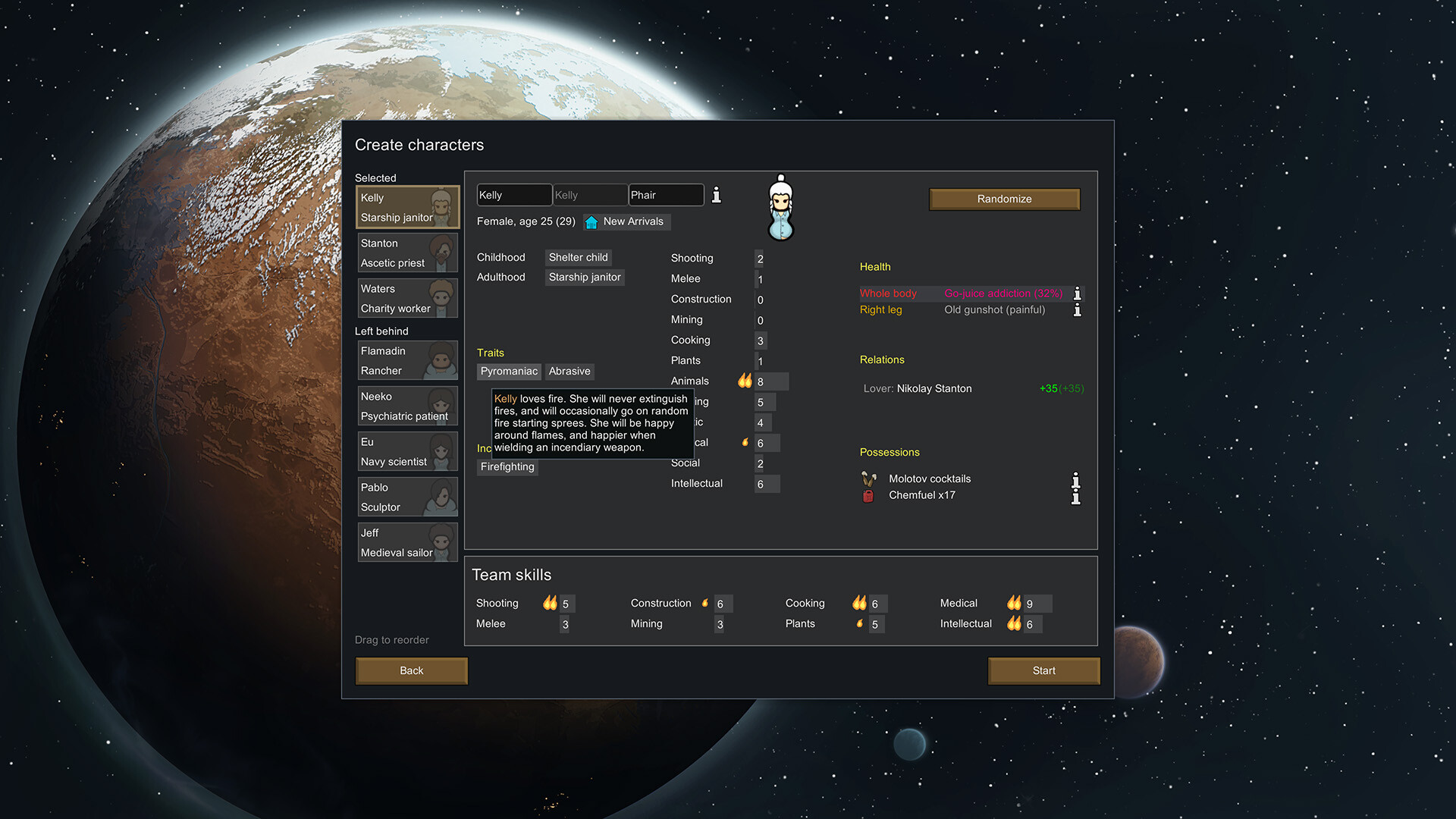
Inspect the starting colonists before assigning the settlement's first tasks. Skills, health, traits, and work restrictions matter more than a balanced-looking list of names. Identify who can reliably build, grow food, cook, and provide medical care. Choose a manageable opening shelter near the resources those jobs will use rather than spreading unfinished projects across the map.
Keep essential storage protected and place frequently connected activities close together. A cook walking a long distance for every ingredient loses time that the work-priority grid cannot recover. Separate future expansion ideas from the structures needed today, and finish a functioning room before surrounding it with several incomplete replacements.
- Read work restrictions as well as skill levels.
- Choose the first shelter for access and workable construction.
- Keep commonly used ingredients near the workstation that consumes them.
02 / THE GUIDE
Assign responsibilities and inspect the actual result
Use the Work tab to make responsibility explicit. Manual priorities let you distinguish essential jobs from optional work, but a colonist still needs time, materials, and a reachable task. If meals are not appearing, inspect the bill, ingredients, allowed work, and the assigned cook's current activity before increasing the priority of everything.
Give specialists a limited set of primary jobs and retain backups for emergencies. Hauling, cleaning, and replenishing supplies need attention even though they do not create a new building. After changing priorities, watch a normal work period: the useful test is whether the colony completes its essential cycle without repeated forced commands.
- Assign a clear owner to cooking and medical work.
- Check production bills when a workstation remains idle.
- Keep backup coverage for an injured or unavailable specialist.
03 / THE GUIDE
Connect food reserves with medical recovery
Plan food around the biome's growing conditions and the time until the next reliable harvest. Raw ingredients, finished meals, storage conditions, and cooking labor are separate parts of the chain. A room full of harvested crops does not automatically mean colonists will receive meals when the only cook is bedridden or busy elsewhere.
Prepare medical space and supplies before a difficult fight. Inspect injuries and treatment requirements, assign appropriate care, and protect a recovery period instead of immediately sending wounded colonists back to demanding work. Keep useful paths clear between medicine, beds, and the people providing treatment. Review animal and prisoner food needs as the colony grows.
- Check the next harvest against the current reserve.
- Keep the cooking area and its supply route practical.
- Set up medical care before deliberately taking a risky encounter.
04 / THE GUIDE
Read mood problems instead of guessing
Open a struggling colonist's needs and thoughts to see the actual causes of low mood. Hunger, pain, poor surroundings, insufficient recreation, and personal events require different responses. Buying another luxury item may not help somebody who never has time to use recreation or is repeatedly eating away from a suitable dining area.
Design the schedule and settlement around ordinary needs as well as production. Provide time and reachable places for rest, eating, and recreation, then check whether the routine works during a normal day. Temporary emergencies may justify changing the plan, but permanent emergency work can create the next crisis through exhaustion and worsening mood.
- Read the largest negative thoughts before spending resources.
- Check whether recreation is reachable and actually used.
- Review schedules after changing shifts or adding a major workplace.
05 / THE GUIDE
Grow with defense and recovery capacity
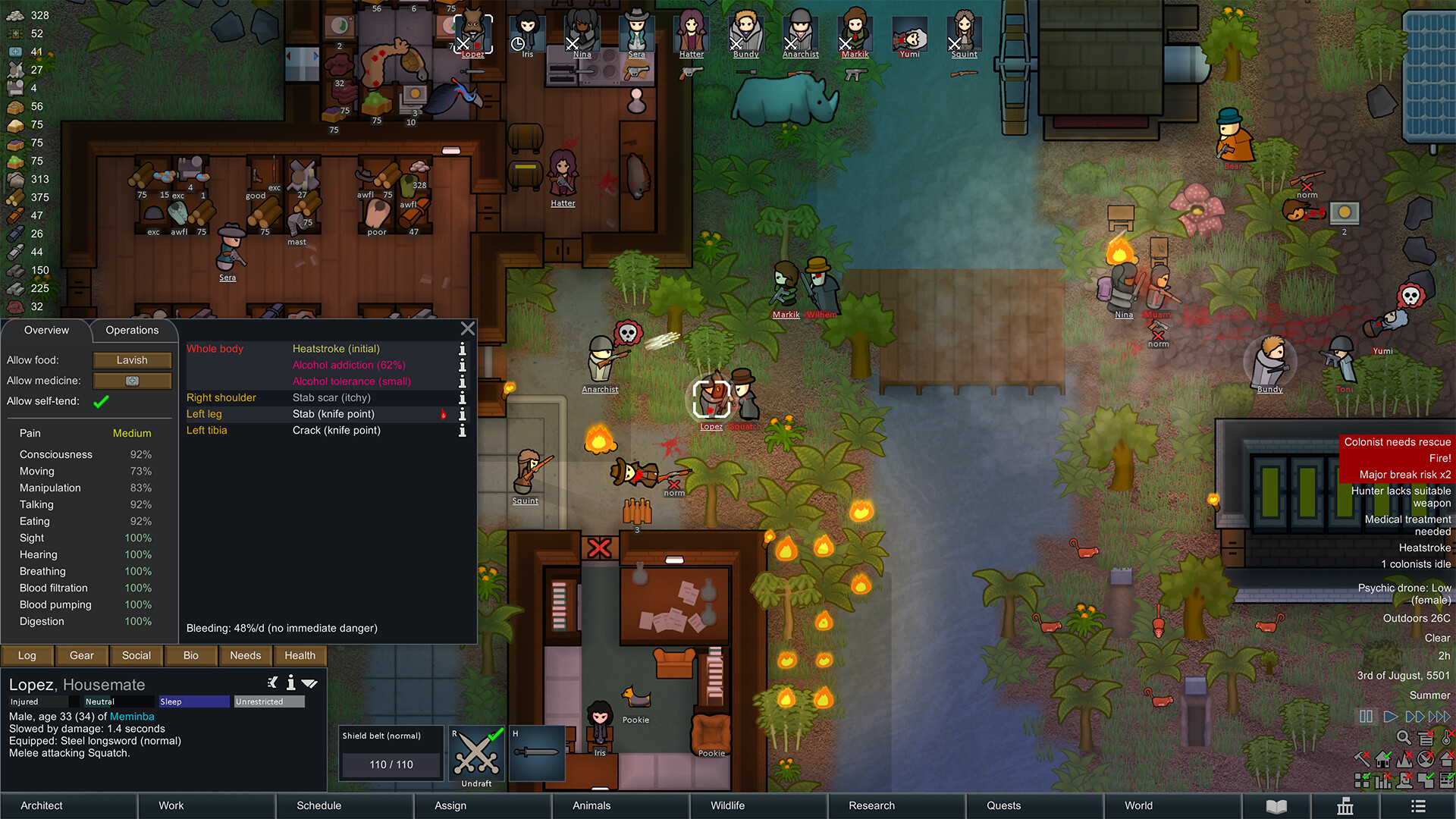
Inspect likely approaches and choose defensive positions that give your colonists useful protection and a retreat path. A weapon is not a substitute for knowing where its user will stand or how a wounded defender will be rescued. Keep firefighting access and vulnerable supplies in mind when designing the settlement's perimeter.
New valuables, animals, prisoners, and colonists create obligations as well as opportunities. Expand because the colony can feed, house, protect, and integrate the addition. After a raid or disaster, repair the essential food, power, and medical systems before resuming an ambitious project. A successful recovery is meaningful progress in a game designed to generate difficult stories.
- Choose positions before an enemy reaches the living area.
- Keep a route for rescuing wounded defenders.
- Recheck food and work coverage before accepting a major expansion.
COMMUNITY
Player discussion