 GameWiki

GET YOUR BEARINGS
About Pound for Pound: MMA Promotion Simulator
Pound for Pound puts you in charge of an MMA promotion, beginning with unknown fighters and a local venue. You sign contracts, schedule events, choose venues, and grow the brand while rival promotions chase the same talent.
The game tracks fighter relationships, matchmaking based on attributes and styles, and the competitive actions of other promotions. Success unlocks new weight classes, larger venues, sponsorships, TV deals, and new territories.
01 / THE GUIDE
Building Your Promotion
You start with a small roster and local venues, signing unknown fighters and arranging modest events. As events succeed, the game unlocks additional weight classes, bigger venues, sponsorships, TV deals, and new territories, expanding the organization’s reach.
Progress is tied to performance: profitable events and good management open larger opportunities, while missteps can stall growth. The expansion path is reflected in the unlocking of divisions and territories as the promotion develops.
- Prioritize early events that generate profit to accelerate venue upgrades.
- Balance signing prospects with retaining existing talent to keep steady growth.
02 / THE GUIDE
Fighter Relationships
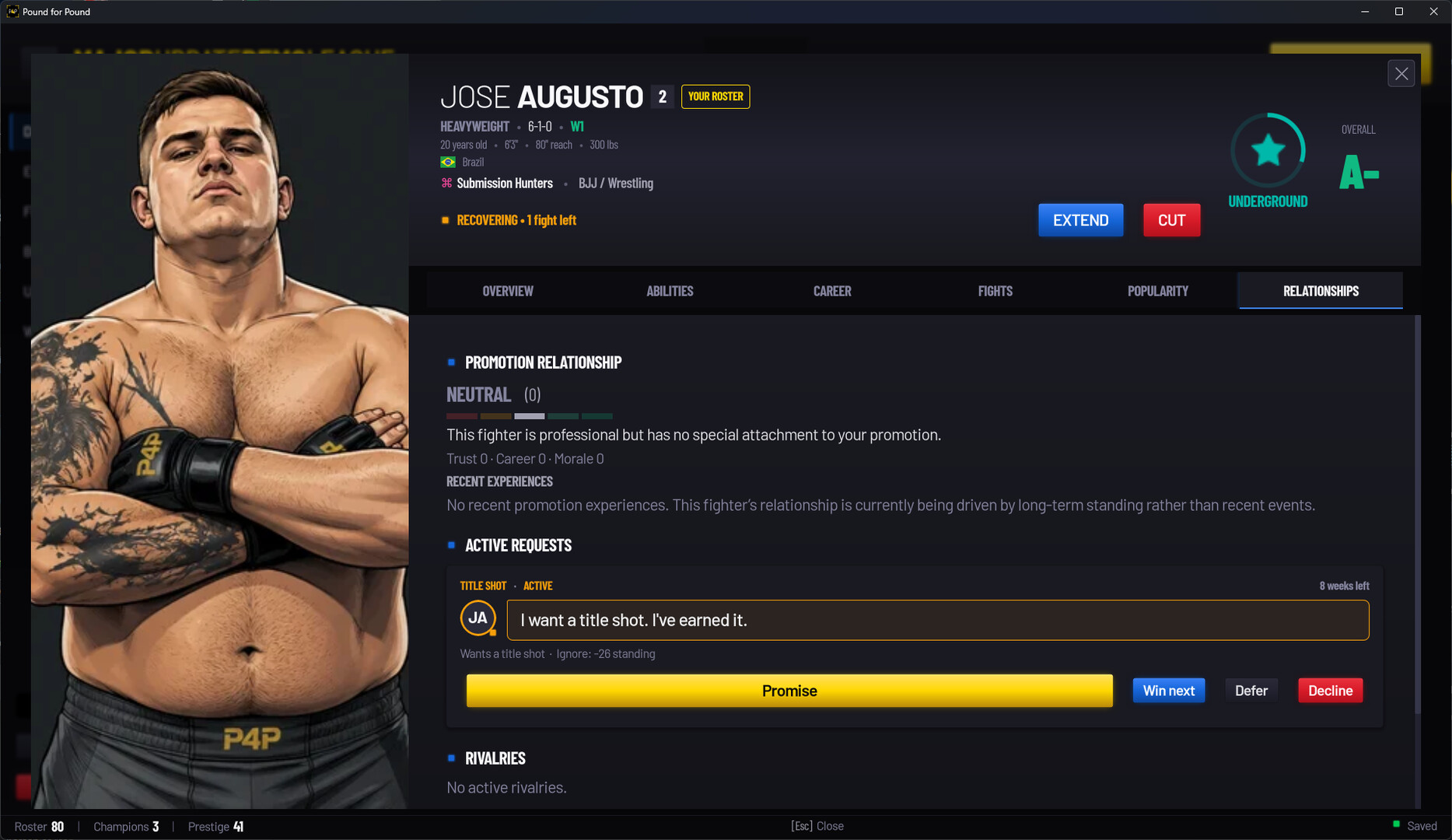
Fighters develop loyalty based on how you treat them. Consistent pay, kept promises, and timely bookings increase loyalty, making re‑signing easier and encouraging fighters to take risks in bouts.
Neglecting contracts, breaking promises, or leaving fighters waiting can erode loyalty, leading to pay raises, release requests, or loss of talent to rival promotions.
- Keep promises to maintain loyalty and make re-signing easier.
- Monitor individual fighter requests to anticipate potential loyalty drops.
03 / THE GUIDE
Matchmaking and Styles
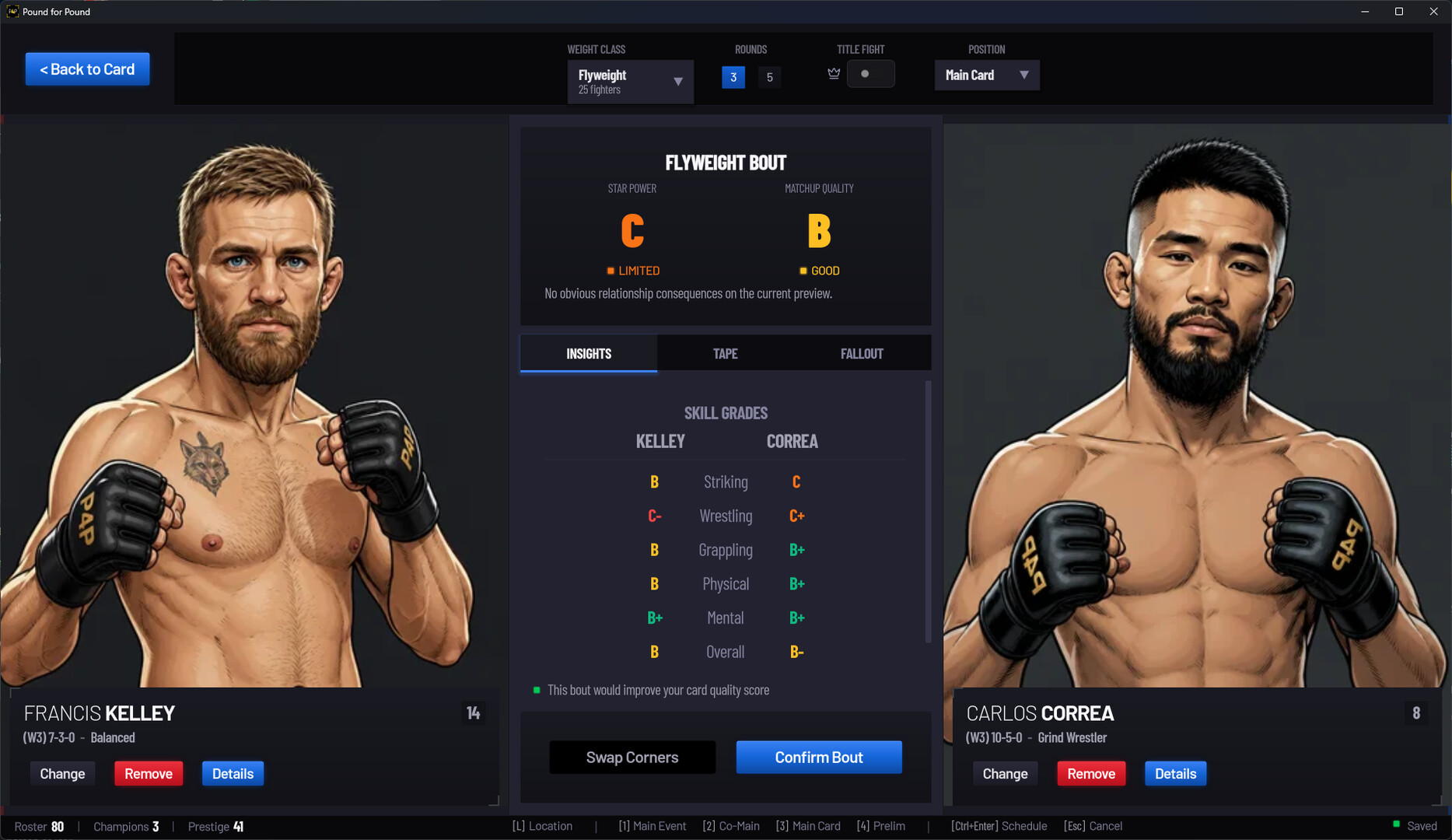
Each bout is driven by fighter attributes, tendencies, and styles. Wrestlers can smother dangerous strikers, while pressure fighters can overwhelm patient counter‑punchers, creating varied tactical outcomes.
Understanding these dynamics helps you craft compelling fights, protect investments, and develop stars that resonate with fans and shape division histories.
- Pair contrasting styles for exciting matchups that attract fan interest.
- Use veteran experience to mentor prospects within a division.
04 / THE GUIDE
Negotiation Mechanics
Booking fights involves more than offering a bout; fighters consider personality, career stage, money, rivalries, deadlines, and specific requests such as title shots or hometown bookings.
You can make promises—title shots, rematches, main‑card spots—to close deals, but broken promises are remembered and affect future negotiations.
- Use targeted promises to secure high‑profile fights without overextending resources.
- Track promised outcomes to avoid damaging future negotiations.
05 / THE GUIDE
Rival Promotions
Other promotions compete for the same prospects, schedule events on key dates, and build their own legacies. Their actions can cause talent to slip away if you are not attentive.
Staying ahead by monitoring rival moves and securing contracts promptly helps maintain momentum and prevents loss of key fighters.
- Watch rival event calendars to avoid scheduling conflicts for top talent.
- Secure long‑term contracts with rising stars before rivals can intervene.

COMMUNITY
Player discussion