 GameWiki
GET YOUR BEARINGS
About Pharaoh: A New Era
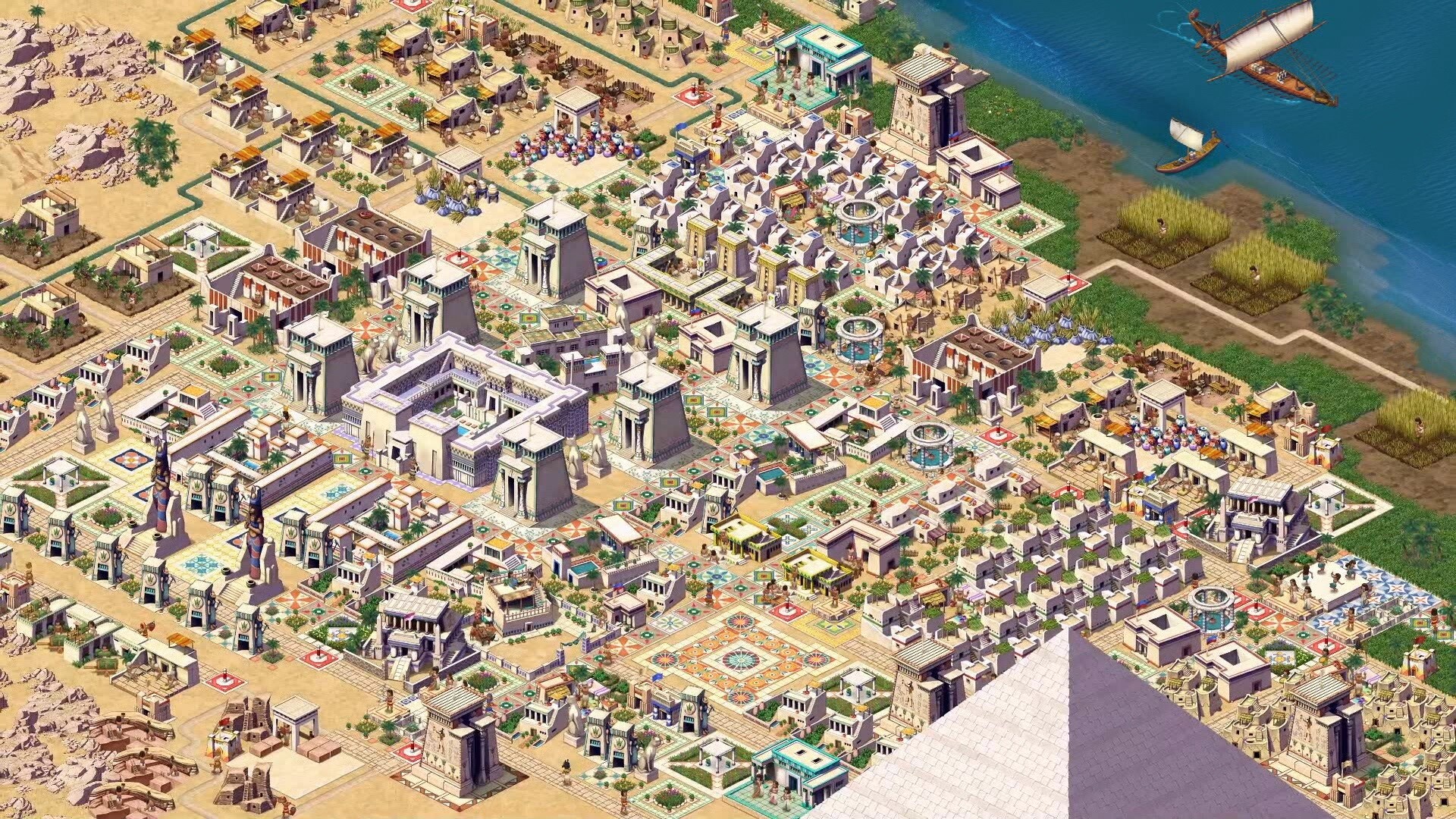
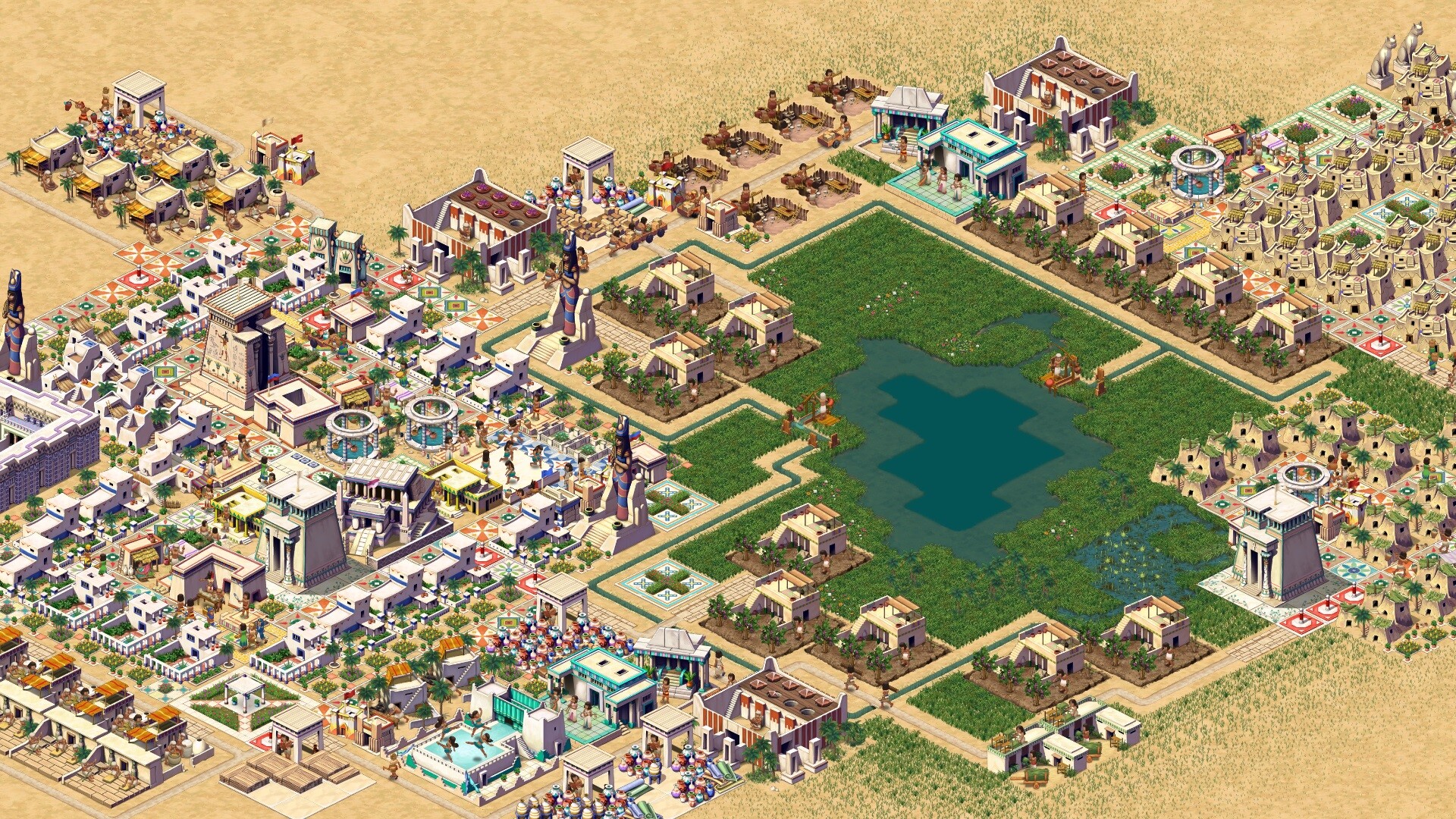
Pharaoh™: A New Era is a remake of the classic city‑builder set in Ancient Egypt. It offers over 50 missions, HD isometric graphics, a re‑orchestrated soundtrack, and a redesigned UI while preserving the original depth of managing a Nile‑based civilization.
Players can experience a story‑driven Campaign that teaches core mechanics, or a Sandbox mode that lets them construct cities without preset objectives, focusing on agriculture, trade, health, education, and the era’s polytheistic religion.
01 / THE GUIDE
Campaign Mode
The Campaign presents a series of more than 50 missions that introduce the game's systems step by step. Each mission defines specific goals, requiring the player to balance production, trade, and religious structures while reacting to floods, wars, or plagues.
As the player progresses, new building options and challenges appear, expanding the toolbox for city development. The narrative thread ties these missions together, offering a unique story set in the heart of Ancient Egypt.
- Observe how early missions structure resource flow; mimicking those patterns can smooth later stages.
- When a new building becomes available, compare its cost and output with existing structures before expanding.
02 / THE GUIDE
Sandbox Mode
Sandbox mode removes mission‑specific objectives, allowing players to build any Egyptian metropolis they desire. The mode provides building tools, monuments, and management systems for constructing your city at your own pace.
Because there are no preset goals, players can experiment with city layout, monument placement, and trade routes at their own pace, using the same indicators such as the Nilometer and population mood tools.
- Use the copy‑paste building feature to test alternative city layouts quickly.
- Try different monument arrangements as you shape your city.
03 / THE GUIDE
Economy and Trade
Economic success relies on managing internal production of resources like grain, stone, and gold, and on establishing trade with neighboring cities. Markets distribute these resources, influencing population growth and building capacity.
External trade can offset shortages caused by Nile flooding or wartime disruptions, while also requiring trade relationships that must be monitored.
- Watch market indicators regularly to anticipate shortages before they affect growth.
- Maintain trade with multiple partners to reduce reliance on a single source during crises.
04 / THE GUIDE
Religion and Culture
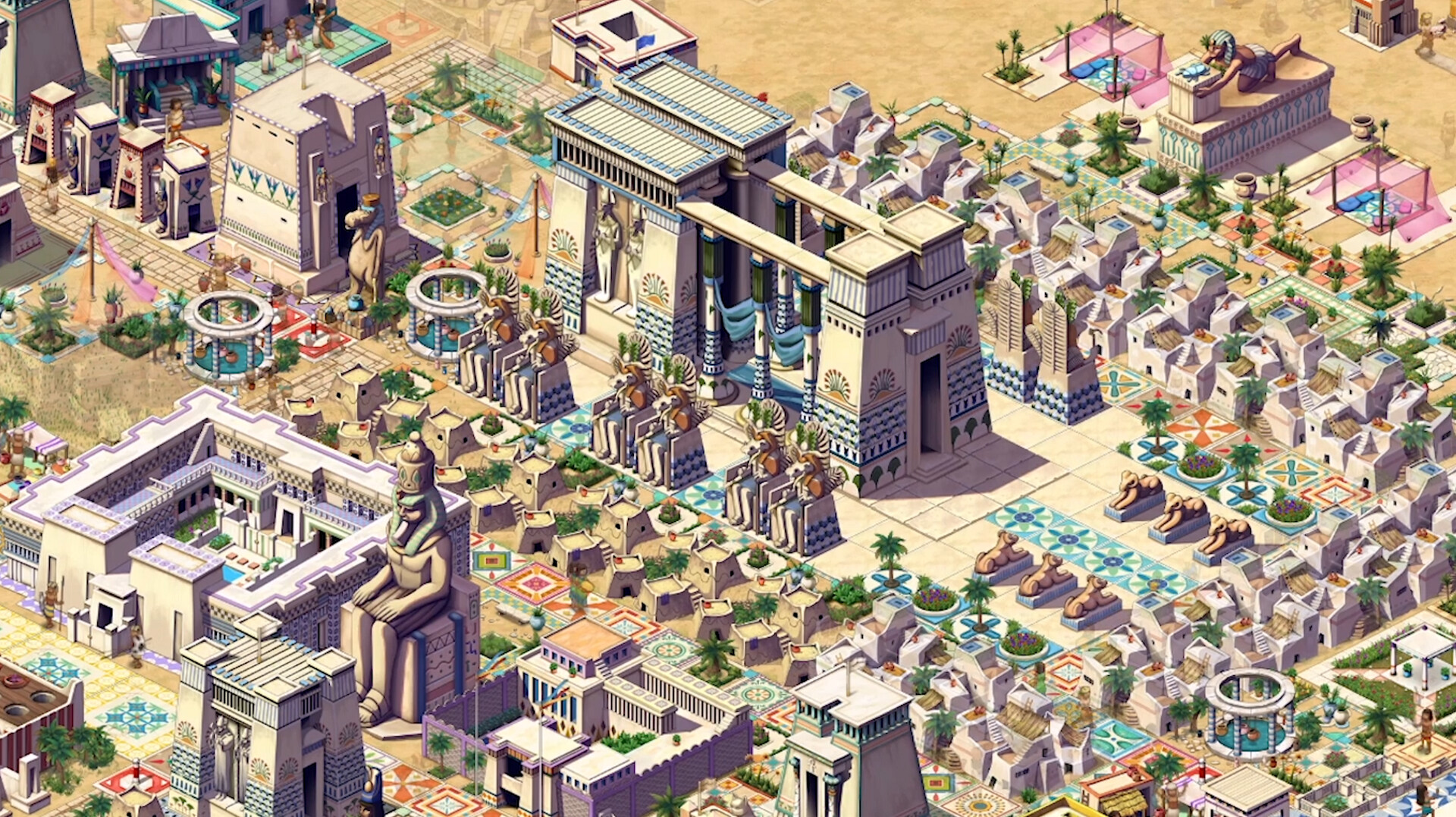
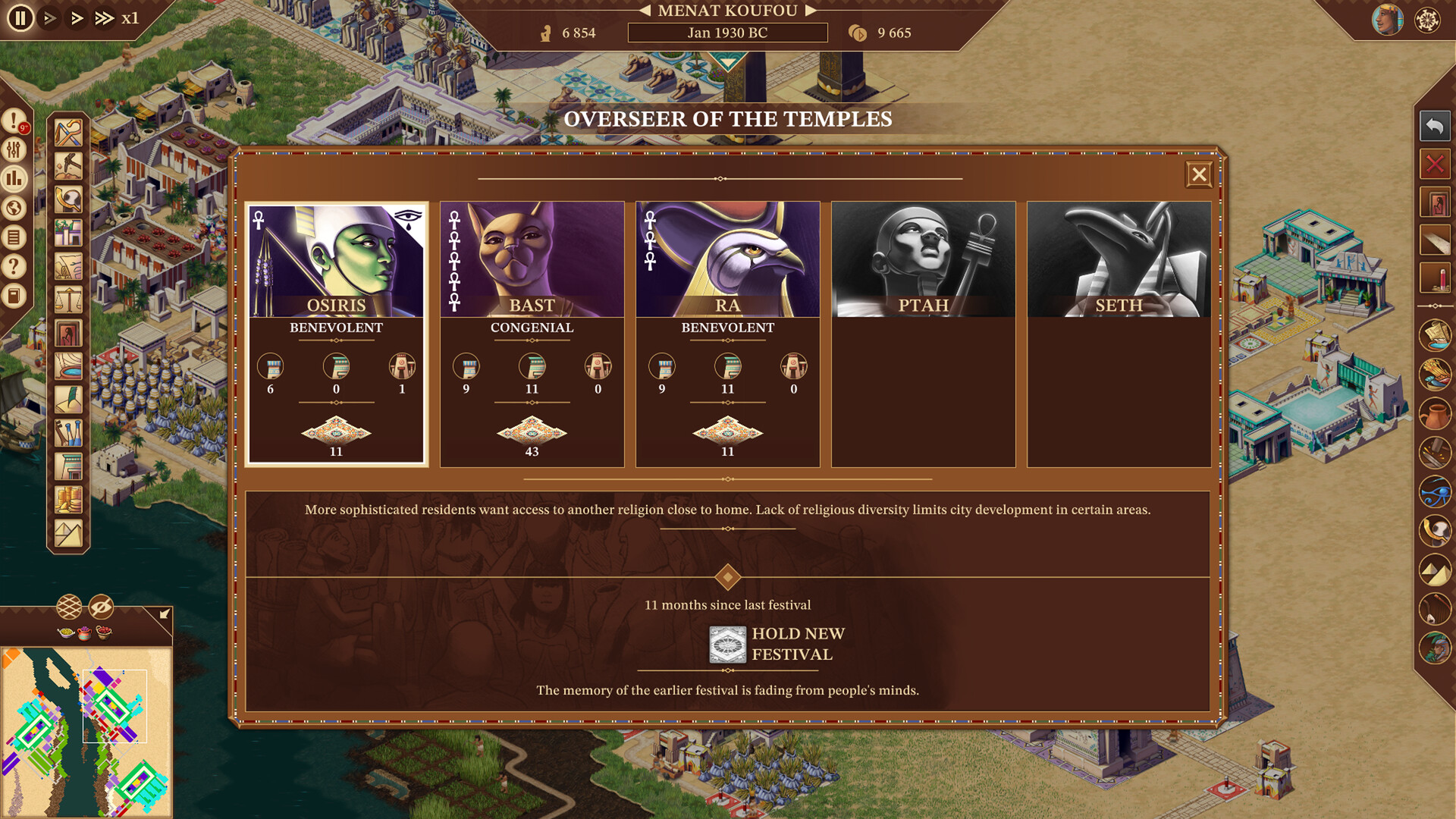
Temples, mausoleums, and festivals represent the polytheistic religion and provide health and cultural benefits. Iconic monuments such as the pyramids, Sphinx, and Lighthouse are among the monuments a pharaoh can erect.
Neglecting religious structures can lead to reduced health or cultural scores, which may bring the furies of the gods, emphasizing the need for balanced placement.
- Place temples near residential districts to maximize cultural impact.
- Balance monument construction with essential services to avoid overextending resources.
05 / THE GUIDE
UI and Management Tools
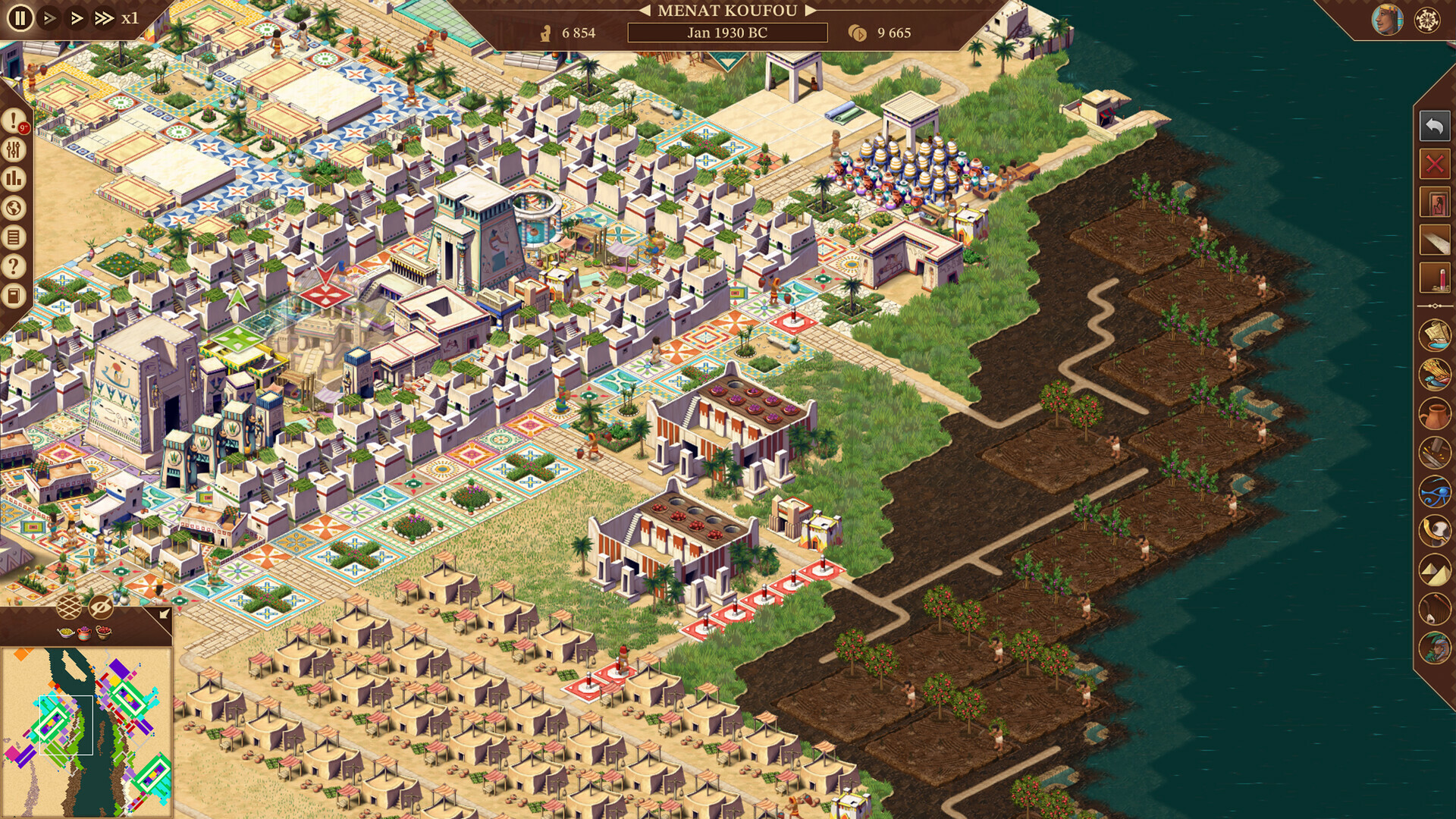
The remake adds a redesigned UI that includes a Nilometer for tracking the frequency and quality of Nile floods, as well as new worker‑management options like Fixed Worker Ratio and Global Labor Pool. These tools clarify population needs and production capacity.
Additional indicators display health, education, and mood metrics, allowing players to respond promptly to emerging conditions and adjust policies accordingly.
- Check the Nilometer regularly to anticipate flood impacts on agriculture.
- Adjust the Fixed Worker Ratio when labor shortages appear to keep production steady.
COMMUNITY
Player discussion