 GameWiki

GET YOUR BEARINGS
About Opus Magnum
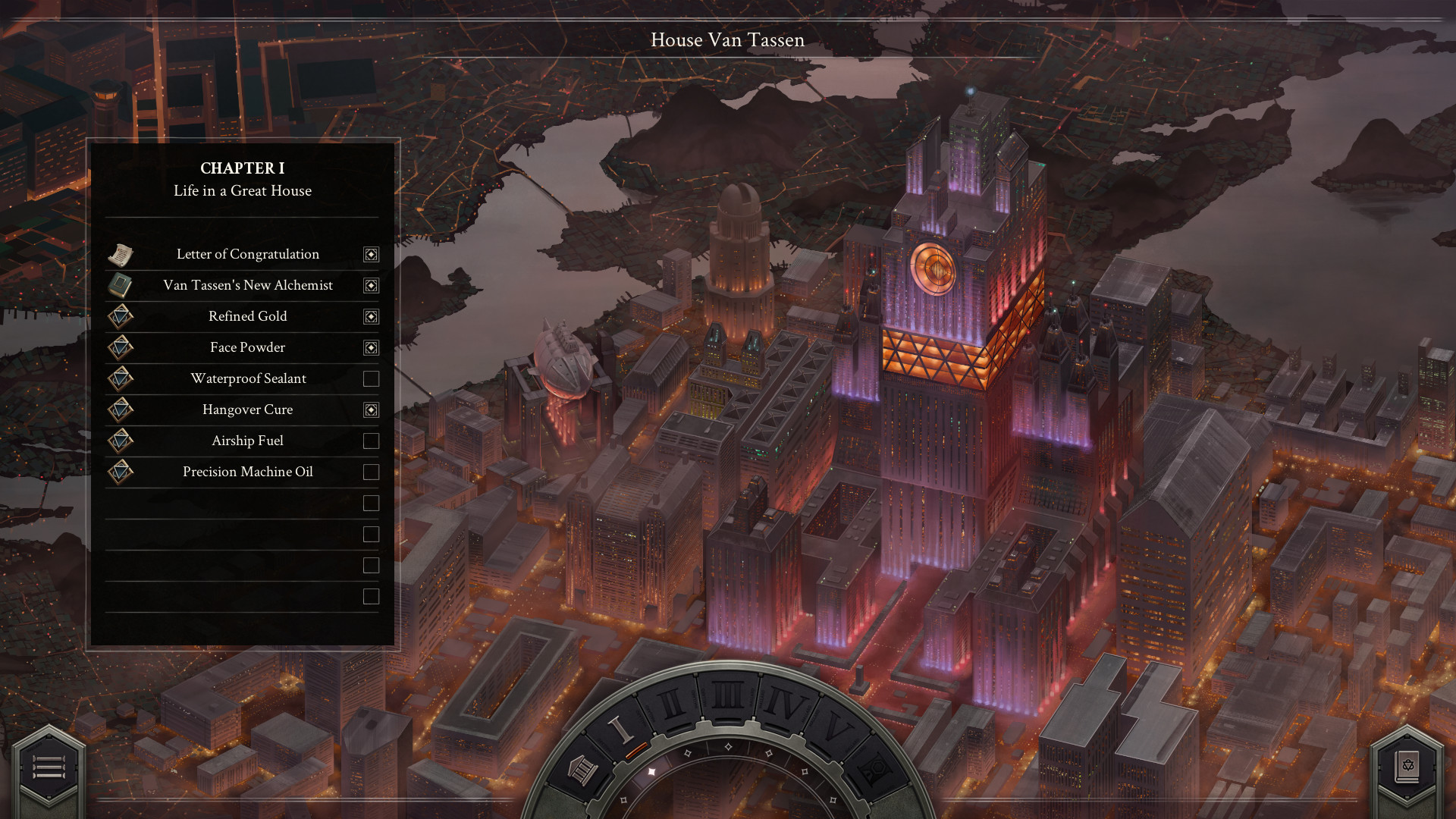
Opus Magnum puts players in the role of Anataeus Vaya, a newly appointed Head Alchemist for the venerable House Van Tassen. Using a transmutation engine, you construct machines from programmable arms, tracks, and exotic devices to synthesize remedies, gems, weapons, and more. The game blends a narrative of intrigue with open‑ended puzzles that reward speed, simplicity, and compactness, while a built‑in editor and Steam Workshop let the community expand the experience.
01 / THE GUIDE
Machine Design
Players assemble machines from a toolbox that includes programmable arms, customizable tracks, Van Berlo’s wheel, and the Glyph of Animismus. Each component can be arranged to move, rotate, and transform alchemical substances within the transmutation engine.
The design process is visual and iterative; you can test, adjust, and refine your layout until it meets the puzzle’s requirements. Successful machines are judged on criteria such as speed, part count, and footprint.
- Start with a clear flow of inputs to outputs before adding complex devices.
- Reuse arms and tracks where possible to keep the footprint low.
02 / THE GUIDE
Open‑Ended Puzzles
Each challenge can be solved in many ways, and the game tracks three performance metrics: fastest completion, fewest parts, and smallest area. Players can compete against friends and the global community for leaderboard positions.
Solutions can be exported as animated GIFs, allowing creators to showcase elegant designs and compare approaches.
- Aim for a balanced solution that scores well on all three metrics.
- Review top leaderboard entries for inspiration on alternative layouts.
03 / THE GUIDE
Steam Workshop Integration
Opus Magnum includes a puzzle editor that uploads creations directly to the Steam Workshop. Community‑submitted puzzles appear in the Journal of Alchemical Engineering, curated by Zachtronics.
Players can browse, download, and solve these user‑generated challenges, extending replay value beyond the base campaign.
- Test your puzzle thoroughly before publishing to ensure it is winnable.
- Use the editor’s preview mode to verify solution paths.
04 / THE GUIDE
Solitaire Minigame
Sigmar’s Garden offers an alchemy‑themed solitaire experience that can be played when you need a break from engineering. It provides a low‑pressure way to stay engaged with the game’s theme.
The minigame is self‑contained and does not affect progress in the main puzzles.
- Use the minigame to relax between challenging design sessions.
- Observe any pattern recognition that might help in larger puzzles.
05 / THE GUIDE
Story and Setting
Set in a city of ancient Houses, the narrative follows Anataeus Vaya as he navigates political intrigue and hidden dangers. Alchemists wield the power to create almost anything, making them both coveted and perilous.
The story unfolds through dialogue and environmental details, providing context for each engineering task.
- Pay attention to dialogue cues that hint at puzzle constraints.
- Consider the narrative backdrop when choosing aesthetic elements for your machines.


COMMUNITY
Player discussion