 GameWiki
GET YOUR BEARINGS
About Once Upon The Universe
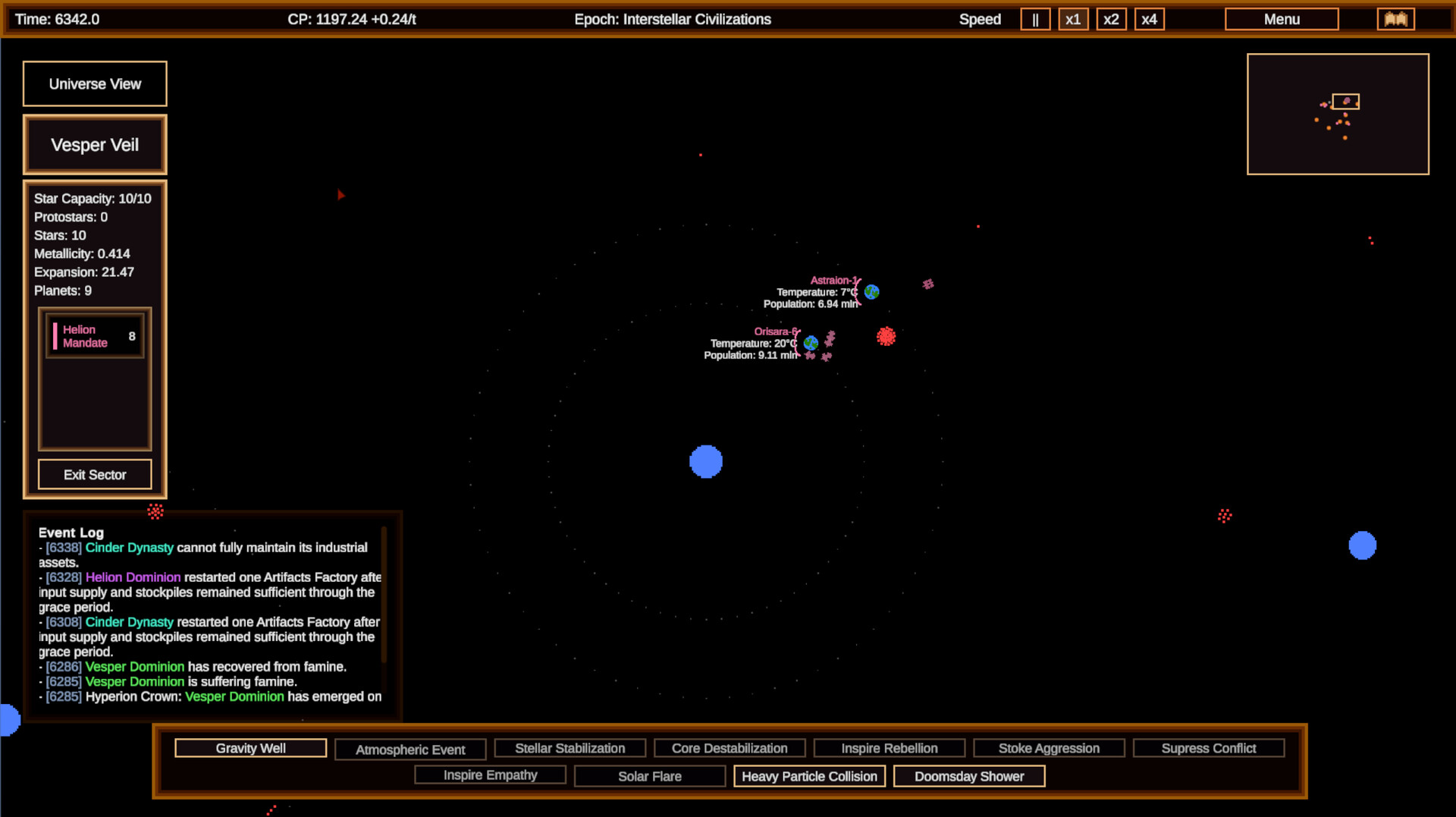
Once Upon The Universe drops you into the literal beginning of existence, right after the big bang, with only empty space and scorching hydrogen to work with. You act as a creator, shaping matter, stabilizing orbits, and guiding the rise of life across countless worlds.
The game blends god‑game mechanics with deep simulation, letting you influence planetary conditions, support emerging civilizations, and watch societies evolve—or collapse—under the pressures of war, resource limits, and stellar death. Your interventions can make your presence known, or you can observe from afar as the cosmos ages toward entropy.
01 / THE GUIDE
The Beginning
You start with a universe of empty space filled with super‑hot hydrogen, the only material available at the outset. From this primordial soup you can use gravity and other anomalies to begin forming stellar objects.
The initial stage is about shaping raw matter into stars and planets, setting the stage for later life. Your early actions determine the distribution of mass and the potential for future ecosystems.
- Observe how small changes in gravity affect the clustering of hydrogen before committing to larger structures.
- Consider creating a variety of stellar masses to diversify future planetary environments.
02 / THE GUIDE
Forming Stars and Planets
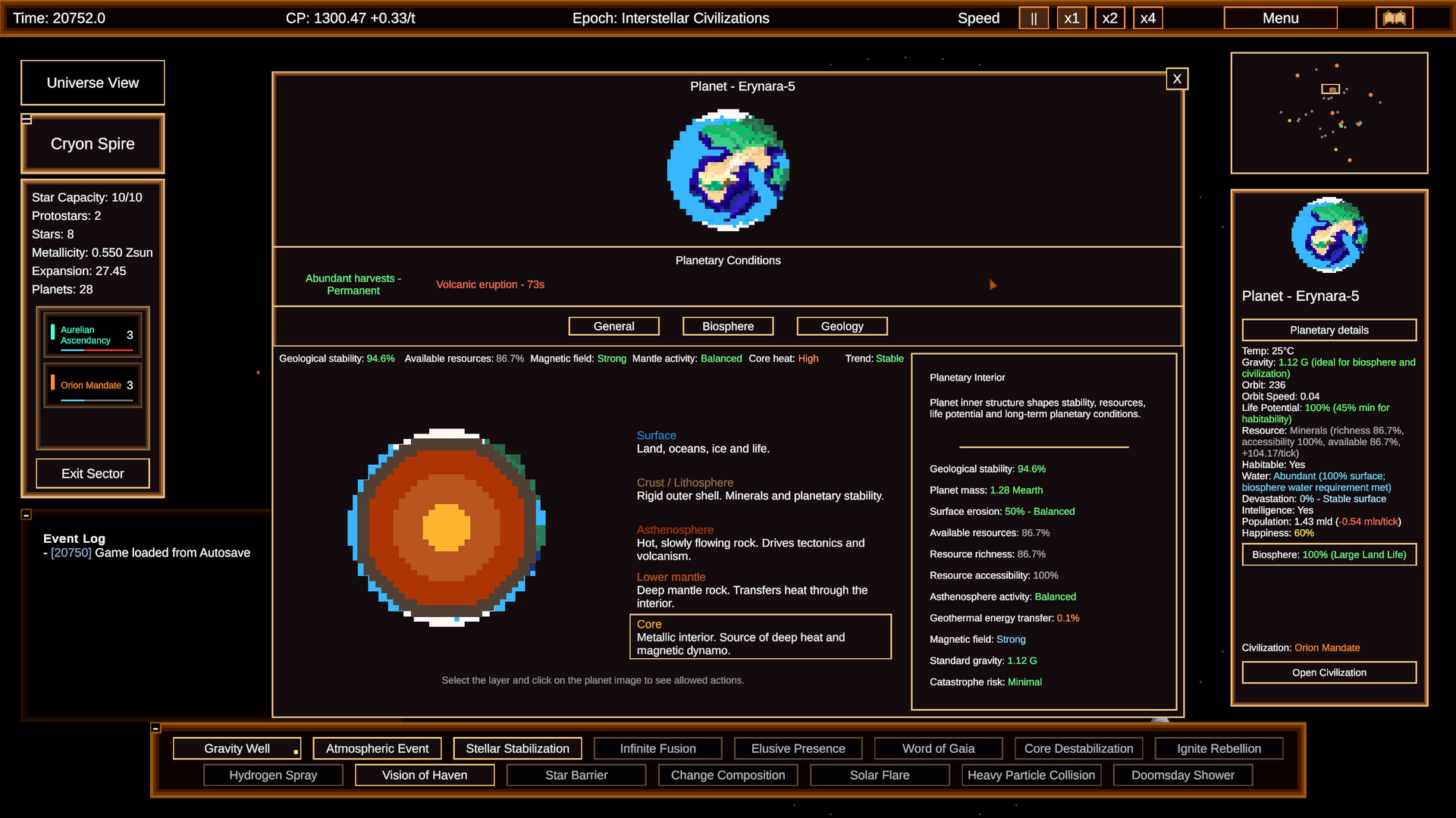
Using gravity and anomalies you can directly and indirectly form stellar objects from the available hydrogen. Once stars are stable, you can work on orbit optimization and water level adjustments to make planets habitable.
Stabilizing orbits and raising water levels are key steps toward creating a biosphere where life can eventually take its first breath. These actions lay the groundwork for ecosystems to emerge.
- Test orbit stability by making minor adjustments before committing to large planetary shifts.
- Raise water levels gradually to monitor how planetary climates respond.
03 / THE GUIDE
Cultivating Life
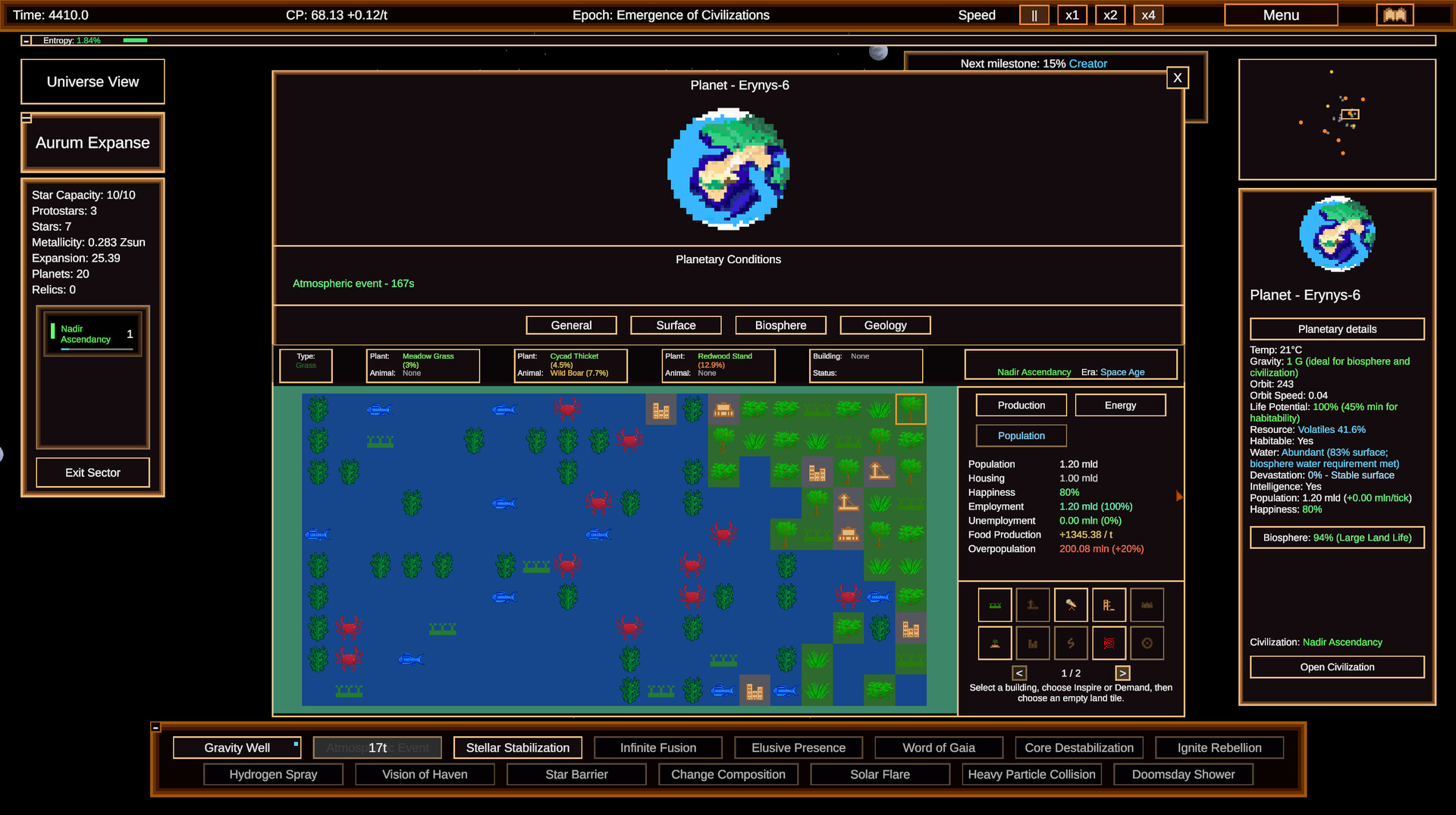
After establishing suitable planetary conditions, plants and animals can spread, compete for space, and form increasingly complex ecosystems. Life possesses its own will, so you influence rather than control its growth.
Supporting life includes adjusting planetary conditions and stabilizing stars, allowing ecosystems to develop naturally. The emergence of life is a milestone that signals the universe is moving beyond mere physics.
- Watch how ecosystems balance themselves before intervening with additional species.
- Use stellar stabilization to maintain long‑term habitability for complex life.
04 / THE GUIDE
Guiding Civilizations
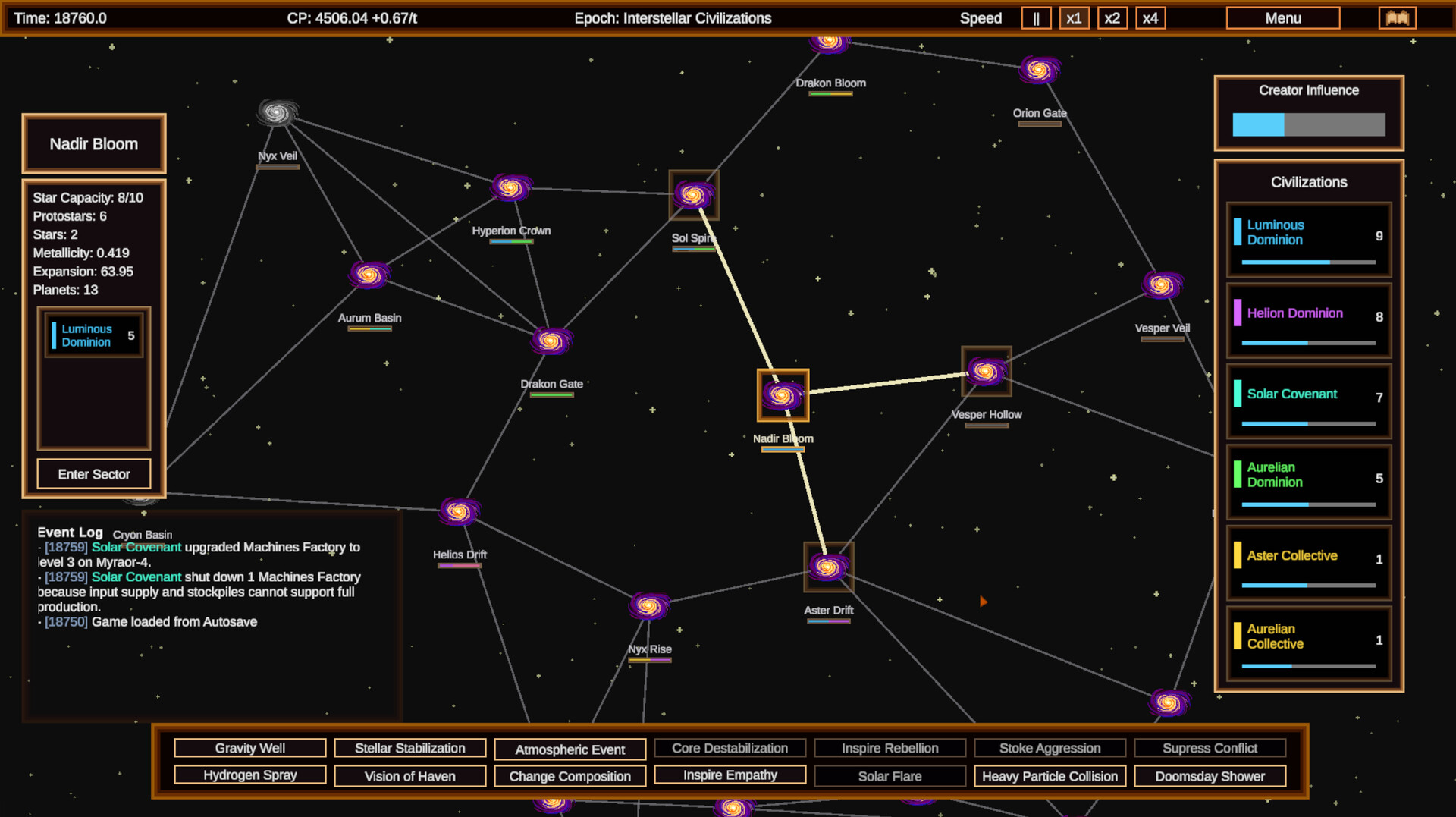
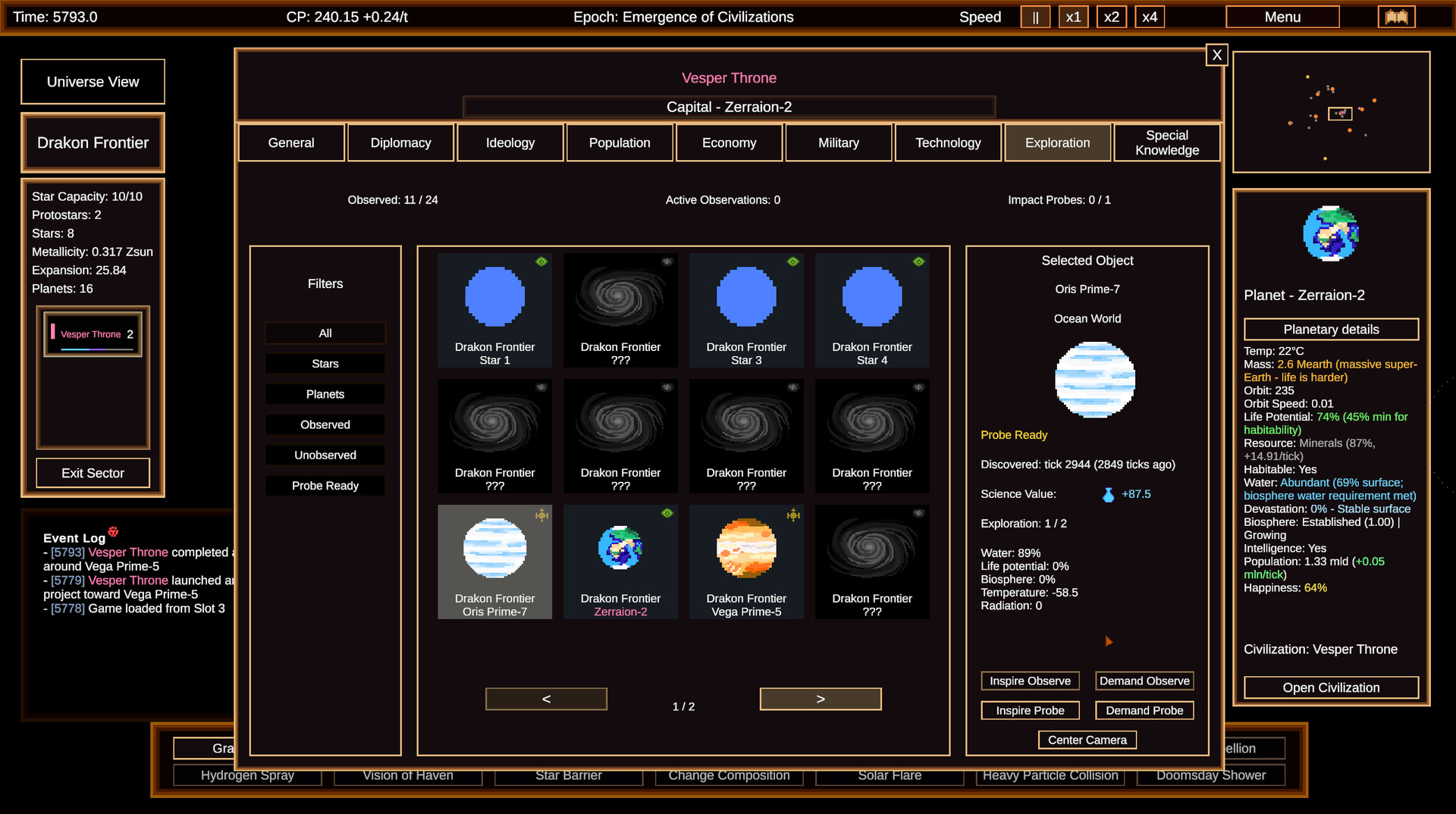
When intelligent life appears, societies can advance through several eras, eventually reaching space. You may support or interfere with their affairs, making them aware of your presence as the Creator.
Intervention can range from subtle environmental tweaks to direct actions that increase awareness. Civilizations may trade, compete, form agreements, or go to war, and not all survive the pressures they face.
- Introduce subtle environmental changes to see how civilizations adapt before using direct interference.
- Observe trade and conflict patterns to decide when a warning might be more effective than force.
05 / THE GUIDE
Aging Universe
Stars age and die, orbits can destabilize, and worlds may lose habitability. Advanced societies may build fleets, wage wars, and attempt stellar engineering projects like Dyson Spheres.
The universe continues toward entropy, and life itself counters that trend. Your role can be to save a dying star, rescue a collapsing civilization, or simply watch the inevitable decline unfold.
- Consider the long‑term impact of stellar engineering on surrounding systems before initiating it.
- Monitor planetary orbit stability as stars age to anticipate potential crises.
COMMUNITY
Player discussion