 GameWiki

GET YOUR BEARINGS
About Norland
After the Empire's collapse, Norland is a fractured land of rival kingdoms. You rule a modest realm, guiding a noble family through famine, war, and foreign threats while shaping the destiny of your line.
The game mixes medieval colony simulation with story‑driven RPG elements. Nobles manage peasants, study ancient texts, forge alliances, and command armies, and every decision influences both your dynasty and the wider world.
01 / THE GUIDE
Family Management
Each family member has distinct strengths, weaknesses, ambitions, traits, cultural backgrounds, and personal needs. Their skill scores decide which tasks—warfare, administration, scholarship, or negotiation—they excel at, while traits shape personality and capabilities.
Dissatisfaction can breed resentment, envy, and disloyalty, sometimes leading to fratricide. You can address tension with gifts, camaraderie, or decisive violence to keep the family hierarchy stable.
- Observe ambitions before assigning critical duties.
- Balance gifts with responsibilities to reduce resentment.
02 / THE GUIDE
Peasant Economy
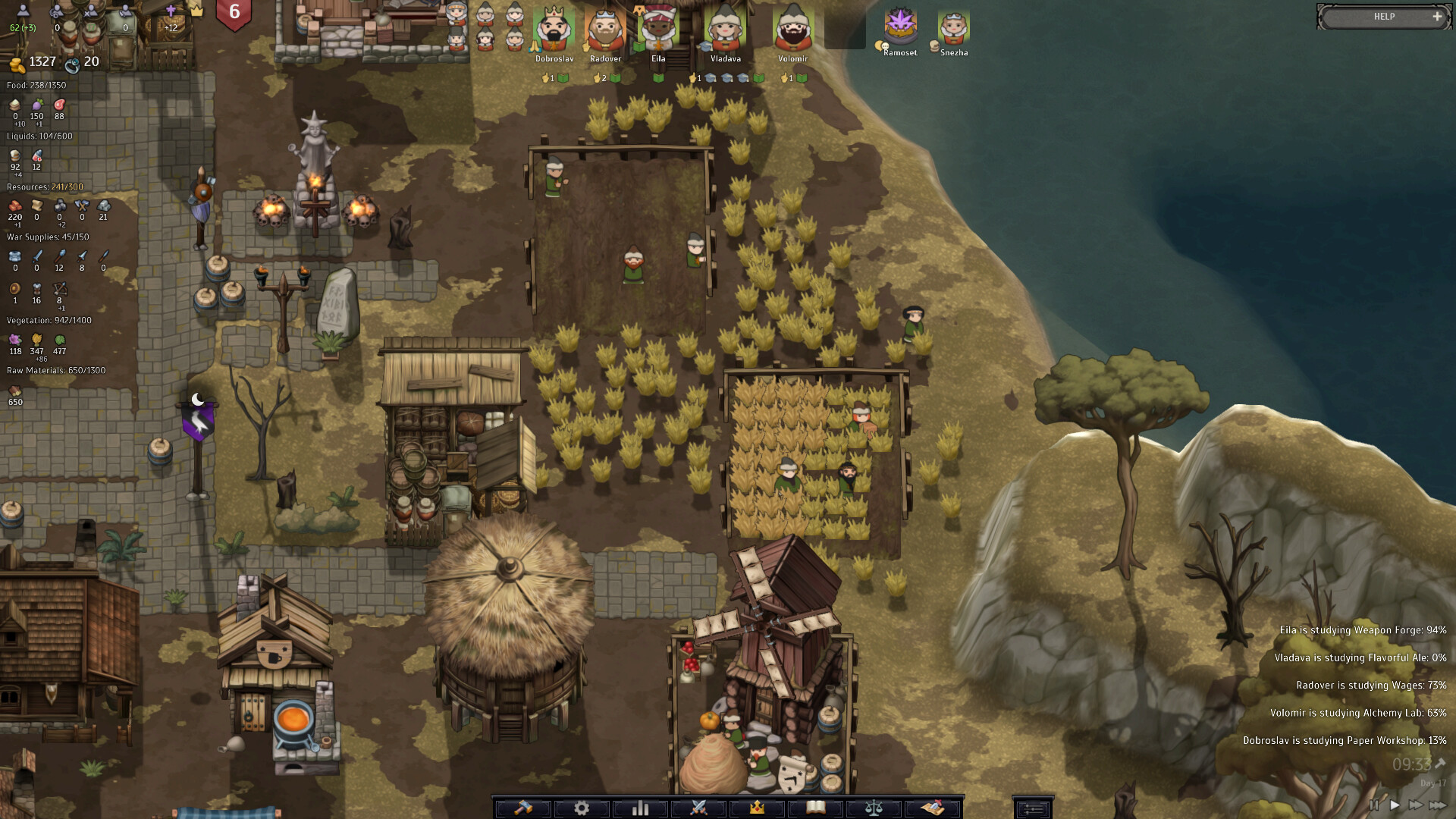
Peasants form the production backbone: they build structures, harvest resources, and craft goods. Their satisfaction hinges on daily wages and the cost of food and beer, which also affect migration and loyalty.
Cultural differences among peasants can cause friction. Hiring guards or establishing nightly patrols can curb unrest, but excessive force may provoke rebellion.
- Keep food and beer affordable to maintain morale.
- Use patrols sparingly to avoid alienating the populace.
03 / THE GUIDE
Knowledge and Books
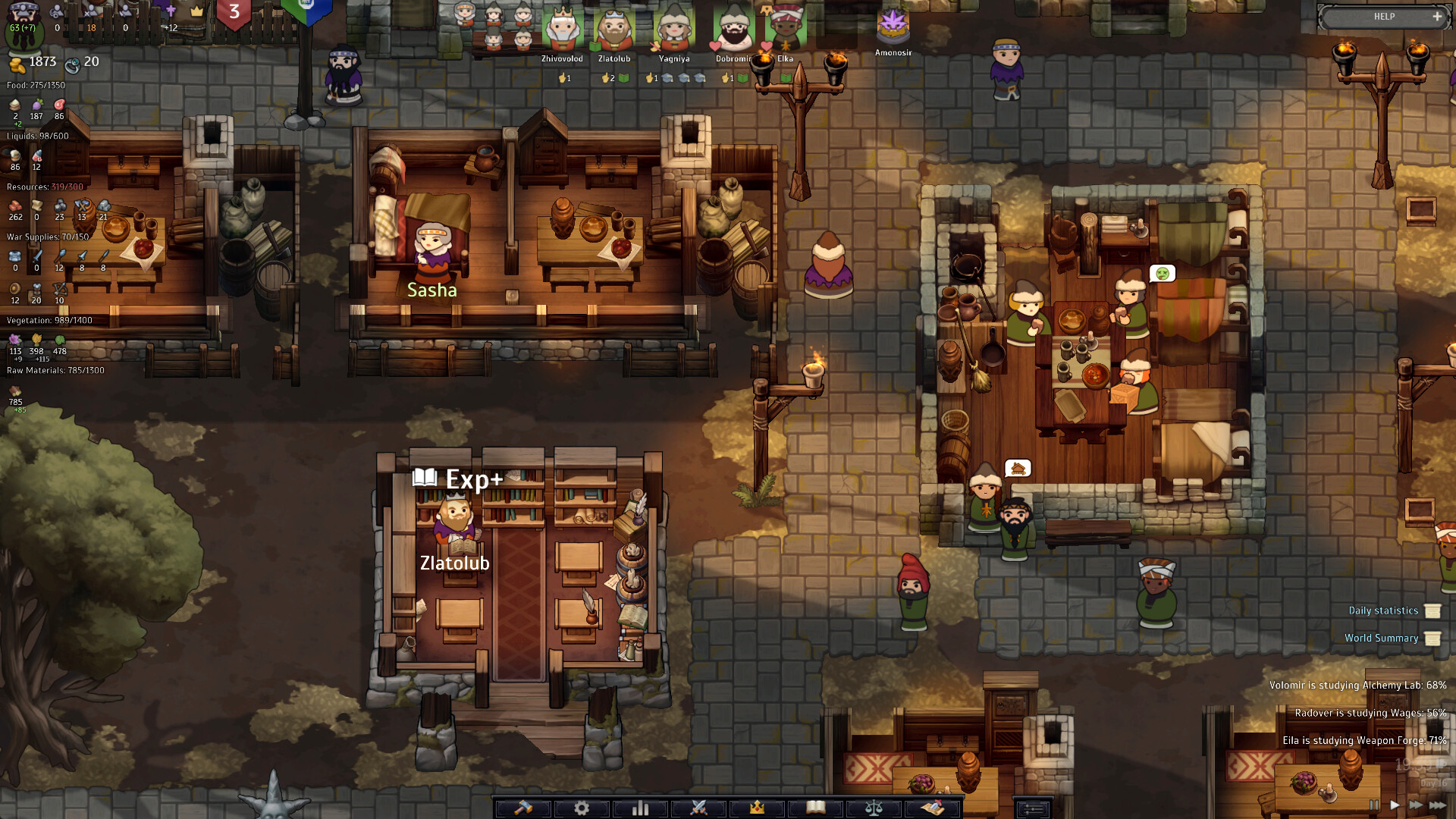
Nobles study ancient texts to unlock new buildings, tools, and technologies. Translating books into a noble’s language preserves the knowledge beyond a single lifespan.
Books can be hoarded for personal advantage or transcribed for trade, turning knowledge into a strategic resource that can affect wealth and development.
- Prioritize translation for nobles with high learning skills.
- Consider trading surplus texts for needed resources.
04 / THE GUIDE
Warfare and Militia
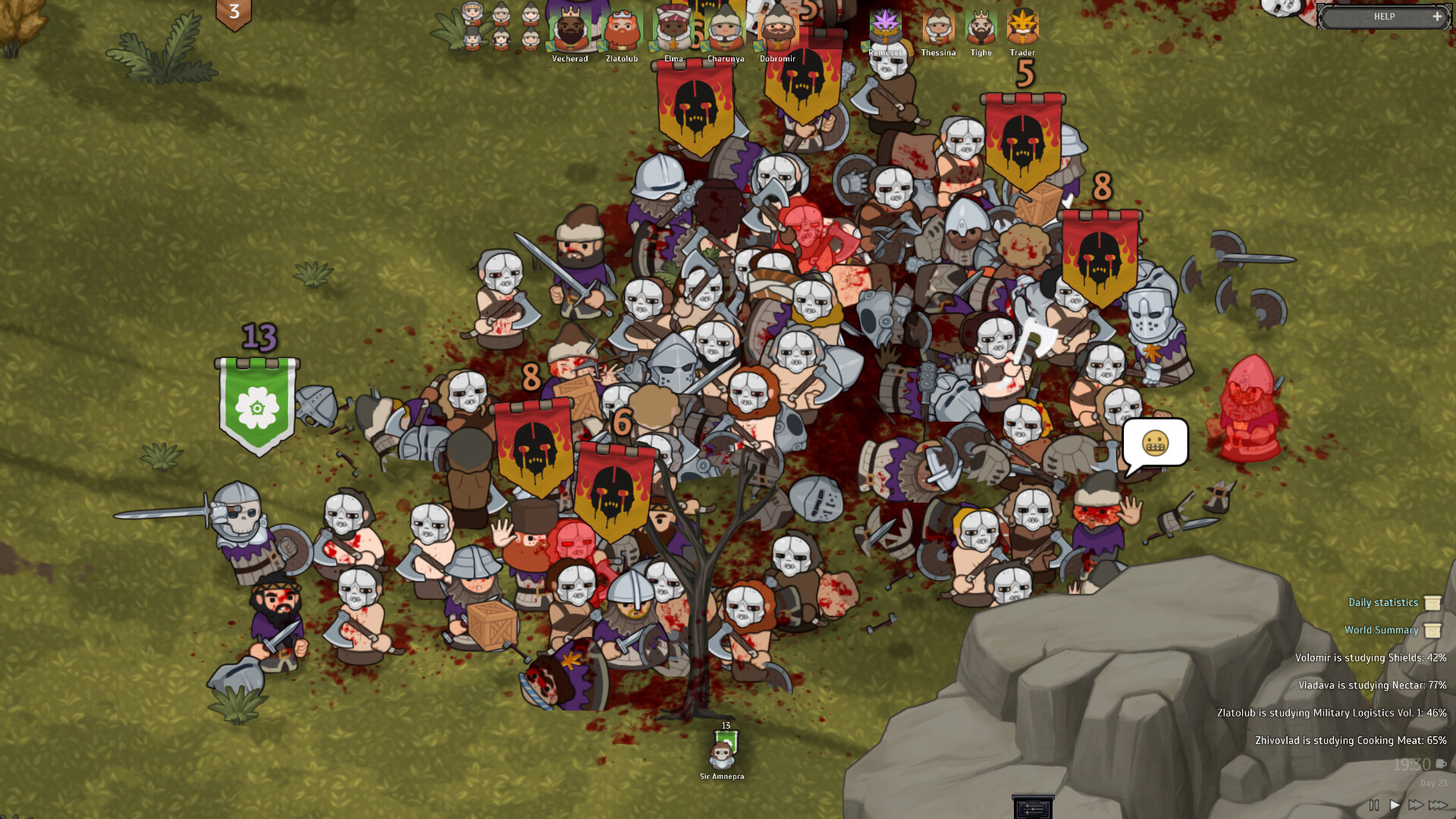
When conflict arises, you can raise a citizen militia, motivate prisoners, and place nobles in command. Morale, combat skills, and tactical decisions influence battle outcomes.
A well‑trained militia can suppress rebellions, while every battle risks the valuable lives of the very people who tend your fields and brew your ale.
- Ensure militia morale is high before engaging in battle.
- Assign nobles with strong combat skills to lead critical engagements.
05 / THE GUIDE
Diplomacy and Intrigue
Skilled nobles can seek marriage alliances, negotiate trade deals, plot assassinations, and recruit spies. Foreign kingdoms send envoys, and bandit camps may appear on the frontier, offering both threats and opportunities.
Balancing open warfare with covert actions lets you shape regional power without overextending your resources, while enemy infiltration remains a constant risk.
- Use marriage to secure long‑term alliances.
- Deploy spies selectively to avoid exposing your own court.


COMMUNITY
Player discussion