 GameWiki

GET YOUR BEARINGS
About Nonentity Galaxy
Nonentity Galaxy puts you in charge of a contract‑driven fleet where each sortie follows a loop: accept a job, handle encounters, salvage wreckage, refit ships, settle the bill and head out again. The game blends tactical fleet positioning with a roguelite economy, rewarding clever risk taking and careful expense management.
Dark humor permeates the rules, turning bureaucracy and unexpected costs into gameplay twists. Success isn’t just winning battles; it’s also navigating absurd procedures, retreat penalties, and the ever‑present threat of the settlement cutting your earnings.
01 / THE GUIDE
Fleet Deployment Loop
Each mission follows a repeatable cycle: take a contract, decide how to meet encounters, salvage and recycle wreckage, then refit your fleet before returning to collect payment. The loop emphasizes that returning home is part of winning, as the settlement evaluates your expenses and salvage value.
The loop is a core roguelite element—every sortie is a gamble with varying routes, battles, and costs. Managing attrition and the value of recovered modules determines how quickly your fleet grows stronger over multiple runs.
- Compare the cost of repairs against the salvage value before committing to a risky battle.
- Track which routes consistently yield higher‑value modules to inform future contract choices.
02 / THE GUIDE
Combat Control Options
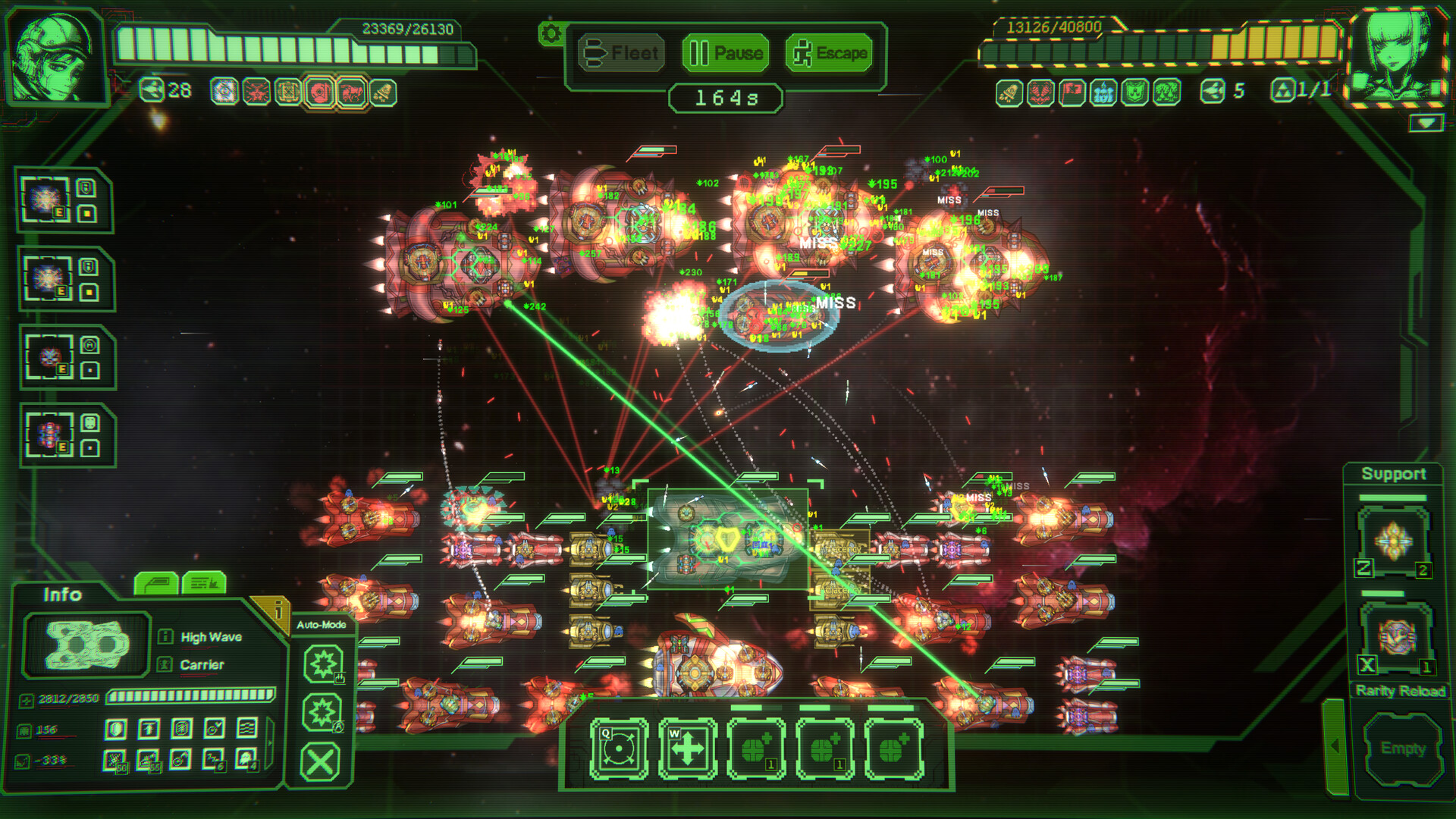
During fights you can let the AI handle routine combat or take manual control to focus fire and reposition ships. Formation and positioning affect damage coverage and survival, while target focus changes the pace of engagements.
Retreat is a viable tactic; the settlement will deduct costs, but withdrawing can preserve fleet integrity for later runs. Manual control lets you shape formations for better defensive coverage.
- Experiment with AI control on easier encounters to conserve attention for tougher battles.
- Use manual positioning to protect weaker ships when facing high‑damage foes.

03 / THE GUIDE
Module Swapping
Modules can be swapped on the spot, allowing immediate power spikes. Better modules are found through salvage or risky routes, and swapping them directly influences combat effectiveness.
Because modules are interchangeable during refit, you can tailor each ship’s role before the next sortie, turning salvaged parts into tangible upgrades without a separate upgrade system.
- Prioritize swapping high‑damage modules onto frontline ships for maximum impact.
- Keep a balanced mix of defensive and offensive modules to handle varied encounters.
04 / THE GUIDE
Route Gambling
Safer paths provide stability, while riskier routes can yield rarer modules and larger payouts. Each route carries its own set of rewards and costs, making route selection a strategic gamble.
Choosing a risky route carries its own rewards and costs, but the potential payoff includes rarer modules and bigger payouts that can accelerate fleet growth, balancing risk versus reward.
- Test a risky route with a smaller fleet first to gauge difficulty before committing major assets.
- Balance your fleet’s composition to handle unexpected encounters on high‑risk paths.
05 / THE GUIDE
Dark Humor System
The game’s rules embed dark humor, turning bureaucratic procedures into gameplay consequences. Pausing can unintentionally trigger additional costs, and victories may be undercut by earnings being sliced before they reach you.
These humor‑driven mechanics remind players that the enemy includes not only firepower but also the absurdity of corporate rules, adding a satirical layer to strategic decisions.
- Read settlement summaries carefully; deductions are real, and the settlement will tell the story.
- Treat unexpected deductions as a cue to reassess your risk tolerance.



COMMUNITY
Player discussion