 GameWiki

GET YOUR BEARINGS
About Nexus Legacy
Nexus Legacy is a persistent online space‑strategy title where players rebuild civilization after the Nexus collapses. You start with a single planet, develop its economy, and expand across a galaxy that evolves as fleets move and colonies grow.
The game blends classic browser‑style empire building with modern logistics, commanders, espionage, piracy, alliances, markets, wormholes and seasonal progression. Monetisation is limited to convenience, cosmetics and account services, keeping competitive balance focused on strategic choices.
01 / THE GUIDE
Build Your Empire
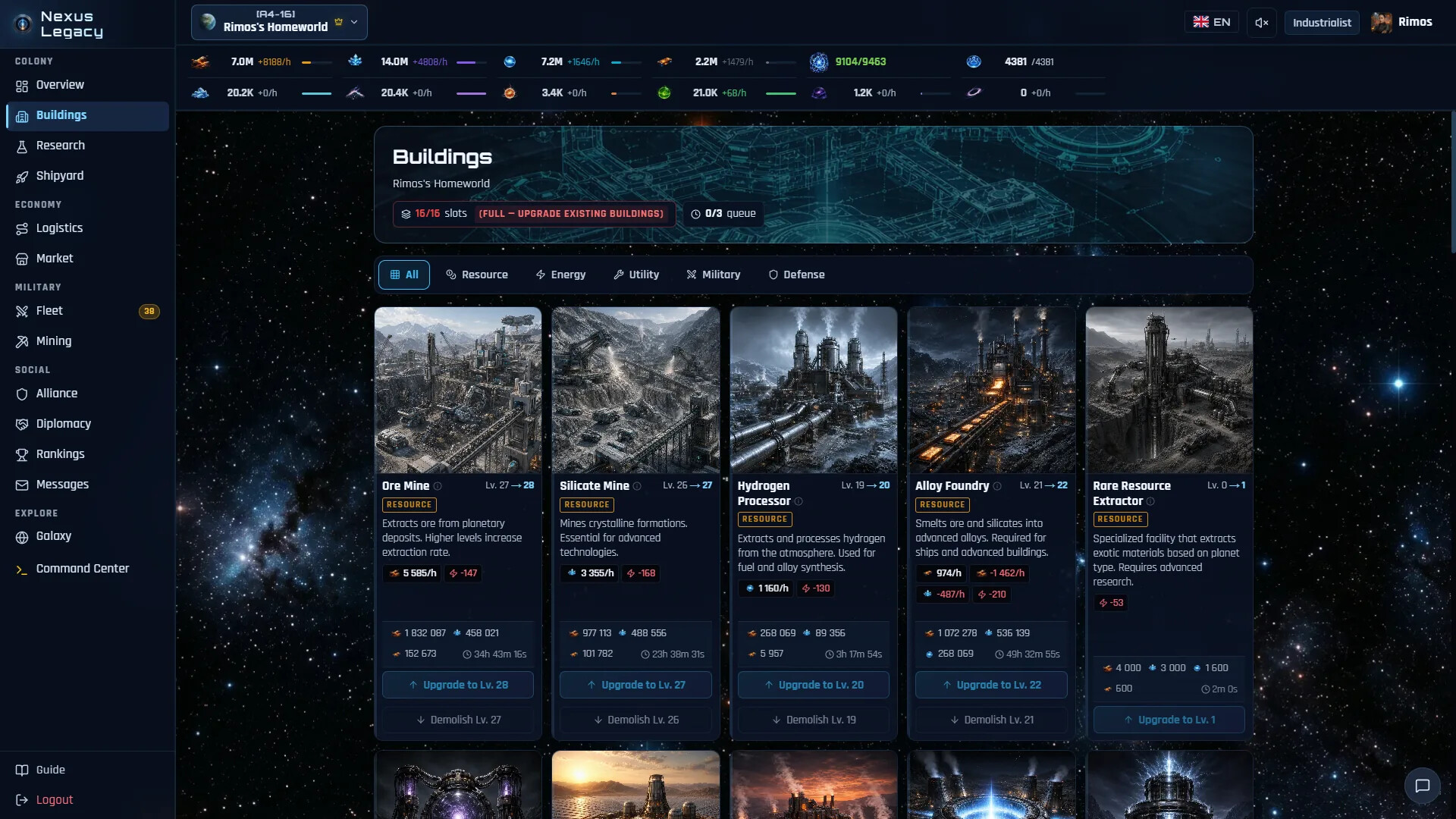
Develop mines, laboratories, shipyards, orbital infrastructure, colonies, moons, outposts and sector stations on each world. Adding a colony raises resource income but also creates a new border that must be defended.
Every new border can become a front line, so placing outposts near those edges shortens travel time for defensive fleets and helps keep supply lines efficient.
- Compare the output of mines versus laboratories before dedicating a planet to a single function.
- Position outposts close to borders to reduce fleet travel when responding to threats.
02 / THE GUIDE
Command Your Fleets
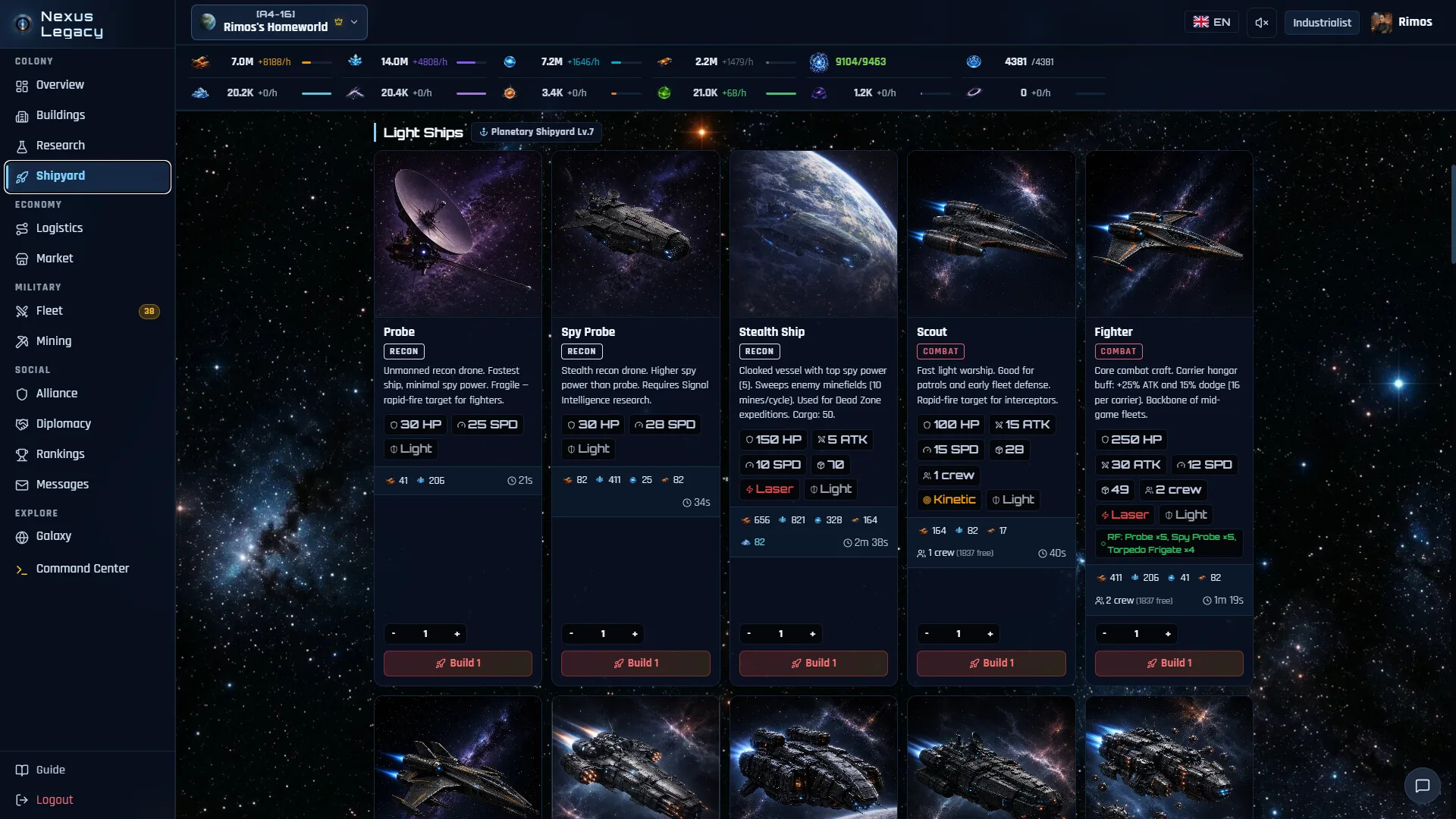
Fleets can be assembled for scouting, raiding, transport, defense, expedition, mining, siege and alliance operations. Each design must weigh cargo capacity, travel time, fuel cost, range and escort composition.
Intelligence gathered through espionage informs which fleet composition best matches a target; a fast scout may be preferable when enemy defenses are known, while a heavier raider suits unknown or poorly defended worlds.
- Match fleet range to the distance of the destination to avoid unnecessary fuel expense.
- Use lighter ships for scouting when you have reliable intel on enemy positions.

03 / THE GUIDE
Research Your Future
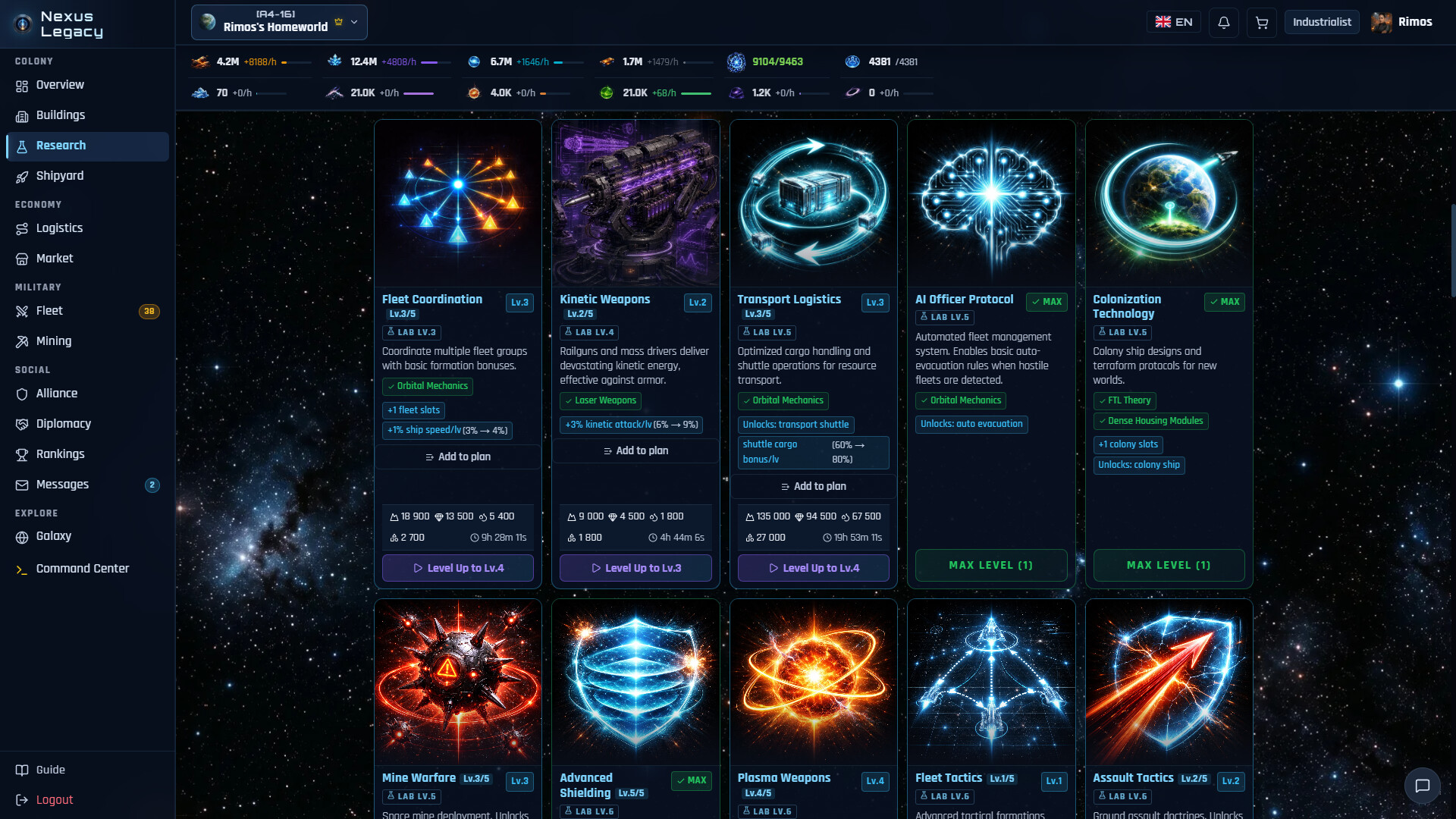
Research unlocks new buildings, ships, military systems, economic upgrades, logistics tools and late‑game technologies. Early research yields rapid progress, while higher tiers require more planning and investment.
Choosing research that complements your current empire layout can accelerate growth; logistics research adds new logistics tools, and advanced ship designs improve raid or defense effectiveness.
- Prioritise logistics research if your empire spans many distant planets.
- Align ship‑type research with the primary role of your fleets.
04 / THE GUIDE
Spy, Raid, Defend
Espionage reveals resources, fleet compositions, defenses and weaknesses before you commit ships. With that data you can plan attacks that break enemy fleets and infrastructure, or raids that extract resources using ground forces and specialised support ships.
Defensive planning benefits from knowing what opponents might target; reinforcing vulnerable installations and keeping a reserve fleet nearby can turn an enemy raid into a costly failure.
- Run espionage on high‑value planets before planning a raid.
- Maintain a small defensive fleet near border worlds to react quickly to raids.
05 / THE GUIDE
Join the Political Game
Alliances enable coordinated attacks, shared defence, resource trade and competition for territory across multiple universes. Political influence shifts as alliances form and dissolve, affecting control of strategic regions.
Alliance diplomacy can provide safety in numbers and market access that boost your economy, but it also requires you to support collective actions, which may stretch resources if not managed carefully.
- Trade surplus resources with allies to build goodwill and secure future aid.
- Balance alliance obligations with your own expansion goals to avoid overextension.

COMMUNITY
Player discussion