 GameWiki

GET YOUR BEARINGS
About NEO Scavenger
NEO Scavenger drops you into a near‑future, post‑apocalyptic Michigan where each turn forces a decision about hunger, cold, thirst, and danger. Survival hinges on managing metabolism, wounds, and inventory while hunting for clues about your lost identity.
The game runs turn‑by‑turn on a hex‑based map, letting you save, quit, and resume at any time. With a single difficulty—permadeath—success depends on the abilities you choose, the items you craft, and how you navigate the world.
01 / THE GUIDE
Abilities and Flaws
At the start you select a set of abilities and flaws; each combination determines which actions are available and which quest branches can be accessed. Because there is no experience or levelling, these choices remain fixed for the entire run, making the initial selection crucial.
Different combos can unlock different abilities and quest branches, opening new pathways in a run. Since the game tracks only the abilities you chose, experimenting with new pairings each playthrough reveals fresh pathways and forces you to adapt your tactics to the strengths and weaknesses you have selected.
- Write down which abilities unlock which quest branches to compare their usefulness across runs.
- Try pairing a scouting‑type ability with a limiting flaw to see how constraints shape your decisions.
02 / THE GUIDE
Extensive Crafting
The crafting system lets you combine scavenged parts into functional items, and it supports substitutions of similar components. For example, half a pair of binoculars can become a rifle scope, and a pill bottle with pebbles can serve as a noise trap.
Because substitutions are allowed, gathering a variety of small parts increases the range of items you can produce later in the game. Crafted tools address survival needs such as shelter, hunting, or defense, and they are created from the resources you find on each turn.
- Collect miscellaneous components early; they often become useful in later recipes.
- Compare a crafted item with a found equivalent before deciding which to keep.
03 / THE GUIDE
Desperate Combat
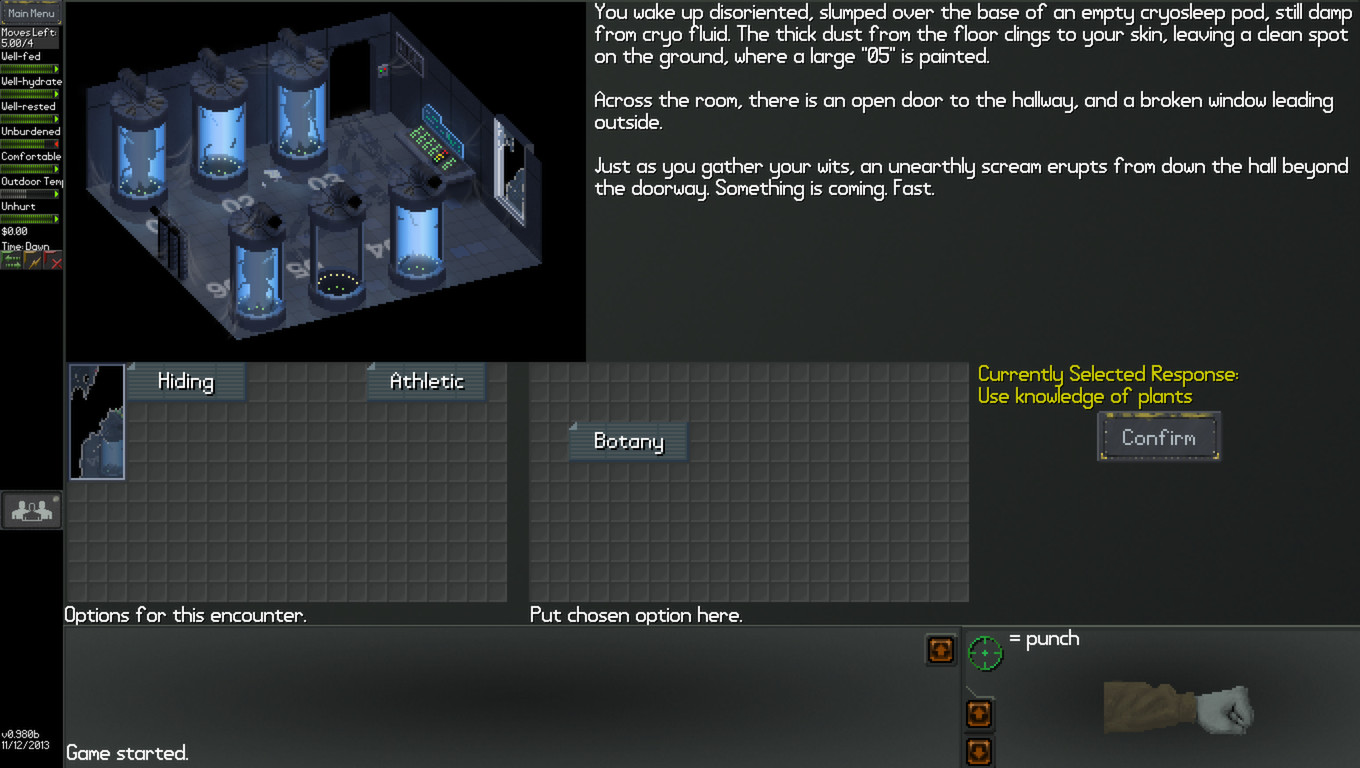
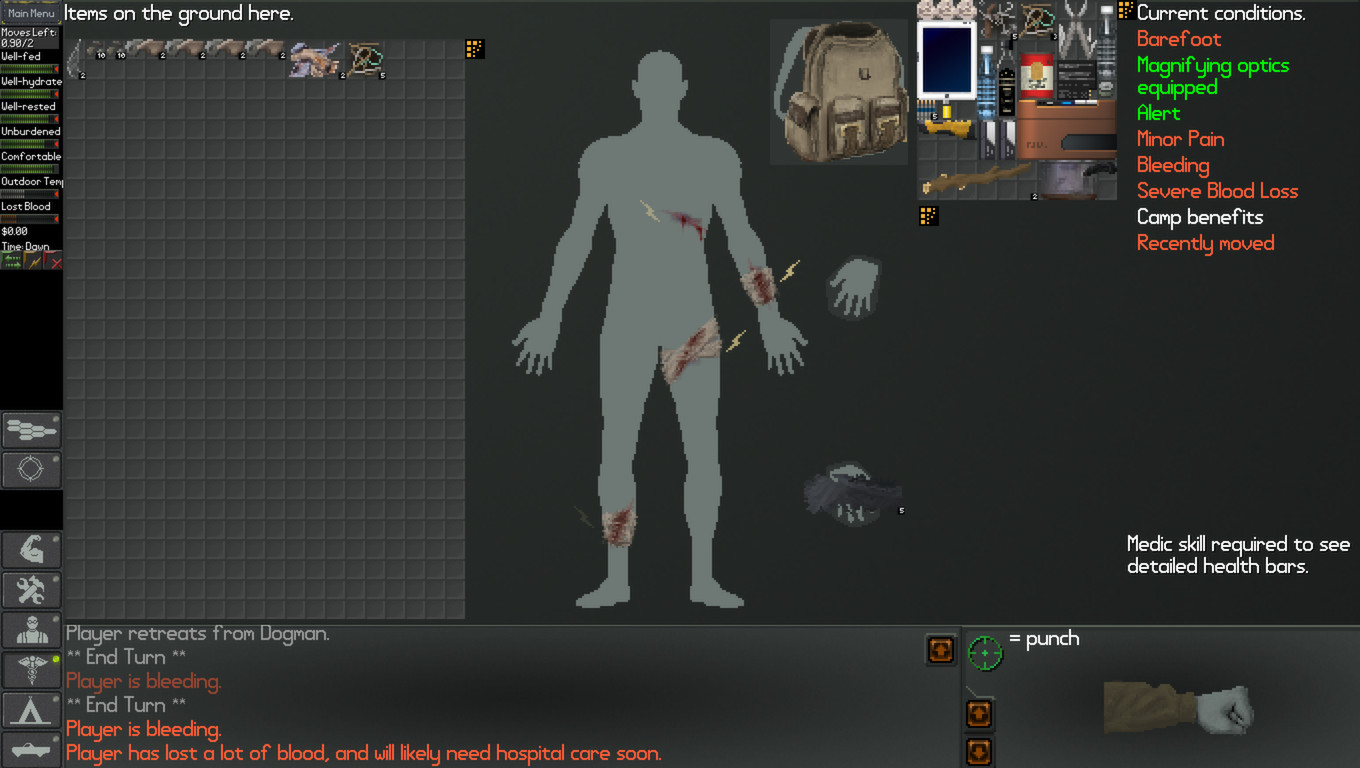
Combat offers a set of specific moves such as "Tackle," "Lure," "Kick While Down," "Demand Surrender," and "Threaten." Creatures feature multiple wound locations, and injuries can cause infection, bleeding, and pain, requiring careful wound management.
The system encourages tactical choices; targeting particular wound sites can limit an opponent’s effectiveness, while non‑lethal actions let you avoid additional bleeding when medical supplies are scarce.
- Observe which moves cause the least bleeding when you need to conserve medical supplies.
- Note which wound locations are most effective to target against different creature types.
05 / THE GUIDE
Realistic Metabolism and Inventory
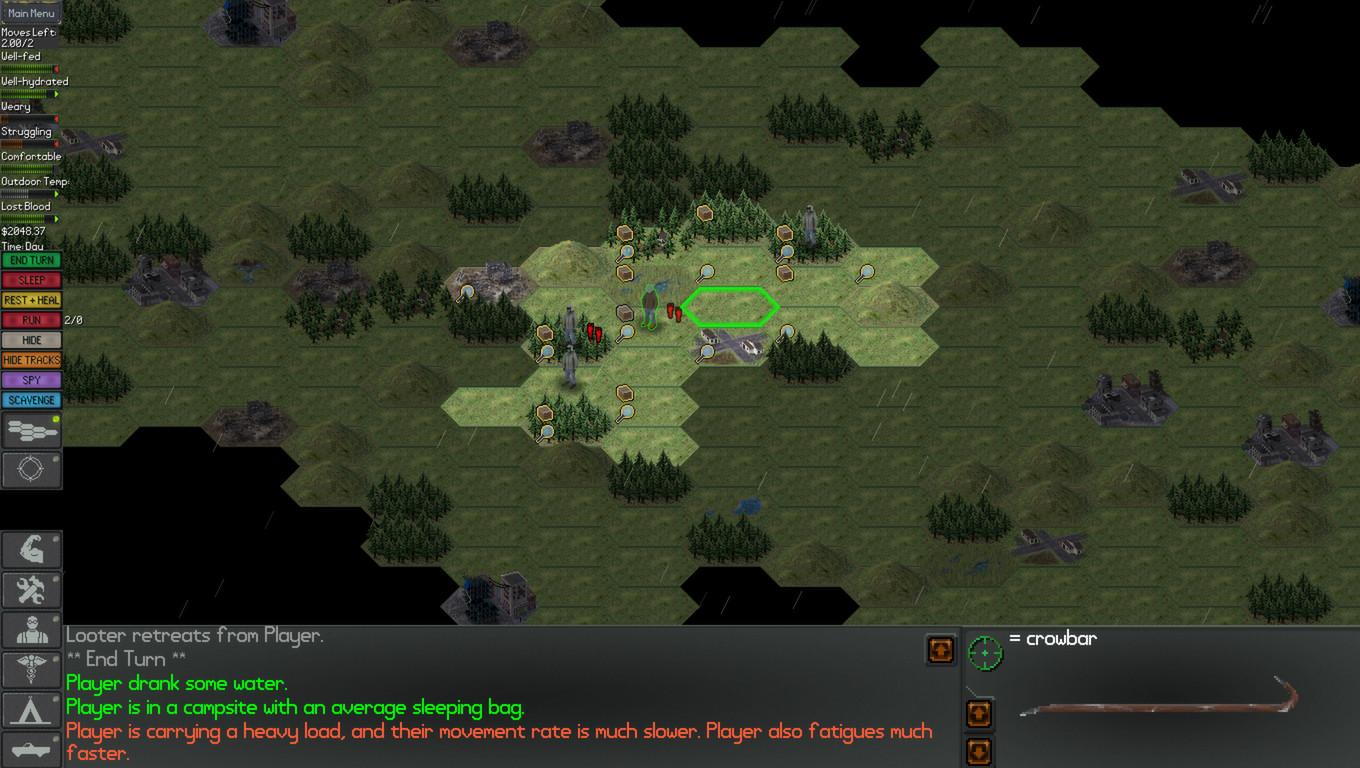
Your character’s body tracks hypothermia, fatigue, thirst, hunger, disease, intoxication, and shelter needs. Each minute in the game advances these metrics, so you must monitor them continuously to avoid critical failure.
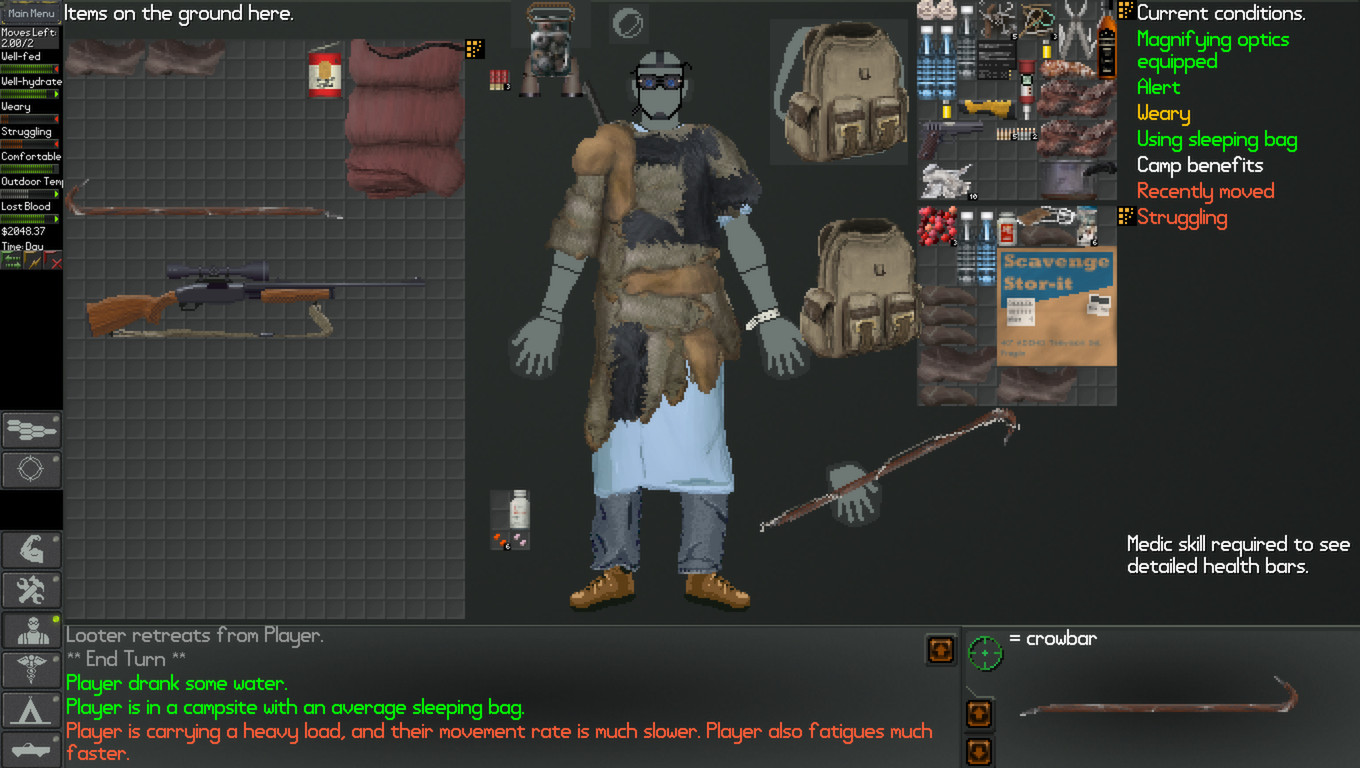
Inventory uses a grid with slots, containers, and encumbrance limits. Proper arrangement of items and awareness of weight are necessary to keep your character mobile and to prevent penalties from over‑burdening.
- Check metabolism stats before embarking on long journeys to ensure you have sufficient resources.
- Arrange items to minimize wasted grid space and keep essential supplies within easy reach.

COMMUNITY
Player discussion