 GameWiki

GET YOUR BEARINGS
About Mini Settlers
Mini Settlers is a minimalistic city‑builder where you settle abandoned islands, construct cities and factories, and design logistic networks of roads, trains and ports. Supplying buildings correctly fuels population growth, letting you expand onto plains, deserts and snowlands, each with its own resources and challenges.
The game is single‑player with global competition, offering adjustable difficulty, mouse‑only option, save‑anytime, Steam achievements, trading cards, cloud saves and other accessibility features such as adjustable text size and camera comfort.
01 / THE GUIDE
Logistic Network
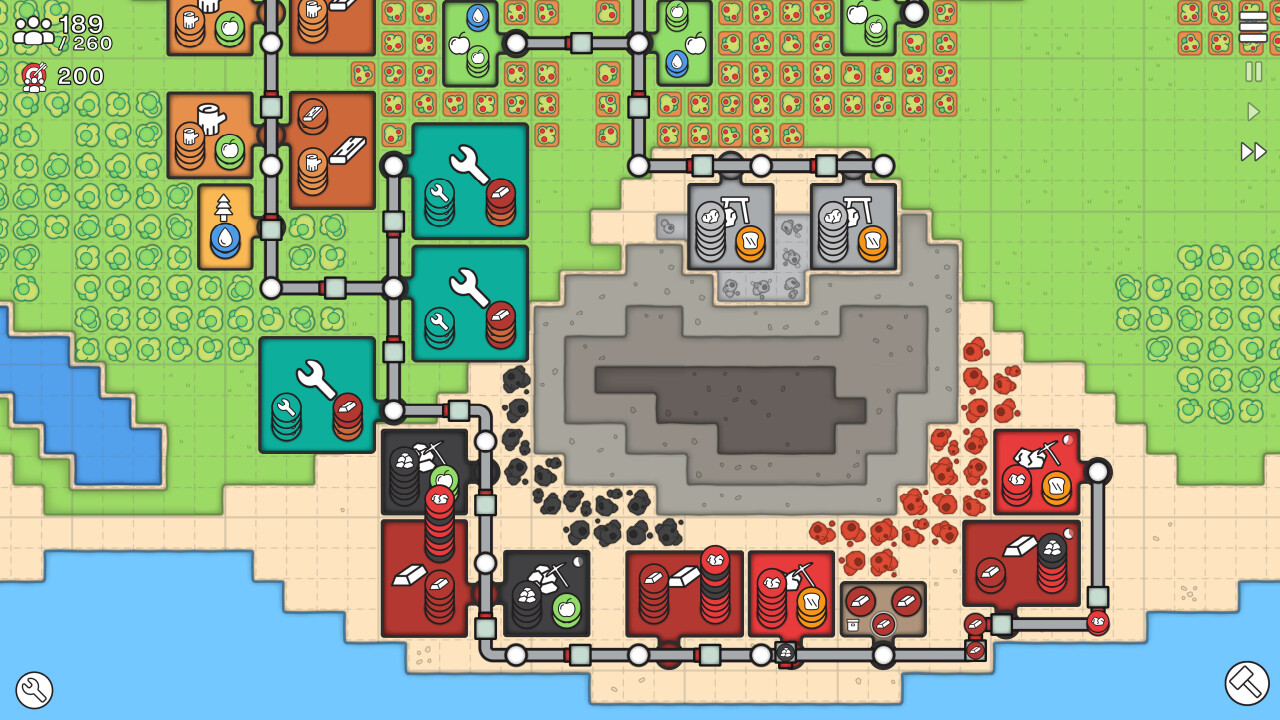
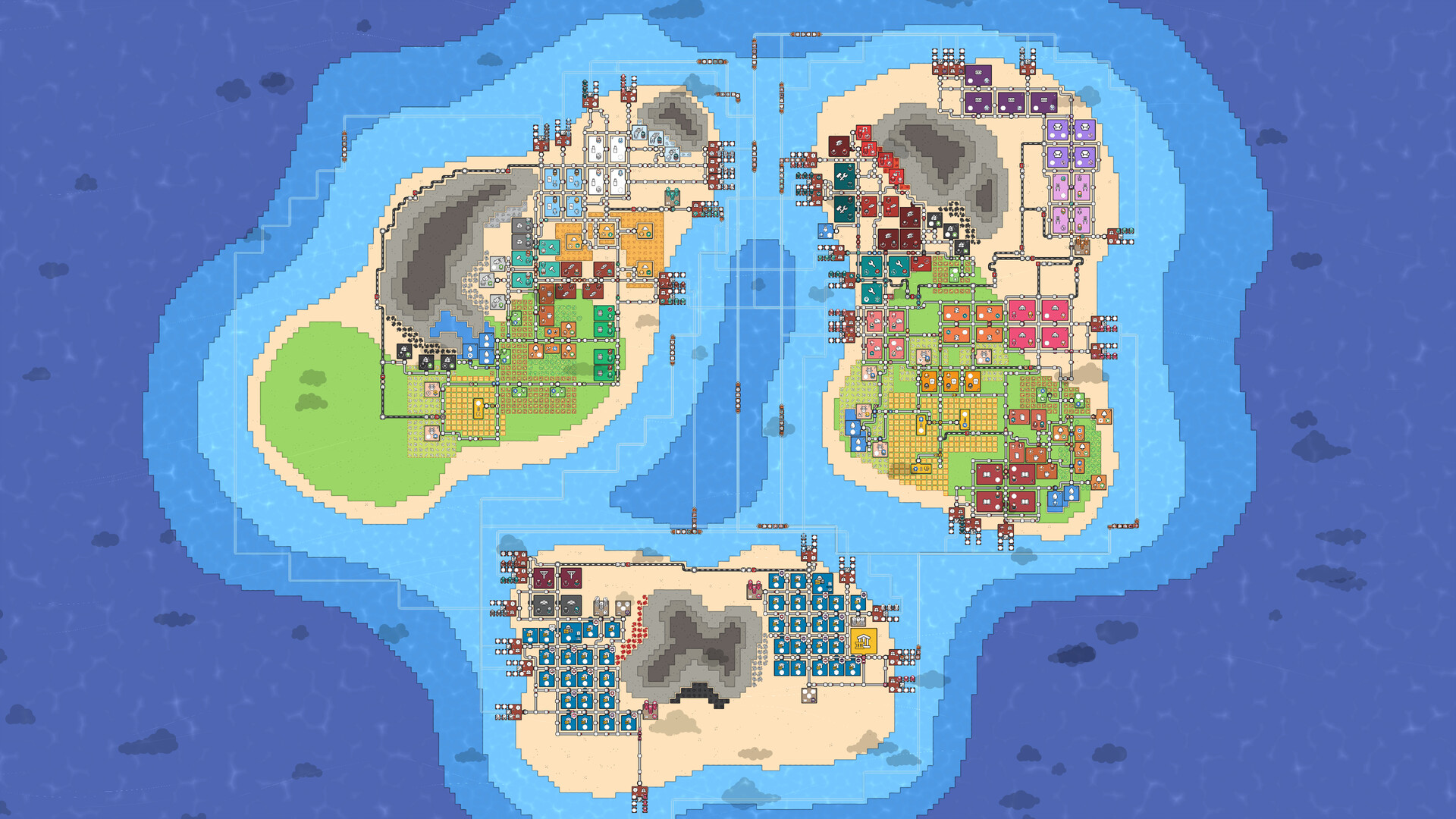
You can build roads, trains and ports to connect factories and cities, moving resources where they are needed. A well‑connected network lets you fulfil building demands across the map.
If the network becomes overloaded, resource flow slows and growth stalls. Planning routes and capacity helps keep the supply chain balanced and supports expansion into new biomes.
- Plan major routes before adding new factories to avoid bottlenecks.
- Mix transport types to spread load across the network.
02 / THE GUIDE
Island Settlement
The game starts by settling abandoned islands, placing basic structures and meeting the needs of the initial population. Each island’s terrain influences which resources are available.
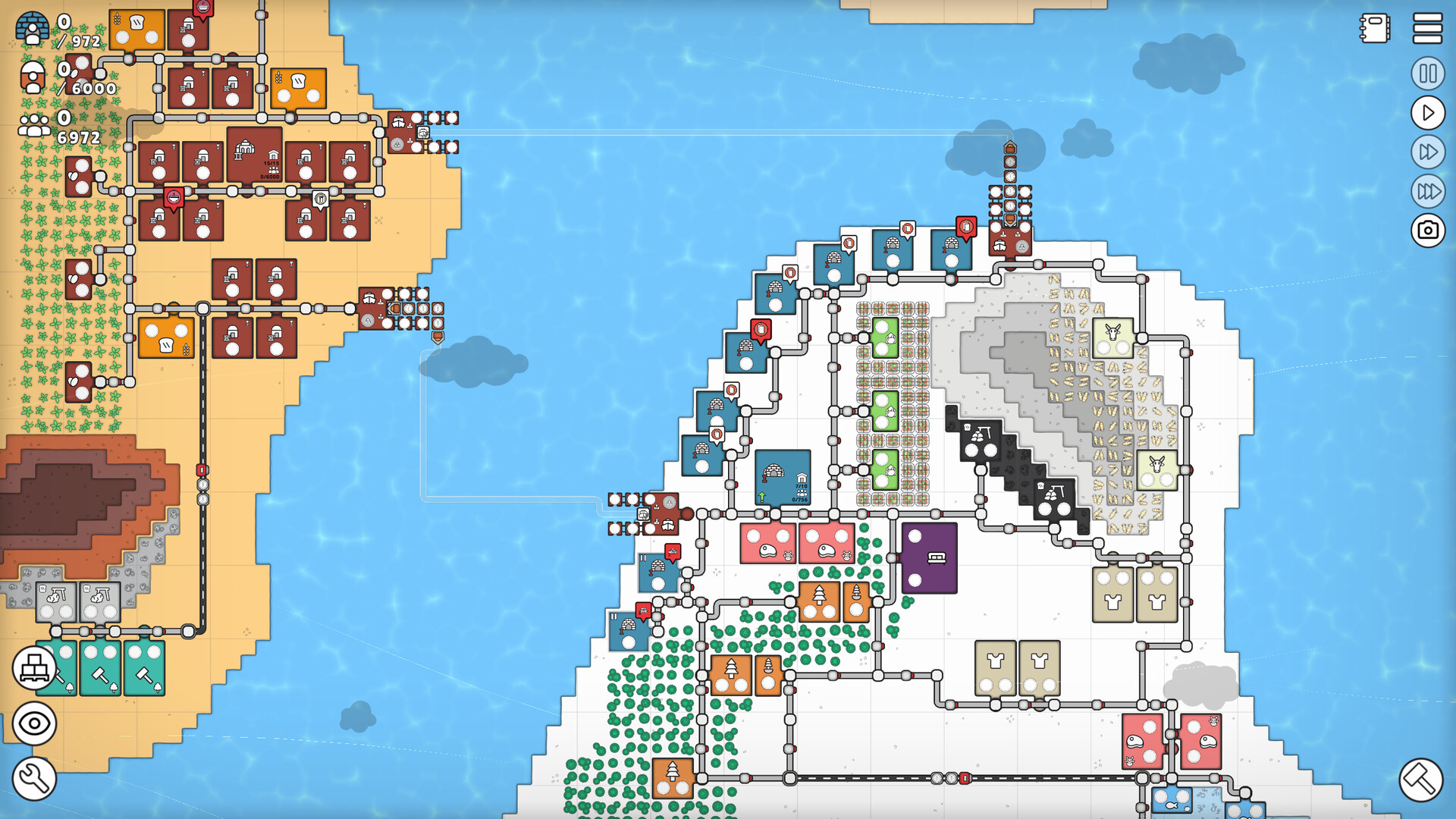
When all needs are satisfied the settlement grows, unlocking the ability to expand onto fertile plains, harsh deserts and icy snowlands, each presenting new resources and challenges.
- Prioritise essential buildings first to meet basic needs quickly.
- Explore nearby islands early to diversify resource sources.
03 / THE GUIDE
Resource Production
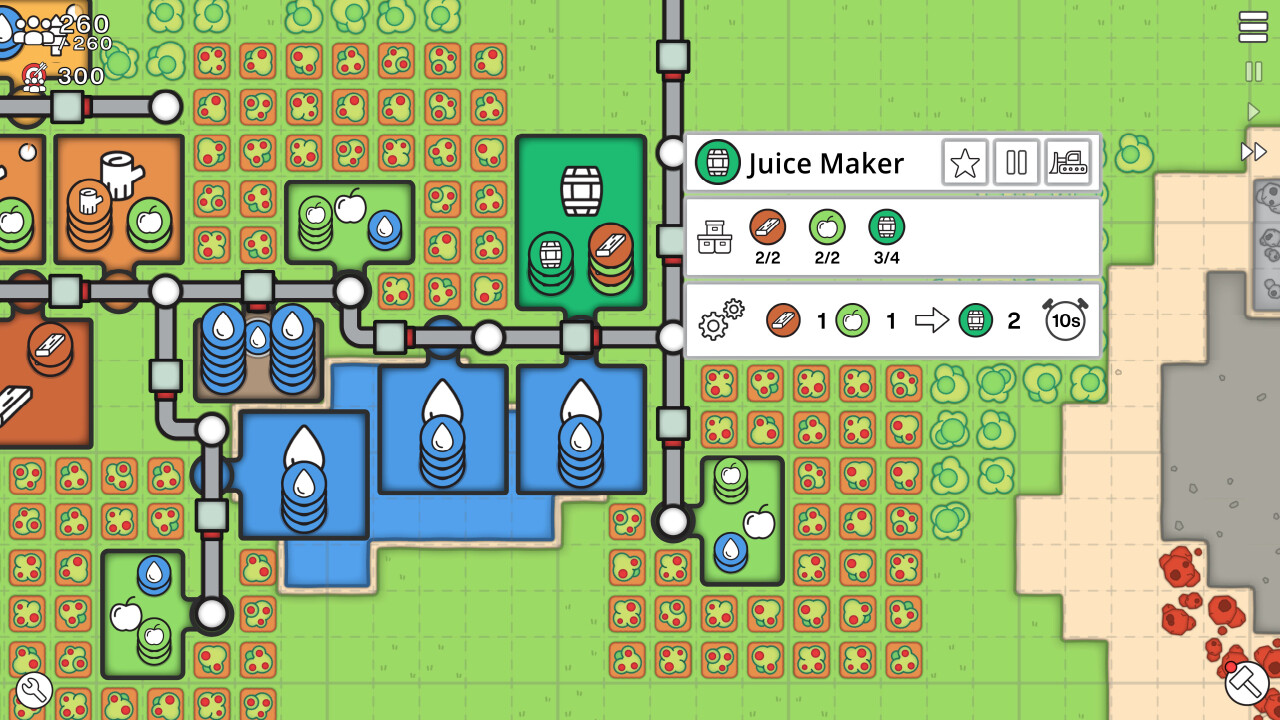
Factories harvest raw materials and transform them into new resources required by cities and other factories. Production chains must be linked so each step receives its inputs.
Balancing output and consumption prevents shortages; excess without demand wastes space, while insufficient output stalls city development.
- Match factory output to the consumption rate of connected cities.
- Monitor resource levels regularly to adjust production as needed.
04 / THE GUIDE
Population Growth
Population increases when all building needs are consistently met. A larger populace unlocks larger cities and more complex infrastructure options.
Growth is tied to supply‑chain balance; any unmet need can halt population increase, making careful planning essential for steady expansion.
- Keep a buffer of essential resources to avoid sudden shortages.
- Upgrade housing only after ensuring a stable supply chain.
05 / THE GUIDE
Global Competition
Players compete with others worldwide, aiming to build more efficient networks and larger populations. Rankings reflect how well supply chains are balanced against rivals.
Success depends on strategic placement of logistics and timely expansion, encouraging optimisation beyond solo play.
- Observe top players’ network layouts for ideas.
- Focus on minimizing transport distance to improve efficiency.

COMMUNITY
Player discussion