 GameWiki

GET YOUR BEARINGS
About Life Inc.
Life Inc. drops you into a financial simulation at age sixteen with limited cash, a parental home, and no qualifications. You begin in entry‑level jobs such as shop assistant, DJ, or streamer, then work toward higher‑paid roles across administration, technology, finance, construction, and sales.
The game blends personal budgeting, career progression, and investment management. You can trade stocks, cryptocurrencies, and real‑estate, launch a business, and eventually amass luxury assets, while taxes, loans, and lifestyle costs constantly threaten your cash flow. Playable in tutorial, sandbox, or an 11‑chapter story mode.
01 / THE GUIDE
Career Paths and Promotion
You start in one of three entry jobs—shop assistant, DJ, or streamer—and must meet education, time, and lifestyle requirements to unlock higher positions. Advancement moves through sectors like administration, technology, finance, construction, and sales, each with its own promotion criteria.
For the DJ track, you complete four specialized courses and progress through 14 career stages, ranging from bedroom setups to owning a record label. Similar structures exist for other careers, with each promotion demanding specific investments of time and money.
- Track the required education and lifestyle thresholds before committing to a promotion.
- Balance job income against the rising cost of status to avoid cash shortages.
02 / THE GUIDE
Investment Markets
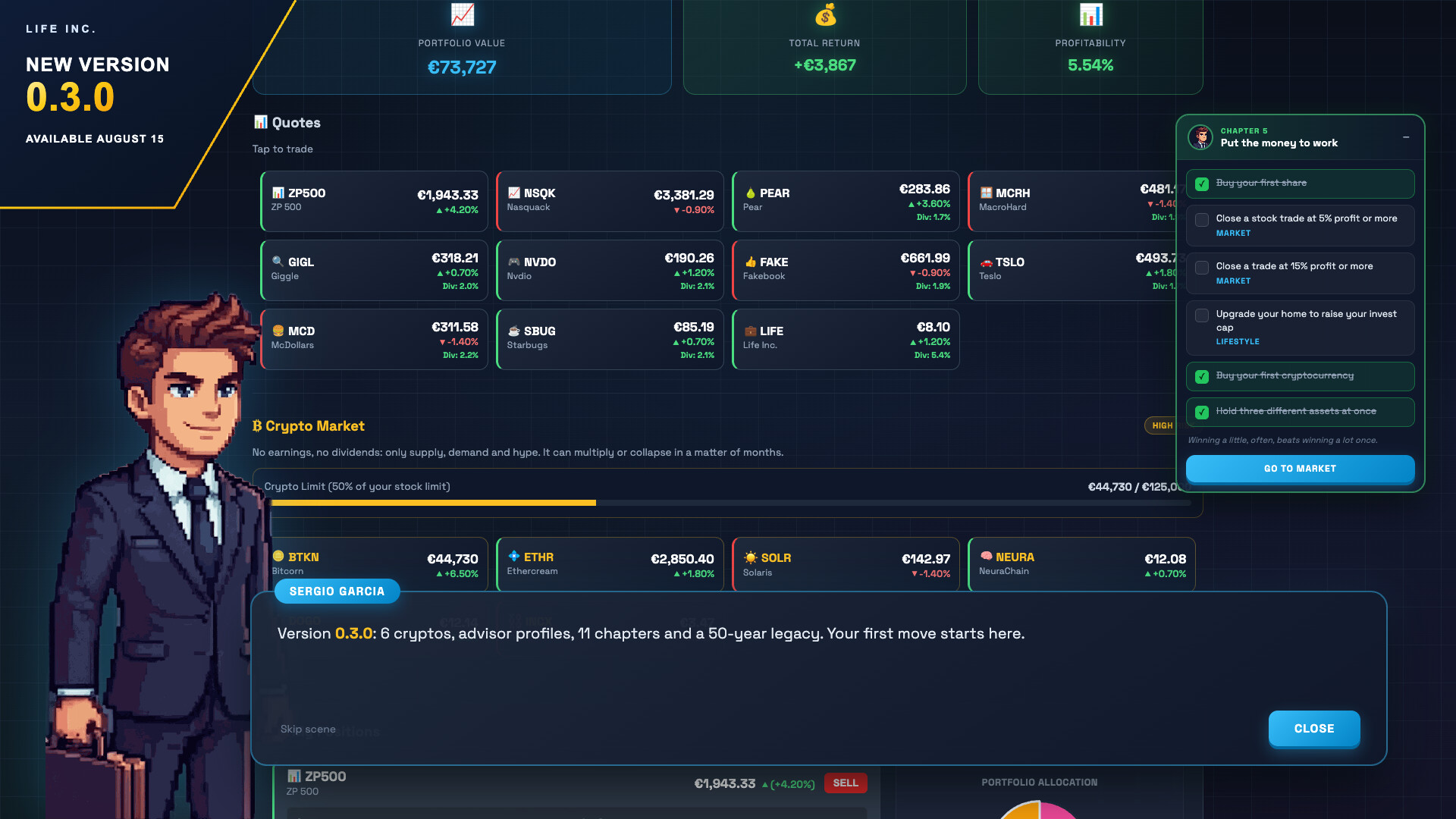
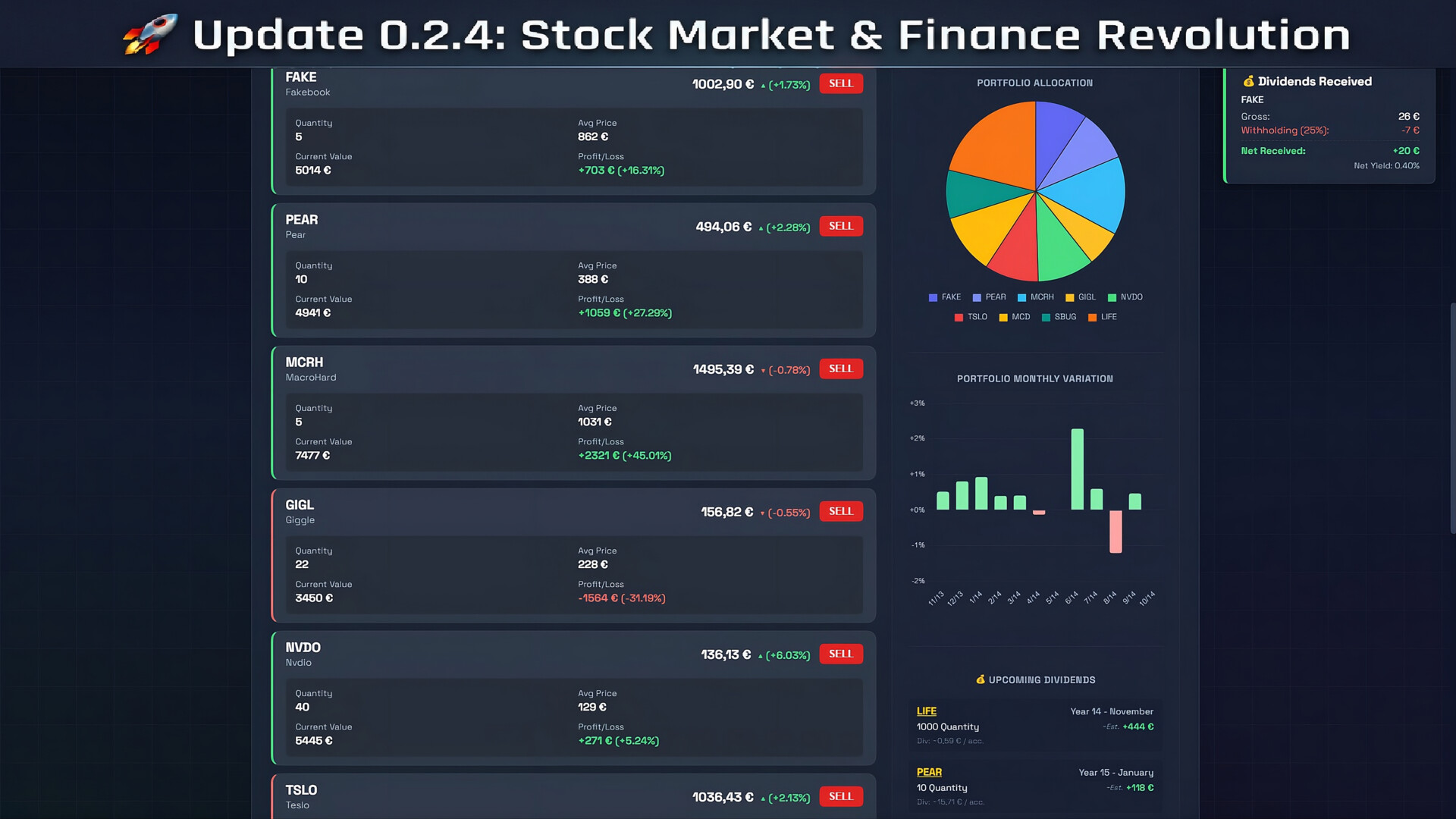
The game offers a stock market with 11 companies and 2 indexes, where earnings, momentum, payout ratio, and dividend months influence each stock’s performance. You can buy and sell based on these metrics.
A separate cryptocurrency market features six high‑volatility assets without dividends, presenting distinct risk dynamics. Both markets require careful timing, as losses can quickly affect your overall wealth.
- Monitor dividend payout months to anticipate cash inflows.
- Treat crypto trades as short‑term moves due to their volatility.

03 / THE GUIDE
Real‑Estate Portfolio
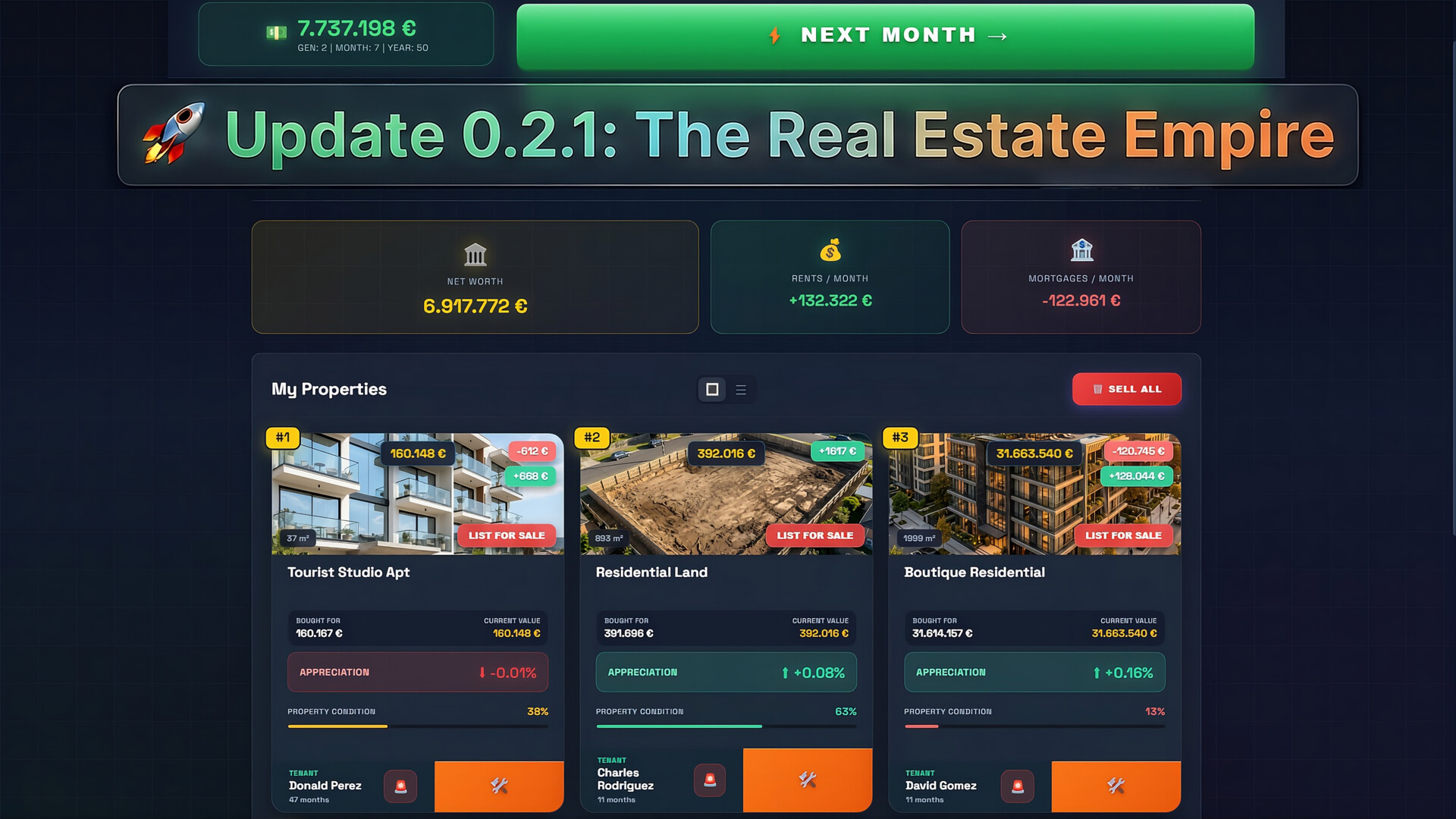
You can purchase garages, land, offices, residential, and luxury properties, then manage tenant offers, renovations, and mortgages. Hiring a property manager becomes available as your portfolio expands.
Location choices—suburbs, city centre, or financial district—affect rent, foot traffic, and hiring capacity. Properly balancing these factors influences both cash flow and property value growth.
- Select property locations that match your current cash flow to avoid overextending rent costs.
- Renovate properties strategically to raise both value and rental yield.
04 / THE GUIDE
Business Creation and Scaling
Leaving the corporate ladder lets you launch a business where you set pricing, suppliers, marketing, payroll, and hiring. Employee skills grow over time, and underpaying the market can cause consequences.
You can invest in R&D, balance quality with demand, and eventually integrate the company into a holding group for automation or sell it when valuation peaks.
- Align staff compensation with market rates to maintain productivity.
- Plan R&D spending to match demand trends for better profit margins.
05 / THE GUIDE
Taxes, Loans, and Wealth Tax
Each year you must file taxes covering salary, rent, stocks, and company profits. Property sales generate capital gains, and at higher wealth tiers a Solidarity Wealth Tax applies.
Loans and mortgages can accelerate growth but require regular interest payments; missed payments can quickly deplete cash reserves and lead to bankruptcy warnings.
- Reserve funds for tax payments to avoid unexpected deficits.
- Use loans conservatively, ensuring you can meet interest obligations each month.
COMMUNITY
Player discussion