 GameWiki

GET YOUR BEARINGS
About Kitsune Tails
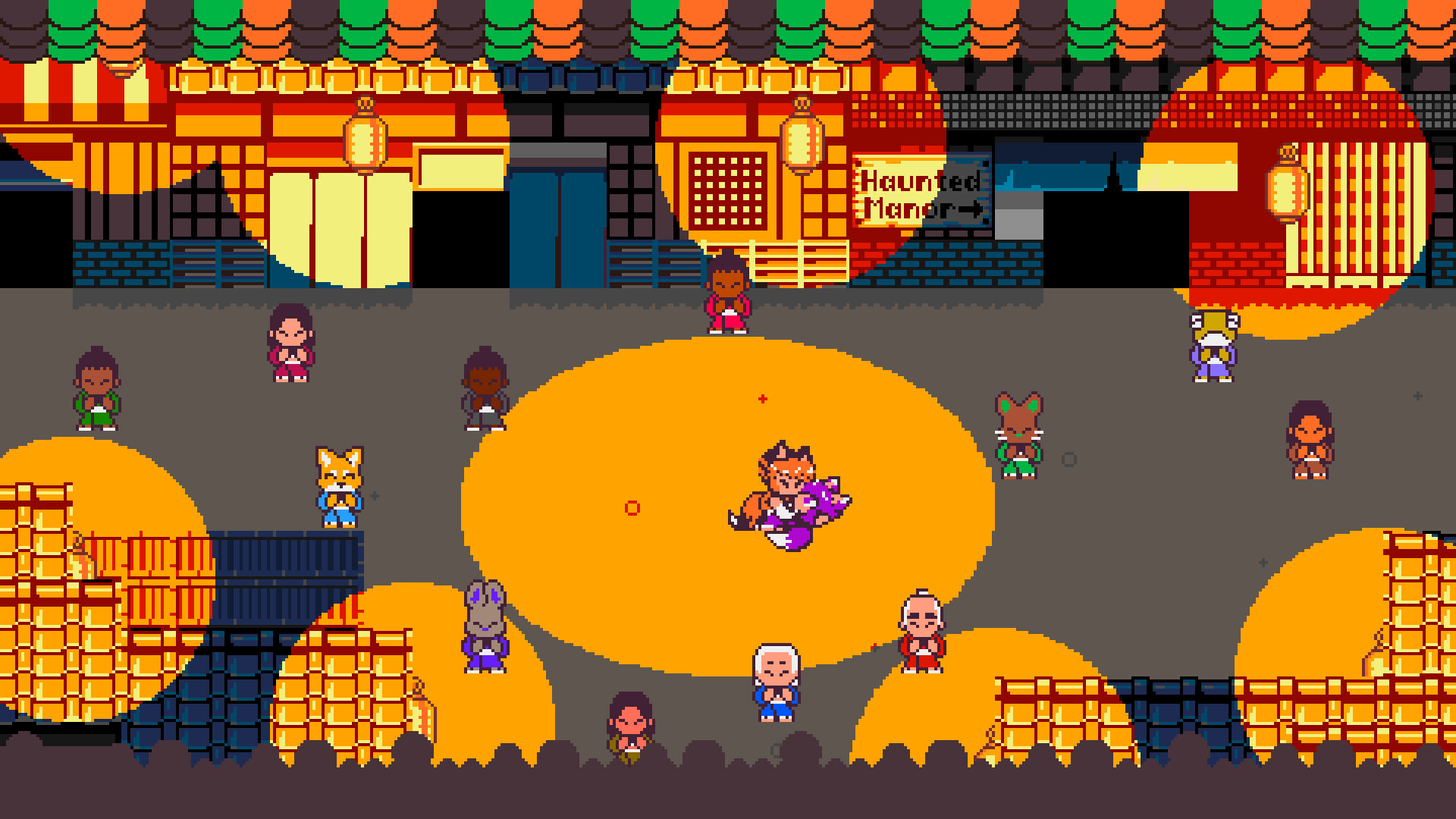
Kitsune Tails puts you in the role of a young female kitsune, a messenger of Inari, whose adventure begins while delivering her first message. The story introduces a kindly sorceress who aids her, a childhood friend turned antagonist, and a quest to free a love interest sealed in an elemental prison.
Gameplay centers on classic platforming across five elemental worlds and haunted houses inspired by Japanese mythology. Players can equip cute outfits that grant abilities such as dashing or stealing a giant boot, and the title includes tools for creating custom levels and Lua‑scripted minigames.
01 / THE GUIDE
Story and Characters
You control a young female kitsune, one of Inari’s fox‑eared messengers, and the narrative opens as she delivers her first message. Early in the journey a kindly sorceress appears to help her during a moment of need, establishing a supportive ally.
Later the kitsune confronts a childhood friend who has become an antagonist; the plot reveals that jealousy motivated the friend to seal the kitsune’s love interest inside an elemental prison. These relationships drive the emotional context for the platforming stages.
- Observe dialogue cues to understand each character’s motives.
- Note how the friend’s actions shift after the betrayal is revealed.
02 / THE GUIDE
Platforming Mechanics
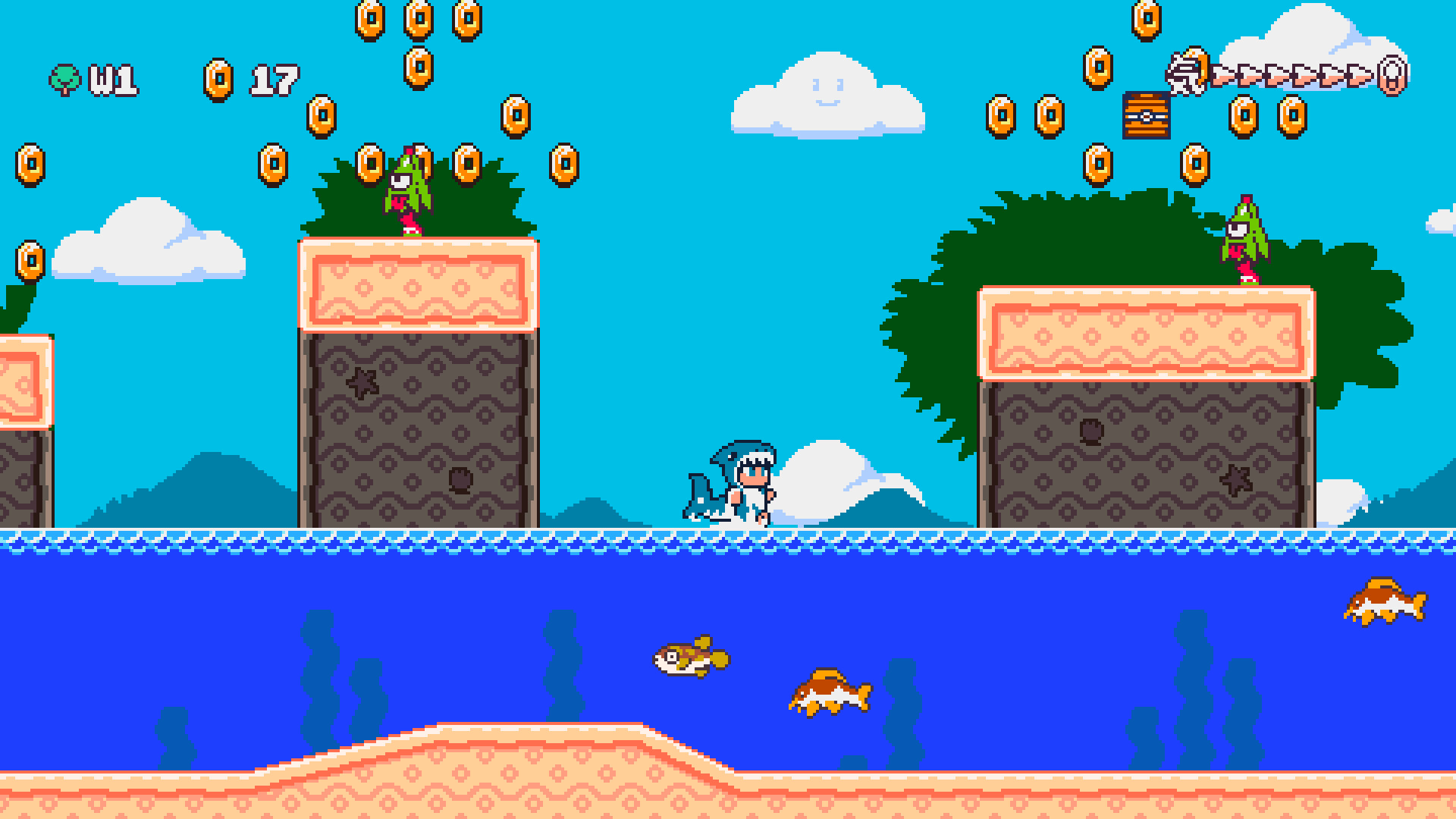
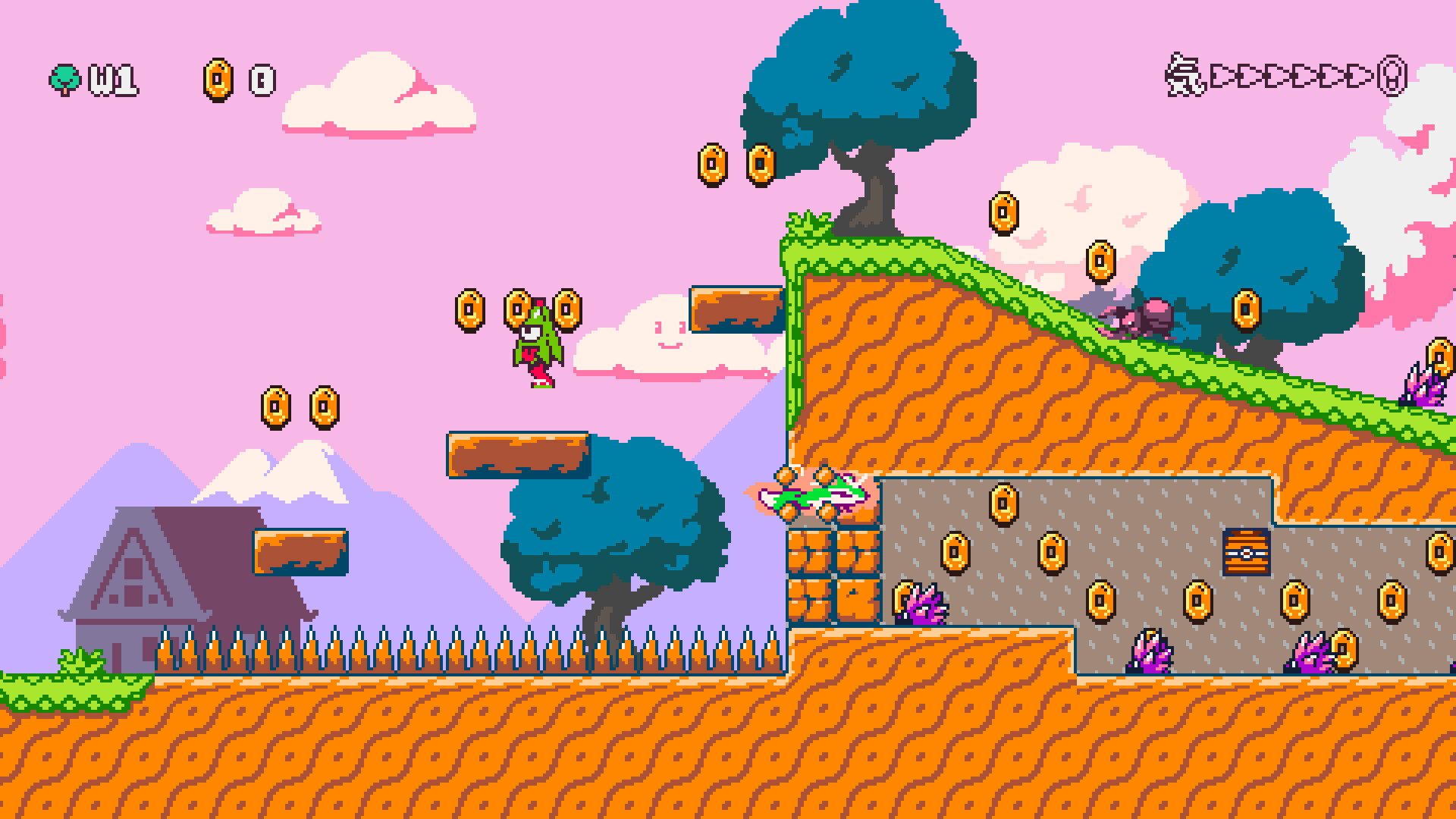
The core gameplay is classic platforming set in a land inspired by Japanese mythology, letting you run, jump, and dash. Enemies can be stomped, and some can be used to steal a giant boot that adds movement options.
Pangos are a specific enemy type; stomping on them makes them curl into a ball, which you can then pick up and kick. This physics‑based interaction can be used to reach platforms that are otherwise inaccessible.
- Use the dash ability to cross larger gaps.
- Kick curled pangos toward distant ledges to test their range.
03 / THE GUIDE
Elemental Worlds and Haunted Houses
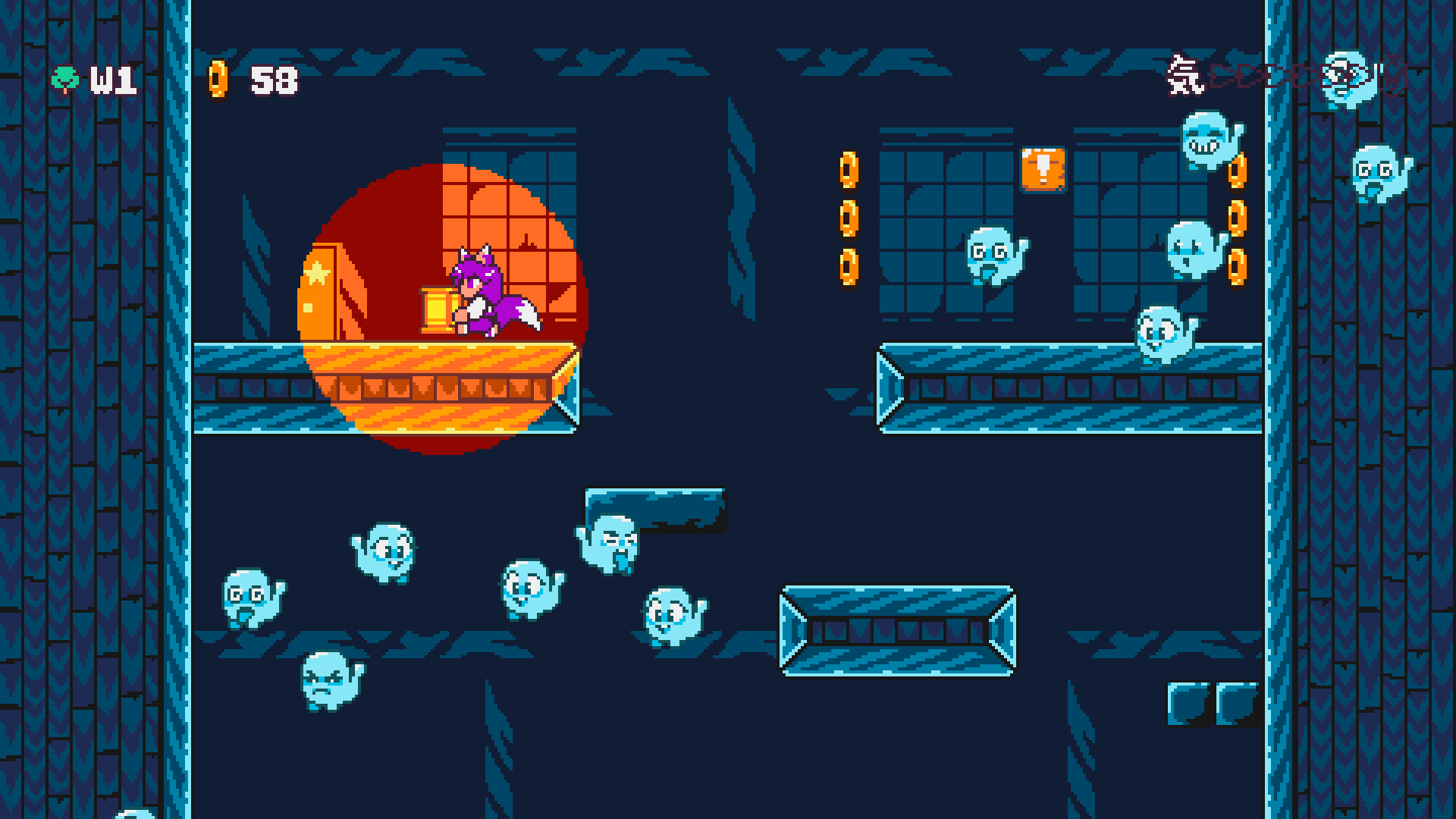
The game features five elemental worlds, each containing various haunted houses. Inside haunted houses you can carry lights to reveal secret doors and to ward off ghosts, adding a light‑based puzzle element to exploration.
After completing the main story, a bonus world becomes available after the credits, offering a set of harder “kaizo” levels for players who seek additional difficulty beyond the standard stages.
- Bring a light source into haunted houses to expose hidden exits.
- Explore the post‑credits bonus world for a tougher platforming test.
04 / THE GUIDE
Outfits and Power‑Ups
Cute outfits function as power‑ups; they let you power up or stomp around by stealing a giant boot from enemies. This links the visual costume to a functional ability without specifying separate movement styles per world.
If you encounter difficulty, the in‑game shop sells additional power‑ups, allowing you to change playstyles for a different approach to challenging sections.
- Visit the shop when you need extra power‑ups for a tough segment.
- Experiment with different outfits to see how each changes your movement options.
05 / THE GUIDE
Custom Levels and Minigames
Mature open‑source tools are provided, enabling players to make custom levels and minigames using the same Lua scripting the developers employed. Over a half‑dozen minigames are unlockable for coins and power‑ups.
An optional CRT filter can be enabled for a nostalgic visual effect, while the custom‑content tools let the community extend the experience beyond the built‑in worlds.
- Experiment with Lua scripts to design a unique platforming challenge.
- Enable the CRT filter if you prefer a retro aesthetic while testing your level.

COMMUNITY
Player discussion