 GameWiki

GET YOUR BEARINGS
About Idle Xanxia
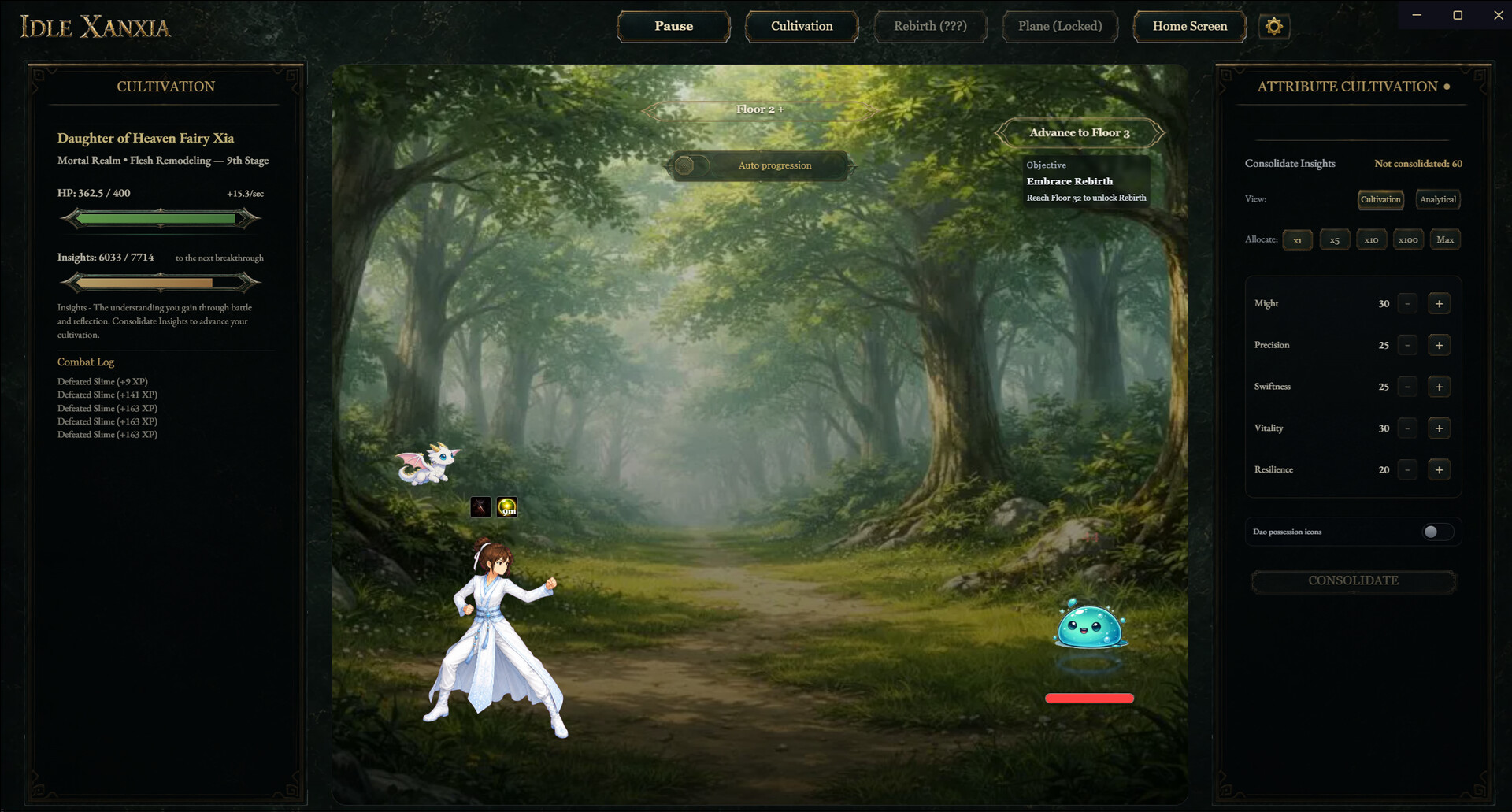
Idle Xanxia is a system‑driven idle RPG where every decision shapes your cultivator’s growth. Players start with a blank slate, allocate stats, and choose from over fifty Dao paths to define their playstyle. Progression is tied to interconnected systems—attributes, Dao paths, and Aspects—that together create long‑term synergies.
When a character reaches its limits, rebirth lets you keep key systems while pushing further in the next cycle. New layers such as sect progression, additional enemies, and fresh realms appear as you advance, making each run a step toward deeper growth.
01 / THE GUIDE
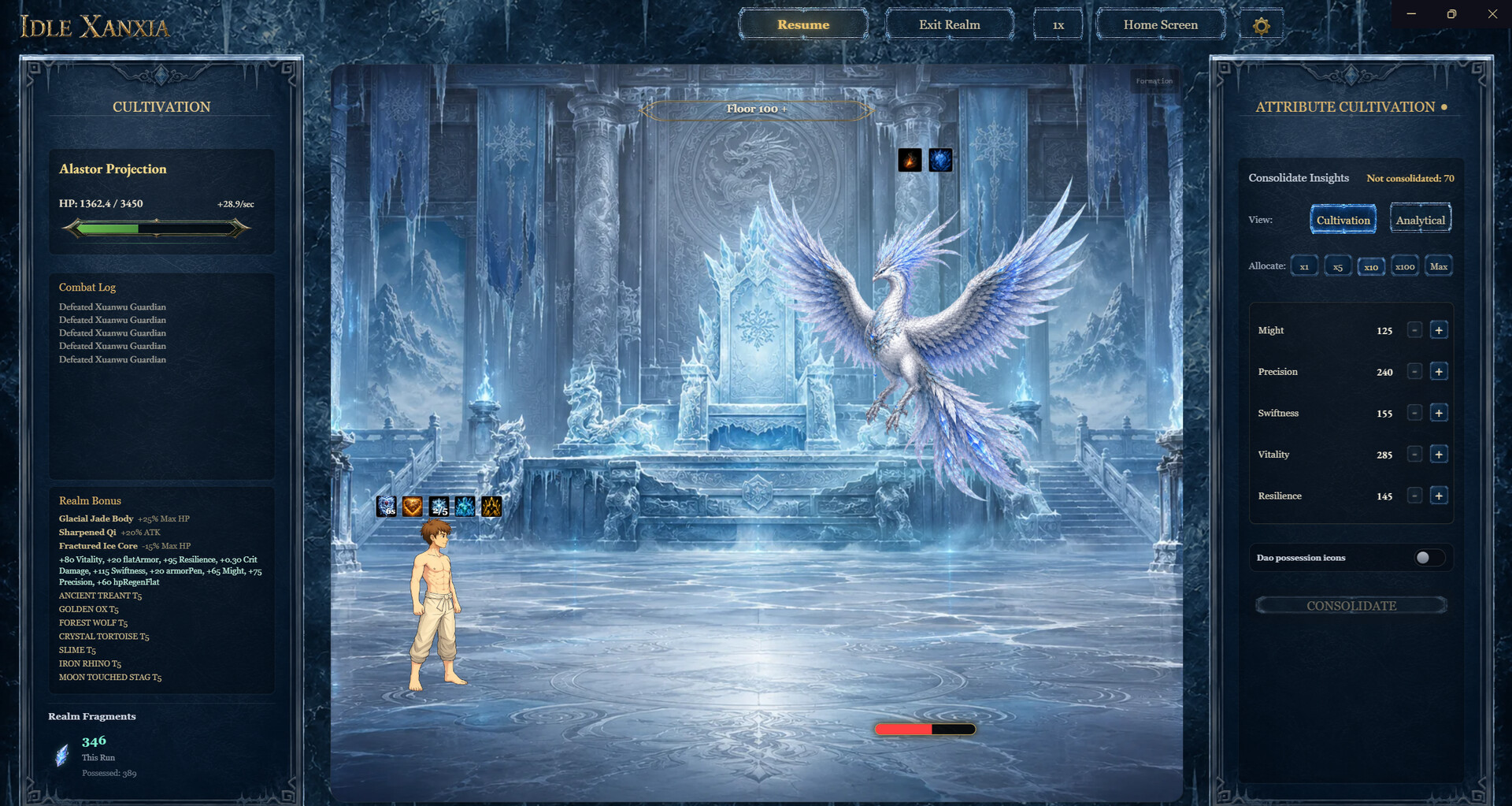
Stat Allocation
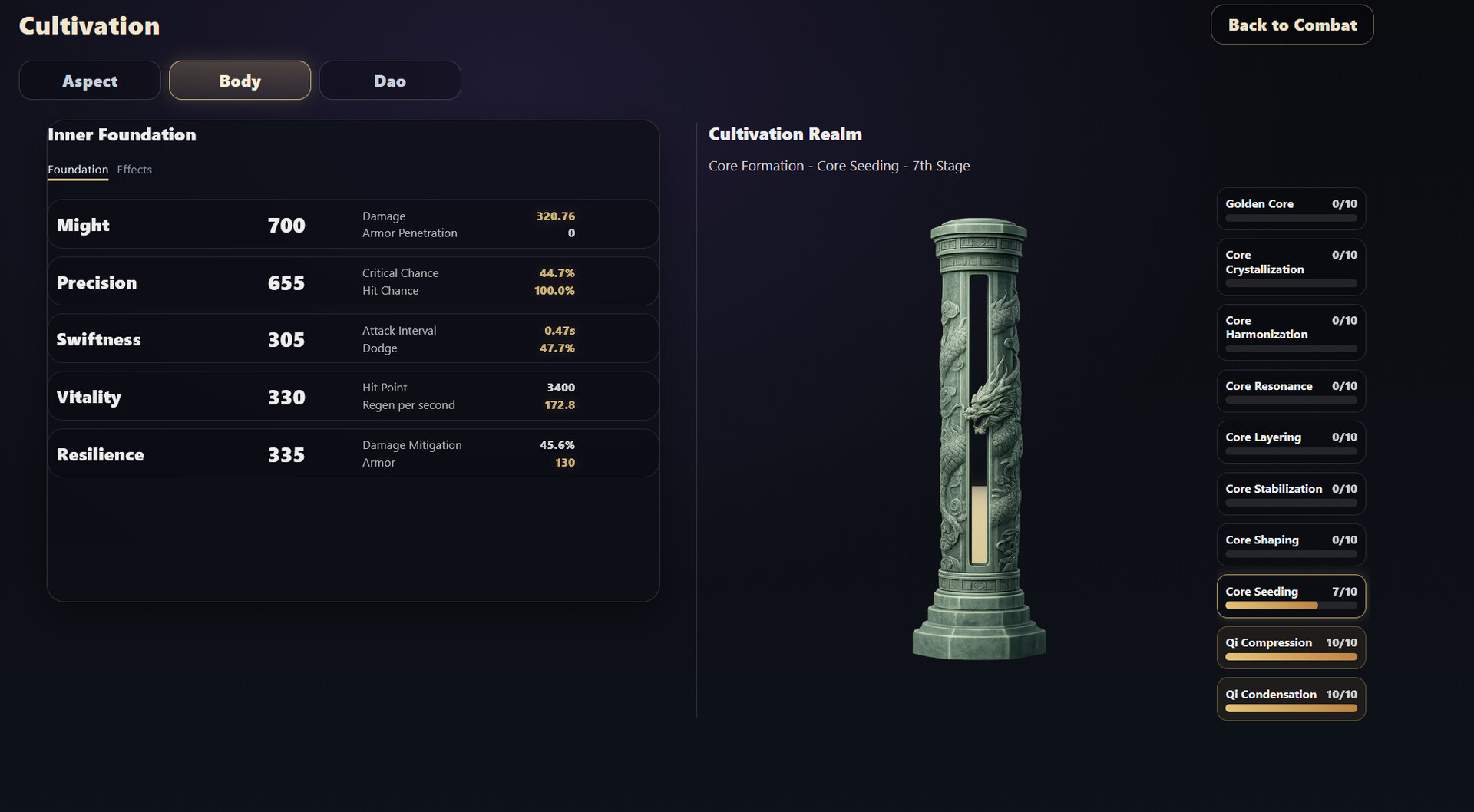
Attributes form the core strengths of your cultivator. By allocating stats you directly influence how effective your build will be in later stages. Each allocation interacts with other systems, ensuring that early choices echo throughout the game.
Because stats are the foundation, thoughtful distribution can unlock smoother pathways through later challenges. Balancing core strengths early can reduce bottlenecks when new enemies appear.
- Consider how your chosen Dao paths will benefit from particular attributes before allocating points.
- Revisit your stat distribution after each rebirth to align with newly unlocked systems.
02 / THE GUIDE
Dao Paths
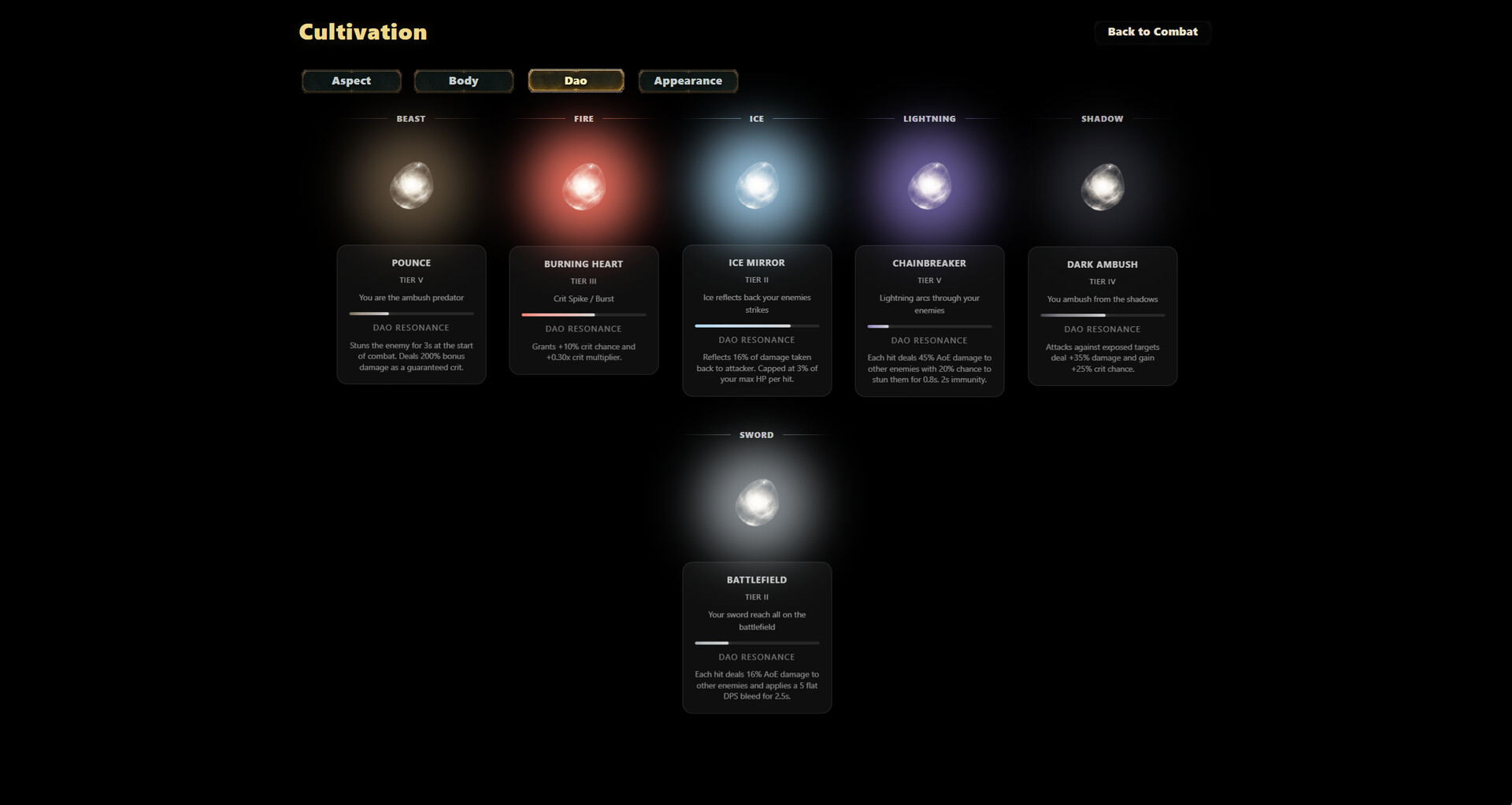
Dao paths are a collection of over fifty options that unlock abilities and shape strategic direction. Selecting a path tailors your cultivator’s capabilities, creating distinct playstyles.
Each path contributes to long‑term synergies with attributes and Aspects, meaning the right combination can amplify overall performance. Paths remain accessible across rebirths, allowing refinement over cycles.
- Experiment with multiple Dao paths across cycles to discover complementary synergies.
- Track which paths align best with the enemies you encounter most often.
03 / THE GUIDE
Aspects
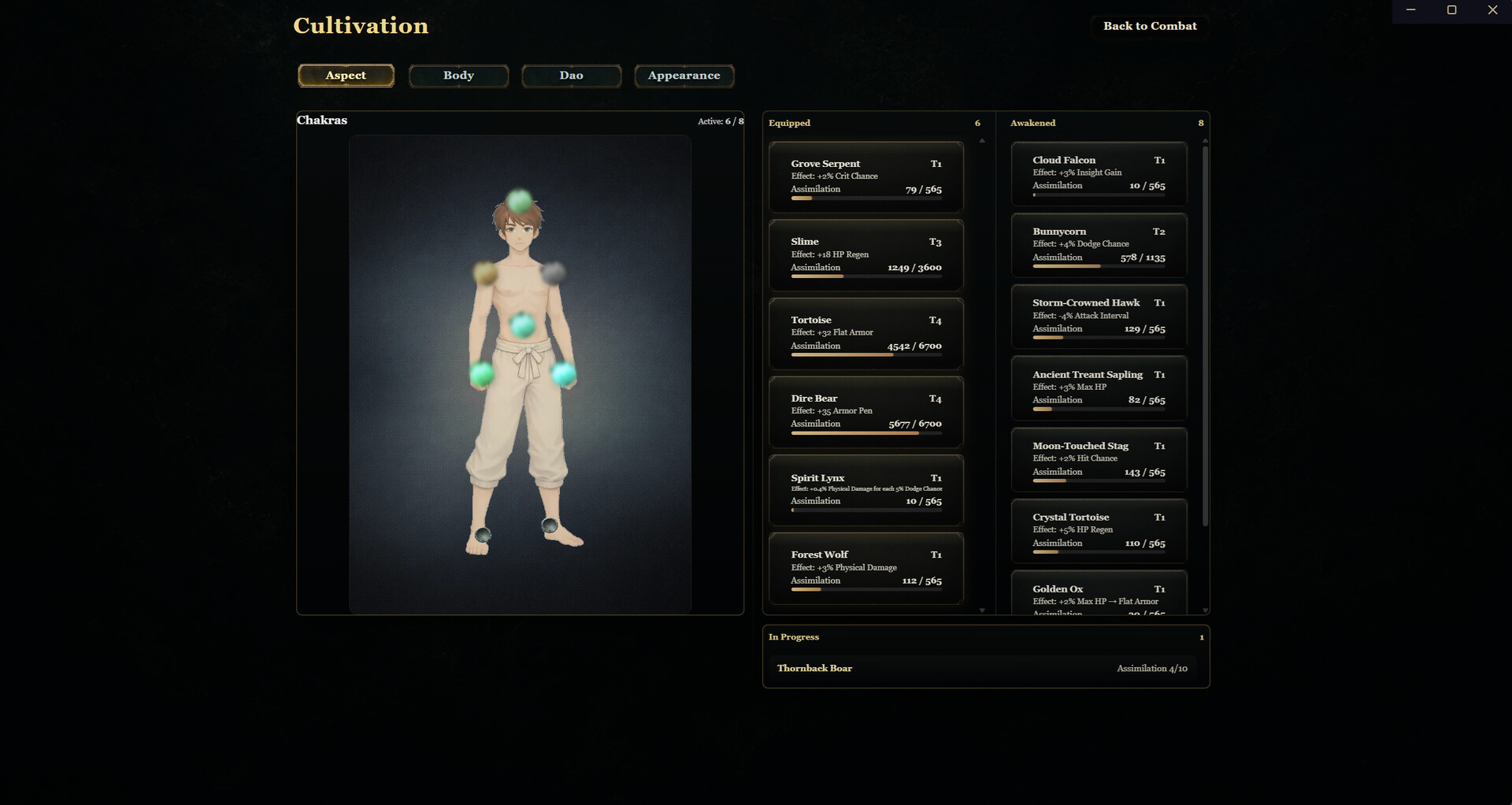
Aspects are passive powers tied to enemies that persist through rebirth. Collecting them adds lasting benefits that enhance your cultivator’s effectiveness without resetting.
Since Aspects are linked to enemy encounters, focusing on varied combat situations can broaden your passive toolkit, supporting diverse strategies in later runs.
- Target a range of enemy types to gather a wider selection of Aspects.
- Review which Aspects complement your current Dao paths before rebirth.
04 / THE GUIDE
Rebirth System
Rebirth activates when you reach your current limits, allowing you to keep key progression systems while starting a new cycle. It is described as progression rather than a full reset, enabling continuous advancement.
Each rebirth provides an opportunity to refine your build, integrate new Dao paths, and apply accumulated Aspects, pushing your cultivator farther than before.
- Plan your next run’s focus before rebirthing to maximize retained progress.
- Use rebirth as a chance to experiment with alternative attribute allocations.
05 / THE GUIDE
Sect Progression
Beyond the initial run, sect progression introduces structured advancement and new challenges. As you unlock this system, additional enemies, mechanics, and realms become available, expanding the game’s depth.
Sect progression works alongside existing systems, offering fresh layers of long‑term growth that keep each cycle engaging and distinct.
- Monitor how sect milestones align with your current build strengths.
- Adjust your Dao path choices to better tackle new mechanics introduced by sect progression.
COMMUNITY
Player discussion