 GameWiki
GET YOUR BEARINGS
About Grand Tactician: The Civil War (1861-1865)
Grand Tactician: The Civil War (1861-1865) blends a real‑time strategic campaign with tactical battlefield control. Players choose either Union or Confederate side and guide their nation from Secession through the war’s end, handling political, economic and military pressures. The game offers five campaign scenarios and twenty stand‑alone battles set on authentic fields, letting you test alternate histories such as foreign intervention or a different 1864 election outcome while managing morale, treasury and drafting.
01 / THE GUIDE
Strategic Campaign Scenarios
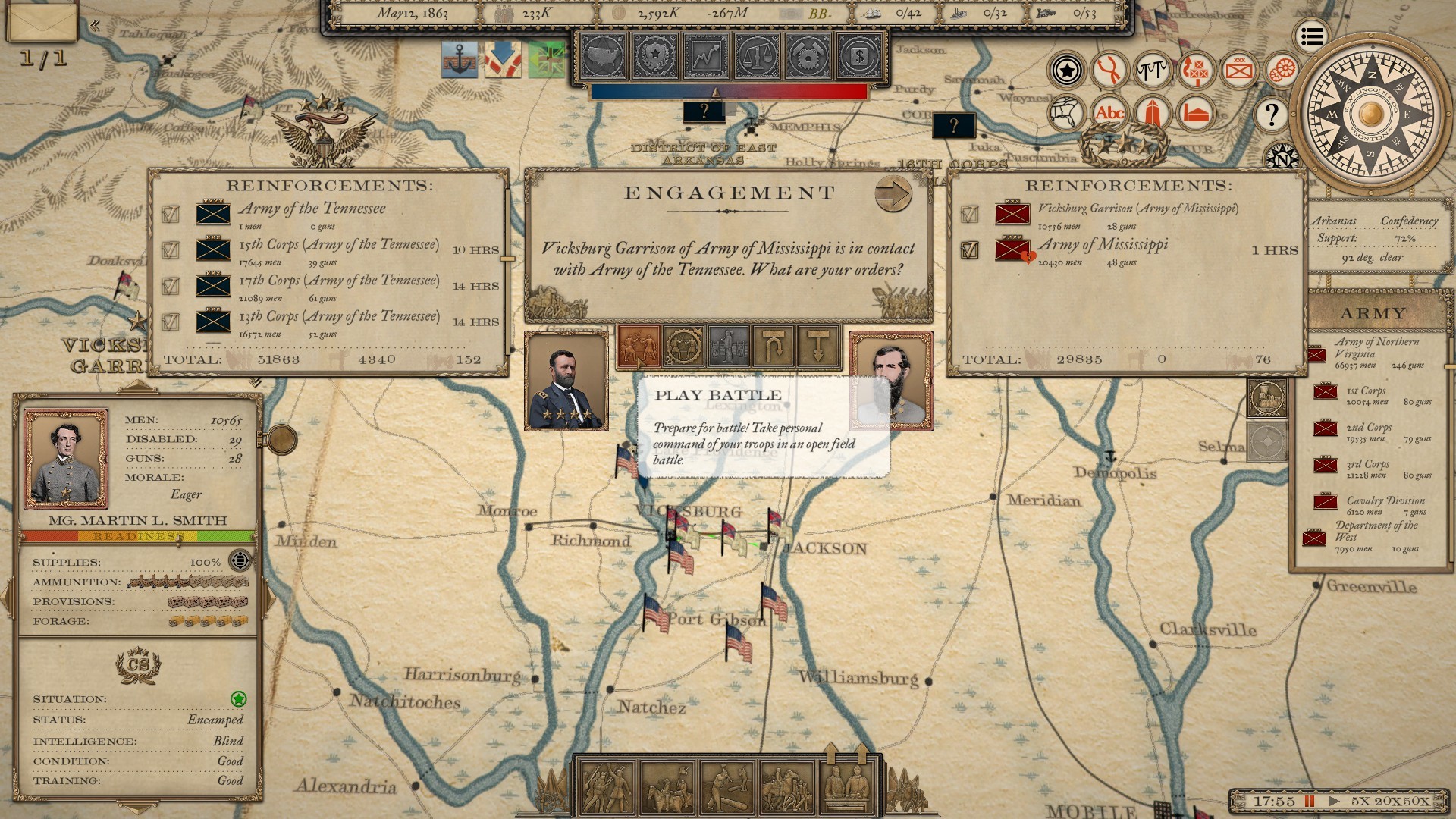
The campaign runs in real‑time, spanning from the opening Secession crisis to the final surrender. Each side follows historical objectives, and five distinct scenarios—Pre‑War, 1861, 1862, 1863, and 1864—provide varied starting conditions. Players must balance political goals, citizen morale, and fiscal health while moving armies across a map that reflects the evolving war front. The campaign’s flexibility allows “what‑if” choices that can alter the overall timeline.
- Compare early‑war and late‑war scenarios to see how resource strain changes.
- Watch morale trends; a dip often signals upcoming unrest.
02 / THE GUIDE
Twenty Stand‑Alone Battles
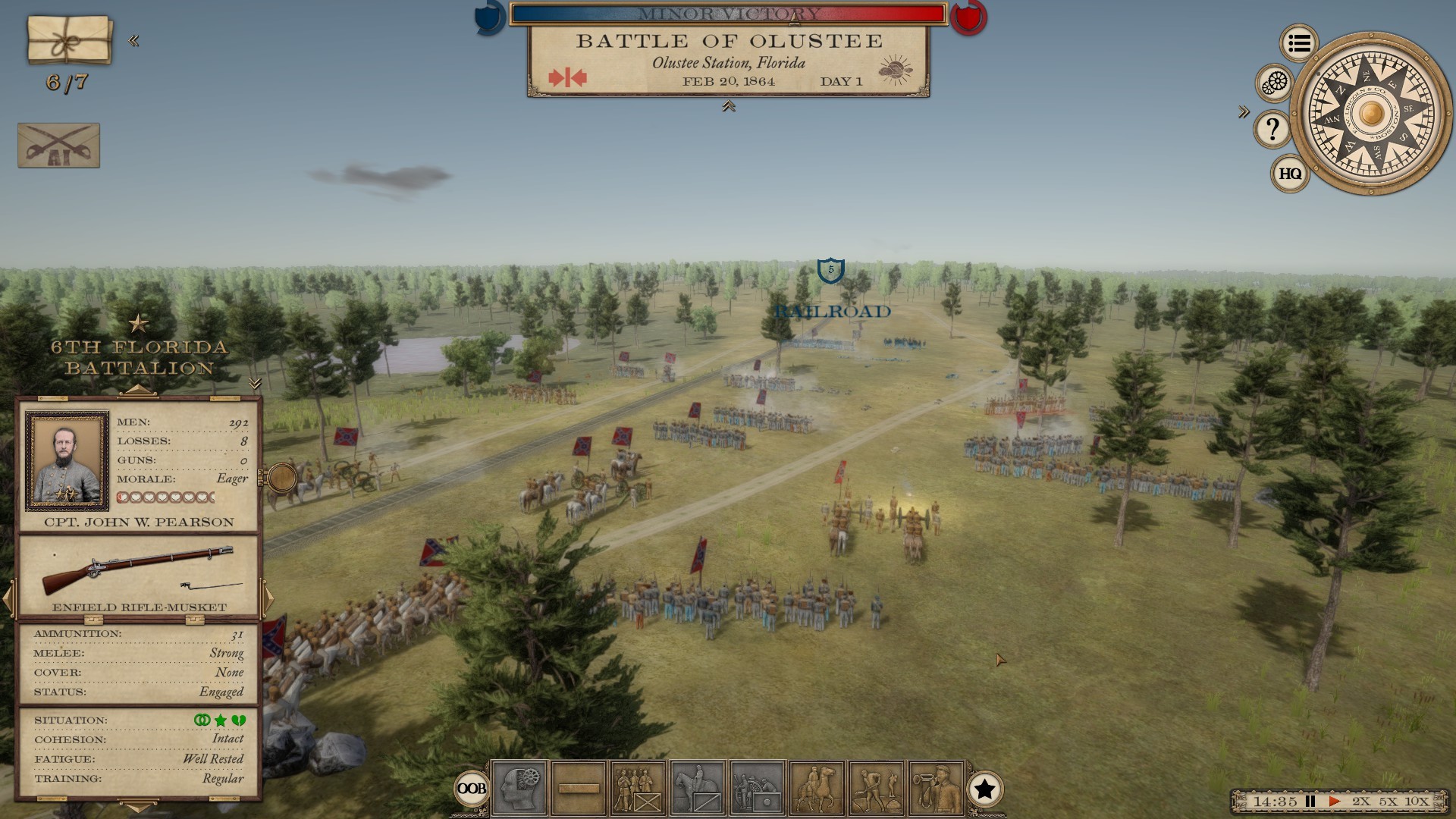
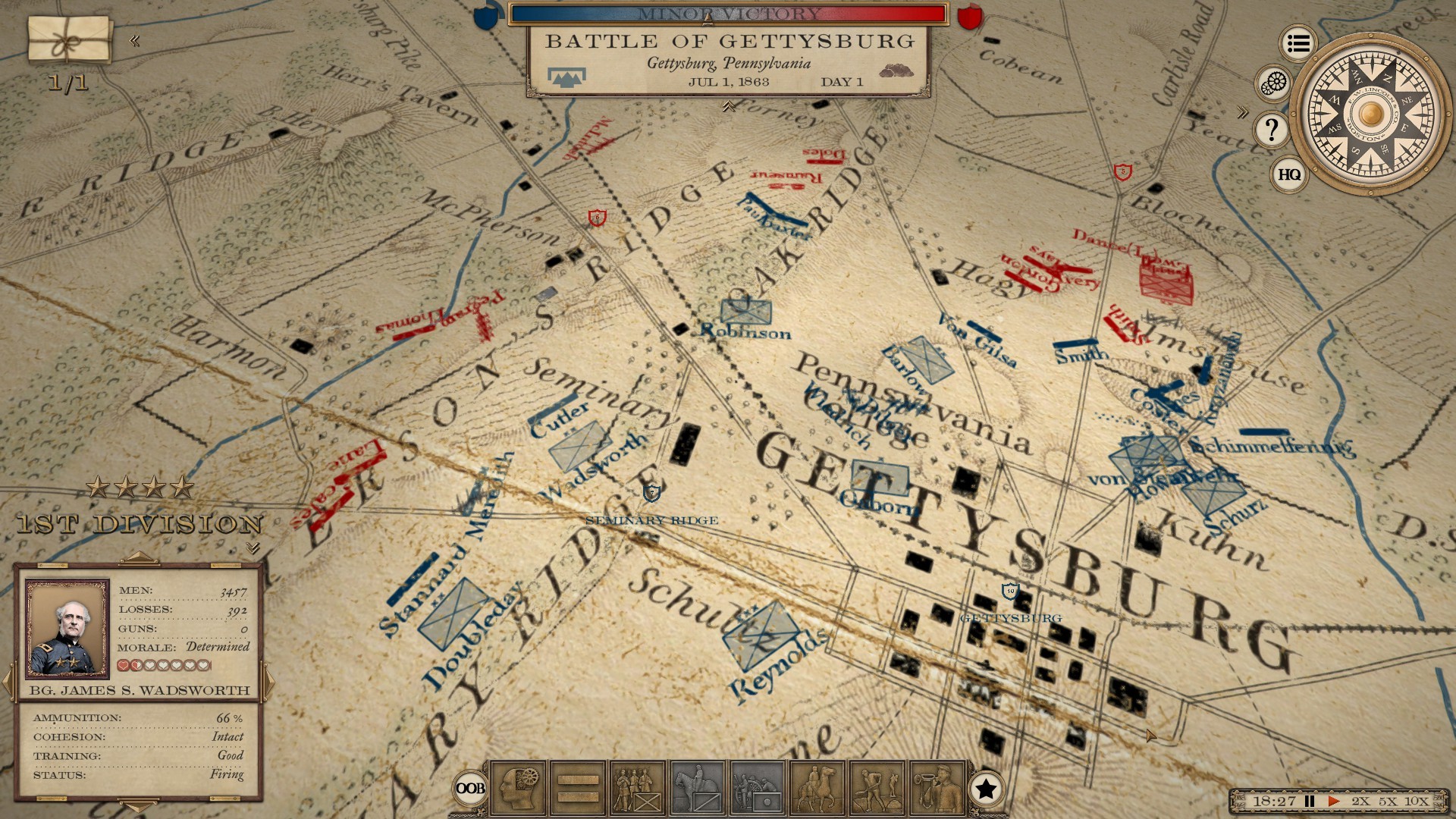
Beyond the campaign, the game includes twenty individual battles ranging from First Manassas (1861) to Appomattox Court House (1865). Each battle unfolds on a historically accurate field and can last multiple days. These engagements let you focus purely on tactics—deploying infantry, cavalry, artillery, engineers, and reserves—without the broader strategic overlay of the campaign.
- Try a battle from the opposite side to understand differing tactics.
- Use engineers early to shape terrain before the main assault.
03 / THE GUIDE
Supply Lines and Railroads
Logistics are central; you must build and expand railroad lines to move supplies and armies, a first for the era. Maintaining a steady flow prevents treasury depletion and keeps troops combat‑ready. If supply falters, morale drops and drafting may trigger unrest, reflecting the historical fatigue of a prolonged war.
- Prioritize rail connections to front‑line armies first.
- Monitor treasury health; low funds often precede supply shortages.
04 / THE GUIDE
Commanders and Reputation
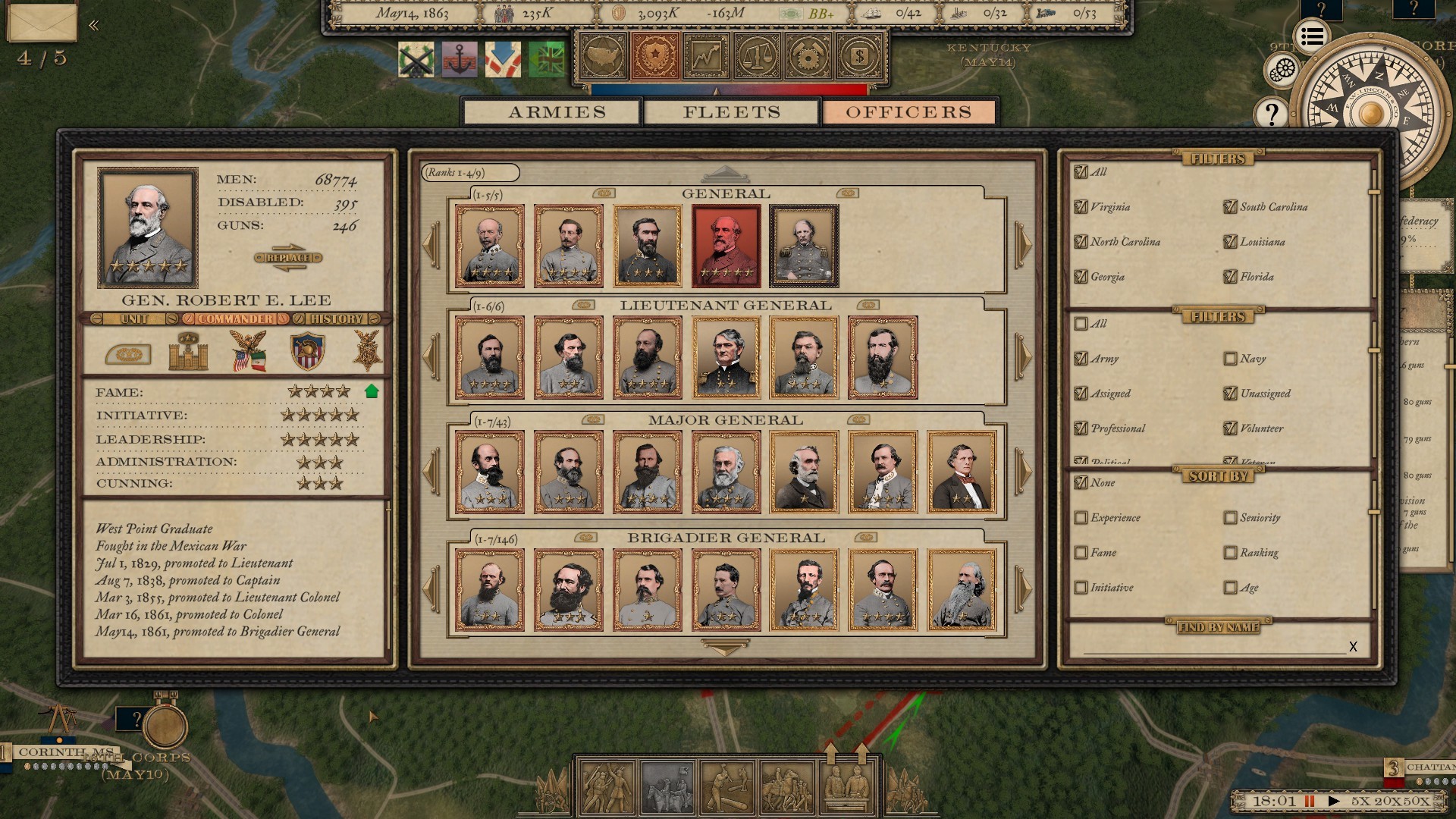
Hundreds of historical commanders, each with personal attributes and specializations, can be assigned to units. Their reputation influences both soldier morale and civilian support, making famous leaders valuable assets. Loss of reputation can be “irreparable,” so protecting key figures is a strategic priority.
- Assign high‑reputation commanders to critical assaults.
- Avoid unnecessary casualties for famed leaders to preserve reputation.
05 / THE GUIDE
Historical Battlefield Elements
Battles feature realistic Order of Battle, engineers who can construct pontoons and trenches, and the ability to call in reinforcements that shift momentum. These tools let you recreate authentic Civil War tactics. The game also includes re‑enactment footage and period music, enhancing immersion on each historic field.
- Build pontoon bridges early to secure river crossings.
- Use trench digging to improve defensive positions before enemy contact.

COMMUNITY
Player discussion