 GameWiki

GET YOUR BEARINGS
About Grand Ages: Rome
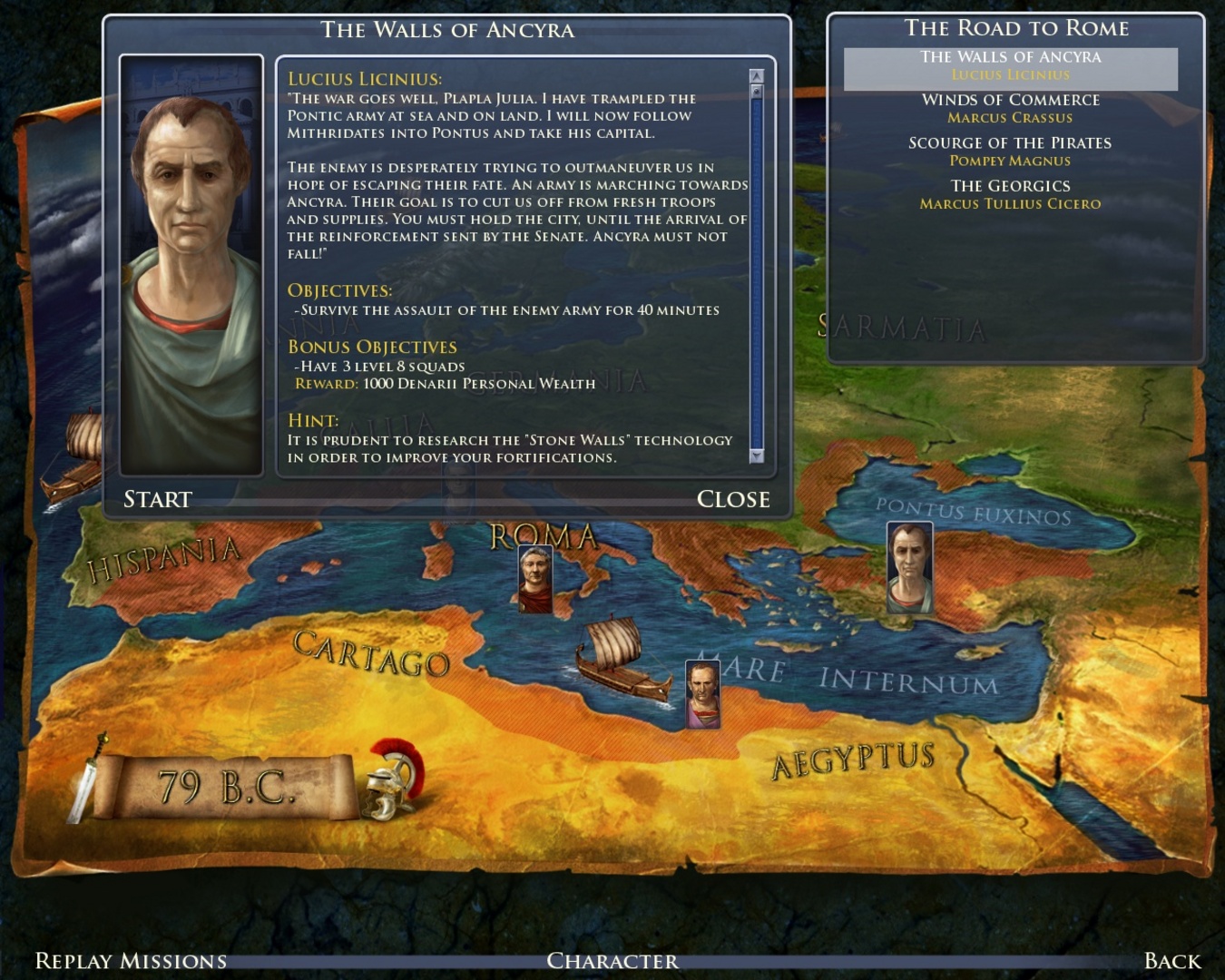
Grand Ages: Rome continues the Imperium Romanum legacy, placing you as a governor of a Roman province during the empire’s height. Your decisions shape the province’s prosperity, defense, and historical progress. The game offers a non‑linear single‑player campaign of 40 missions, featuring a multilevel economic system, sea trade, RTS‑style battles, and a timeline‑driven character development that spans iconic locations such as Rome, Cyrene, and Lugdunum.
01 / THE GUIDE
Non‑Linear Campaign
The campaign consists of 40 missions that can be approached in various orders, allowing players to shape the narrative through their choices. Each mission contributes to a broader timeline that reflects historical development.
Progression is tied to completing mission objectives, which may involve economic growth, military victories, or diplomatic trade, giving a flexible path through the game’s historical setting.
- Experiment with different mission orders to see how early economic choices affect later military challenges.
- Balance immediate objectives with long‑term timeline goals for smoother progression.
02 / THE GUIDE
Multilevel Economic and Sea Trade
An enhanced, multilevel economic system lets you manage resources, fulfill citizen needs, and expand trade routes. Sea trade adds a maritime dimension, linking provinces and distant cultures.
Economic success supports military funding and city development, making trade routes and resource allocation central to provincial stability.
- Prioritize sea trade early to gain additional resources for later missions.
- Monitor citizen needs regularly to keep your province's economy healthy.
03 / THE GUIDE
Diverse Warfare Abilities
Combat features 18 distinct warfare abilities, including units such as Praetorians, War Elephants, and Triarii. These units provide varied tactical options in RTS‑like battles.
Choosing the right mix of units can counter barbarian tribes and support offensive campaigns across the map.
- Combine heavy infantry like Praetorians with mobile units such as War Elephants for balanced assaults.
- Study enemy composition before deploying specialized units.
05 / THE GUIDE
Roman Noble Families
Players select from five Roman noble families, such as Caesar’s Julii, each offering distinct abilities that influence governance, military, and economic strategies.
Family abilities shape how you approach missions, providing unique advantages that can be leveraged throughout the campaign.
- Match family abilities with your preferred playstyle—economic focus or military aggression.
- Switch strategies as the timeline progresses to maximize each family’s strengths.


COMMUNITY
Player discussion