 GameWiki
GET YOUR BEARINGS
About Gary Grigsby's War in the East
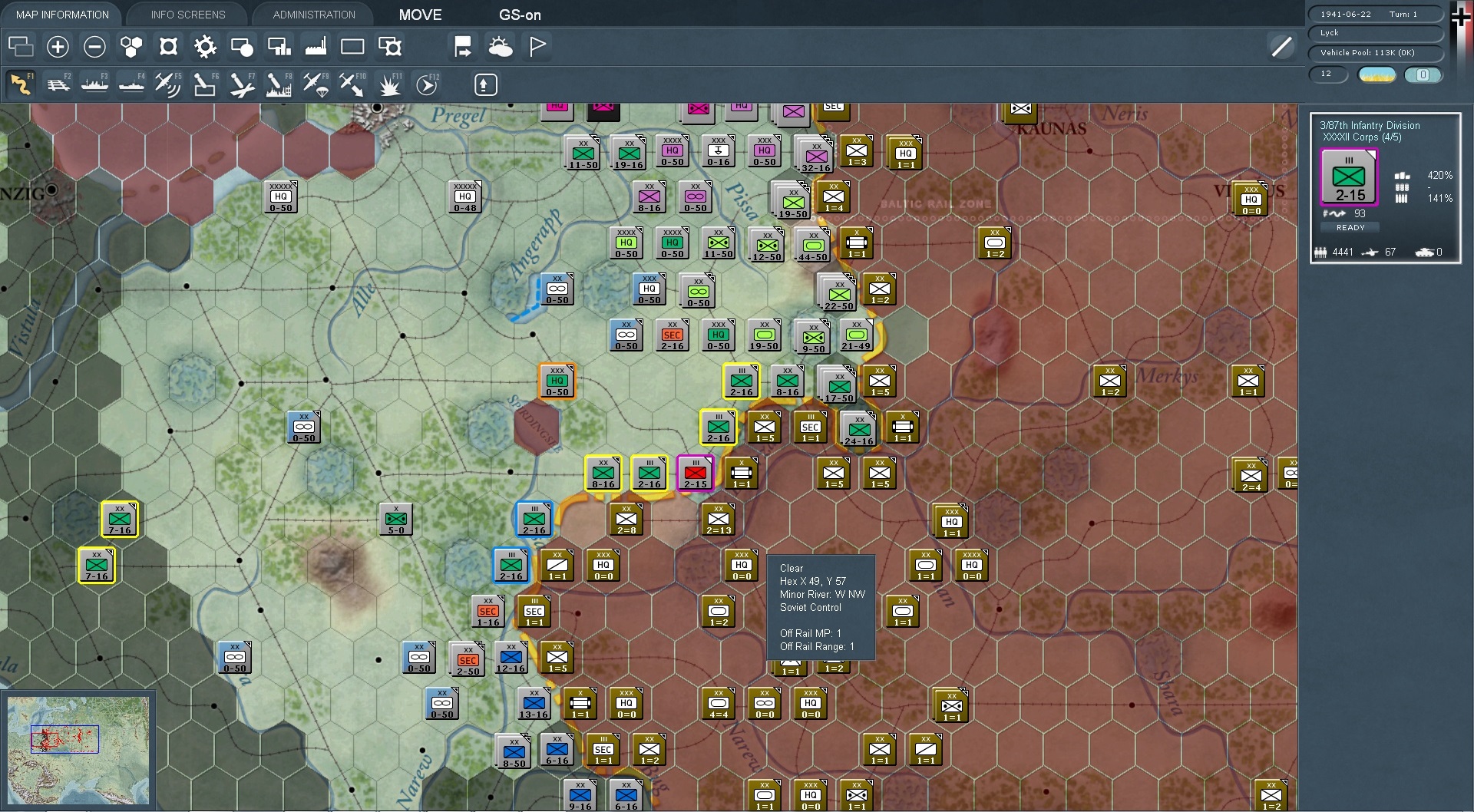
Gary Grigsby’s War in the East is a turn‑based strategy title that models the German‑Soviet conflict from 1941 to 1945. The map uses a 10‑mile hex scale and each turn represents one week, allowing detailed simulation of divisions, logistics, weather and morale.
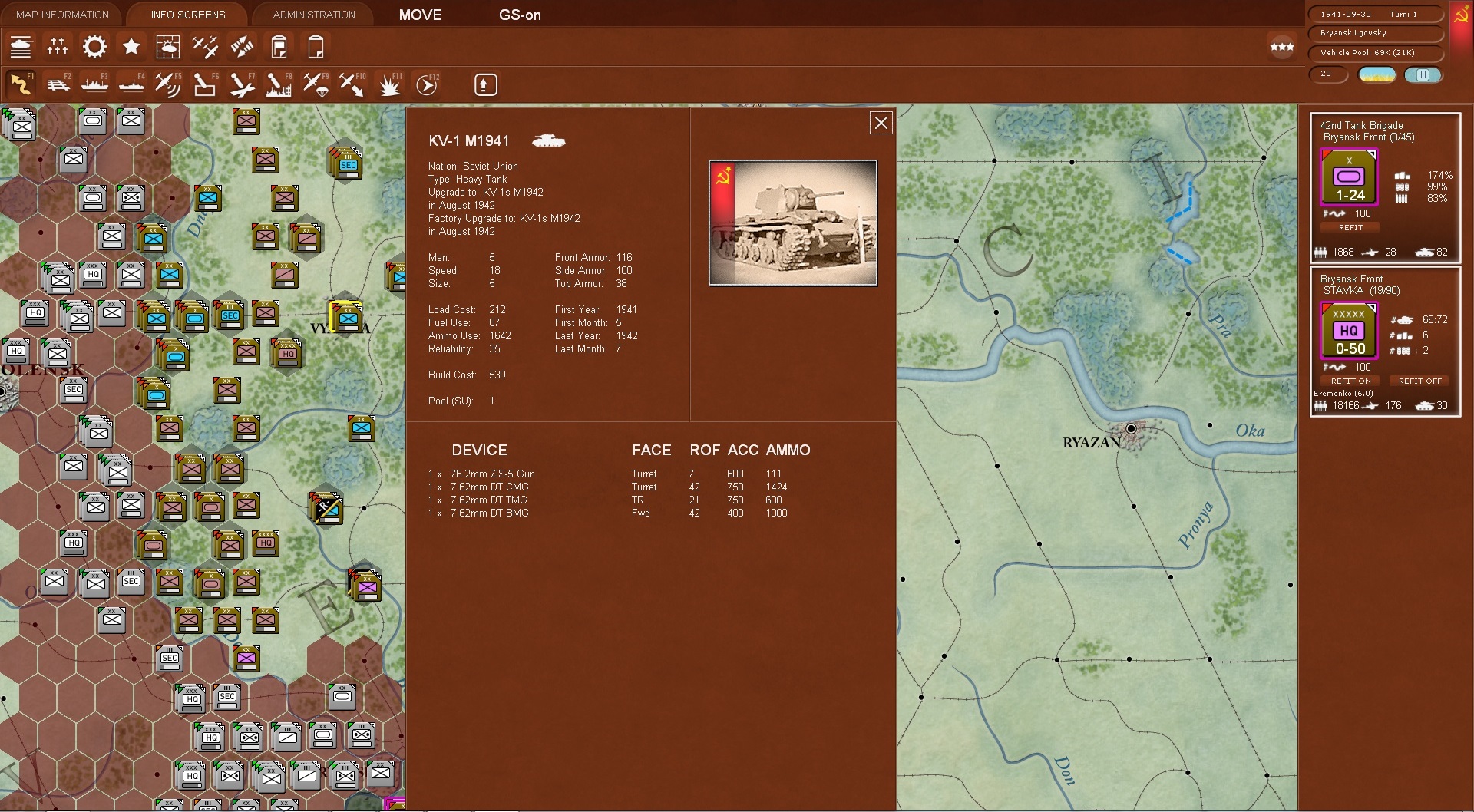
The product ships with five long campaigns, eleven shorter scenarios, a built‑in editor and both single‑player and Play‑by‑Email multiplayer. Its database holds roughly 4 000 units and over 500 historical commanders, delivering a data‑rich representation of the Eastern Front.
01 / THE GUIDE
Campaigns and Scenarios
Five major campaigns start in 1941, 1942, 1943, 1944 and an alternate‑victory 1941 line, each extending to the summer of 1945. Eleven stand‑alone scenarios run from ten to twenty‑five turns, each presenting its own strategic and operational challenges.
Both campaigns and scenarios can be contested against the computer, observed as the AI runs both sides, or played via Play‑by‑Email or server‑based PBEM matches. Five distinct help‑level settings let players fine‑tune the AI’s assistance for each side.
- Match a scenario’s turn count to the amount of time you can devote to a session.
- Experiment with different help‑level settings to see how AI logistics change.
02 / THE GUIDE
Map Scale, Terrain and Weather
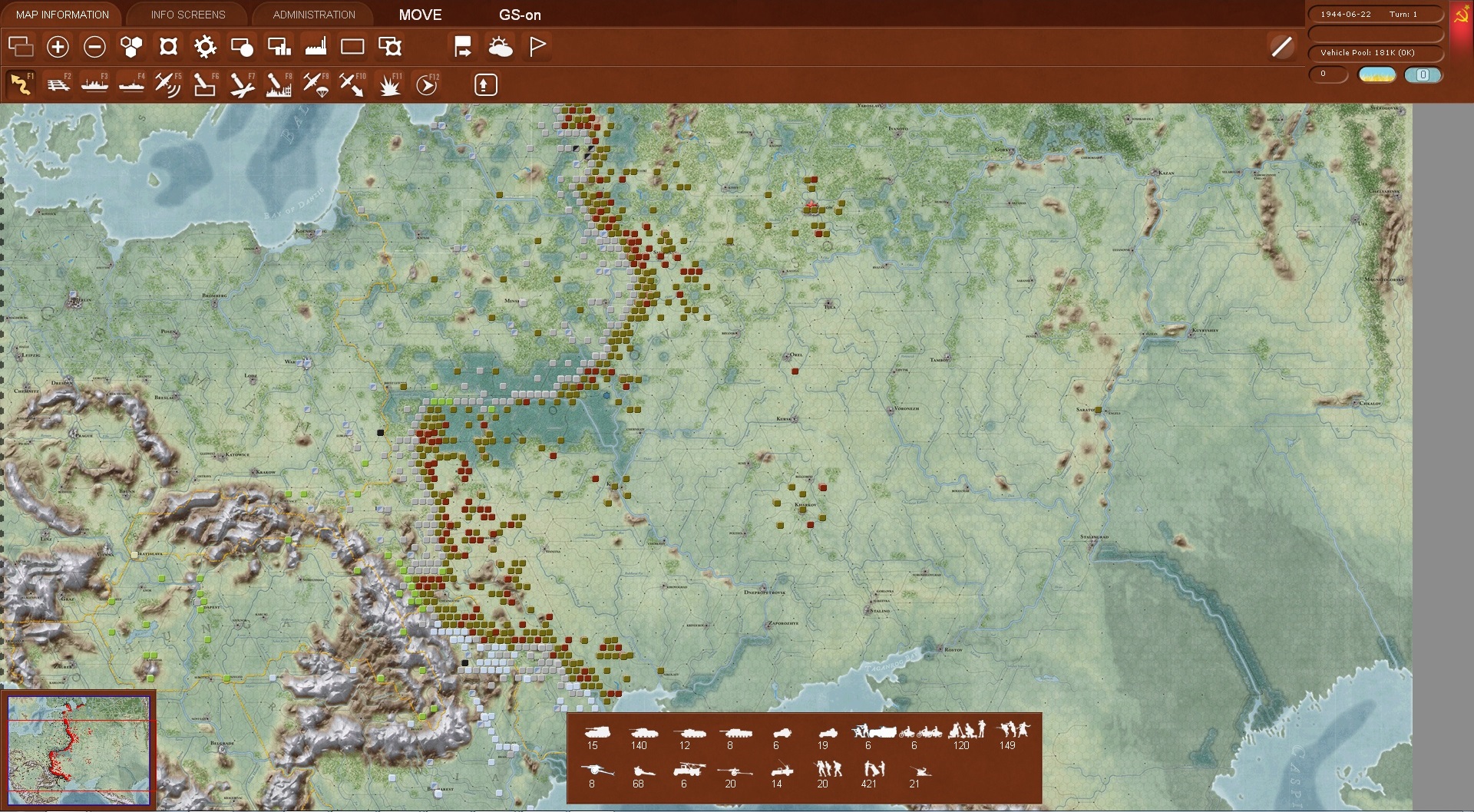
The playable area stretches from about 100 miles west of Berlin to the Ural Mountains, and from roughly 150 miles north of Leningrad down to Bulgaria and Baku. Hexes cover ten miles and each turn covers a week, giving fine‑grained movement and supply calculations.
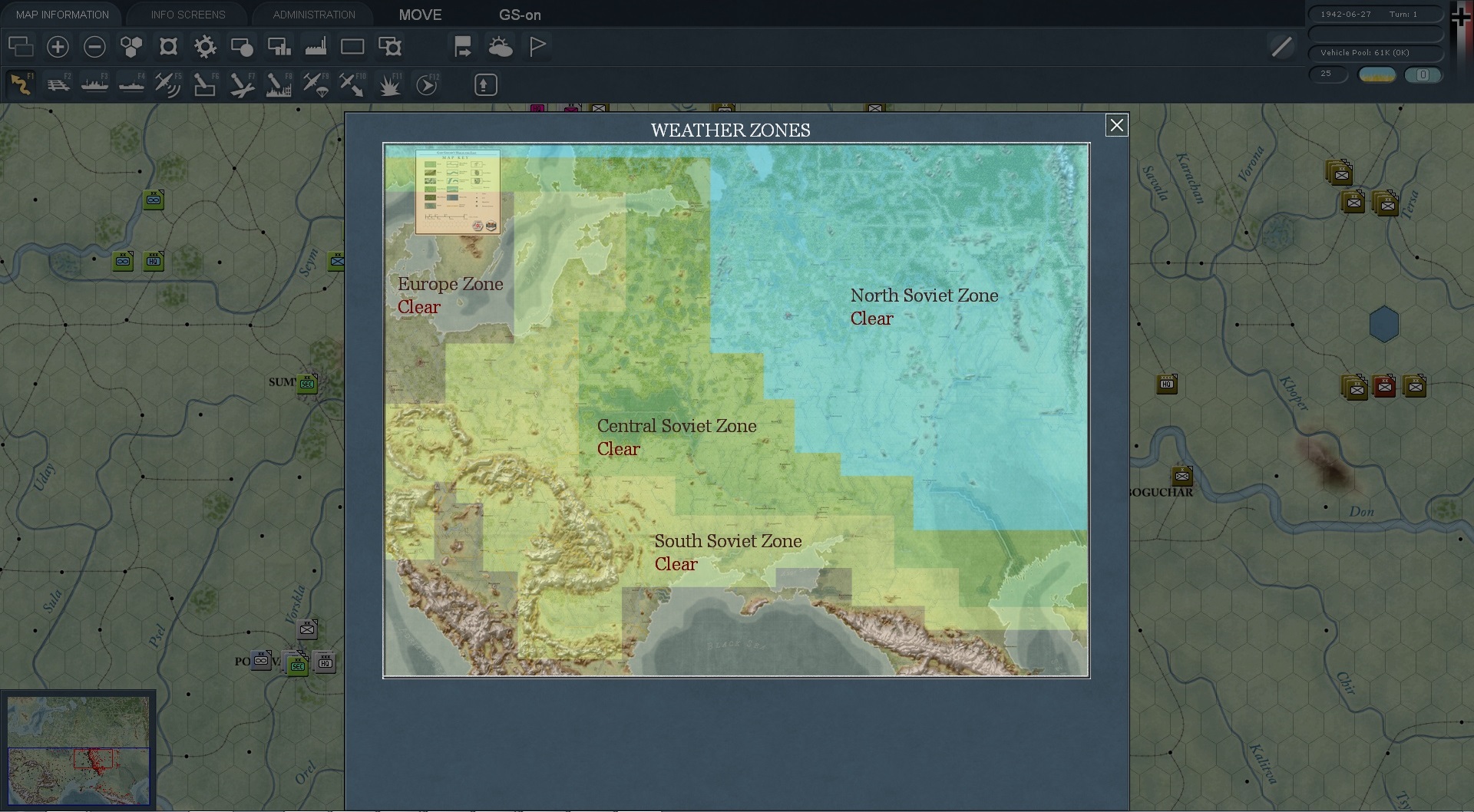
Weather zones, river‑ice levels and optional random or fixed weather patterns influence combat and logistics. Two optional rule sets let players adjust the first winter blizzard effect and the Soviet combat doctrine for further customisation.
- Select the fixed‑weather option if you prefer a predictable early‑game environment.
- Observe how river ice changes unit movement during winter turns to plan crossings.
03 / THE GUIDE
Unit Structure and Support Types
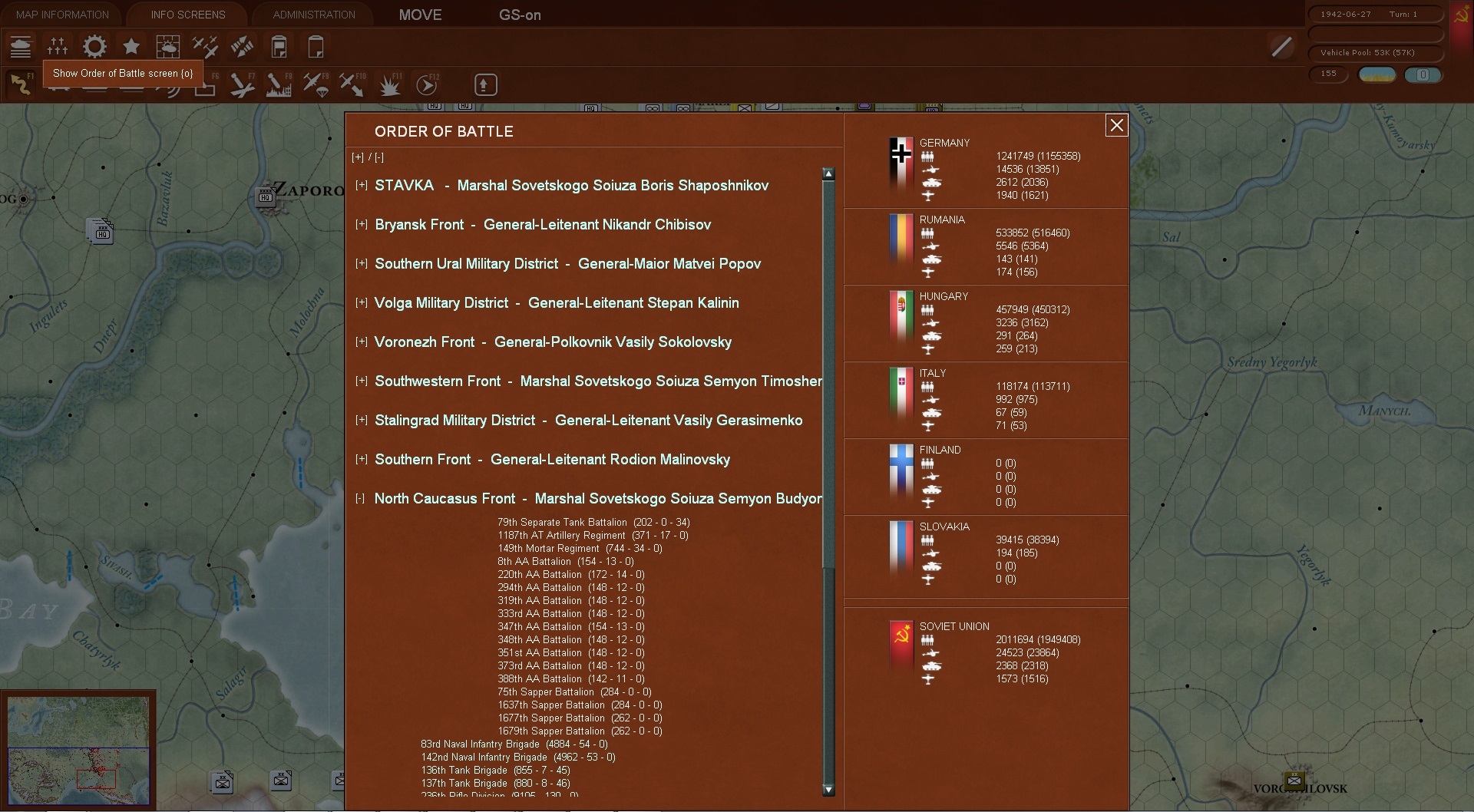
Forces are organised at the division level, each containing thousands of battalion‑ and regiment‑size support elements. Support classes include artillery, engineers, ski troops, anti‑tank, pioneers, tank destroyers and several others, giving each division a varied capability set.
More than 500 historical commanders are modelled, each with eight rating fields covering combat skill, political reliability and other attributes. These leaders can be dismissed, executed, fired or killed in action, directly affecting the performance of the units they command.
- Check a commander’s combat and political ratings before assigning them to a critical division.
- Combine complementary support classes to cover a broader range of tactical situations.
04 / THE GUIDE
Artificial Intelligence and Help Levels
Players may face the computer on either side, or let the AI run the entire war autonomously. Five categories of help levels per side let users adjust the difficulty level of the AI opponent.
Supply, fatigue, experience, morale and leader skill all play an important part in determining results at the front, and the help levels let you shape how challenging the AI opponent is.
- Begin with a higher help level to observe how the AI manages supply chains.
- Reduce the help level gradually as you become comfortable with the logistical model.
05 / THE GUIDE
Scenario and Data Editing Tools
The title includes a full‑service editor that lets users create or modify scenarios and game data, with CSV import and export capabilities for easy external editing. Detailed statistics for ground units and aircraft are available for performance analysis.
The editor also permits the addition of new units beyond the roughly 4 000 supplied in the base game, giving players extensive freedom to design custom battles and test alternative orders of battle.
- Export a scenario to CSV, adjust unit attributes, then re‑import to see how balance changes.
- Use the built‑in statistical reports to compare your custom scenario against historical benchmarks.
COMMUNITY
Player discussion