 GameWiki
GET YOUR BEARINGS
About Game Dev Tycoon
Game Dev Tycoon lets you relive the evolution of the gaming industry by founding a video‑game studio in the 1980s. You begin in a modest garage, craft simple titles, and gradually expand your portfolio while tracking detailed game reports. As you succeed, you can move into larger offices, hire and train staff, and tackle increasingly complex projects that shape the market.
The simulation blends casual, indie, and strategy elements, offering single‑player play with Steam achievements, trading cards, and cloud saves. It also supports community translations and modding via Steam Workshop, letting players customize and share content across many languages.
01 / THE GUIDE
Starting Out in the 80s
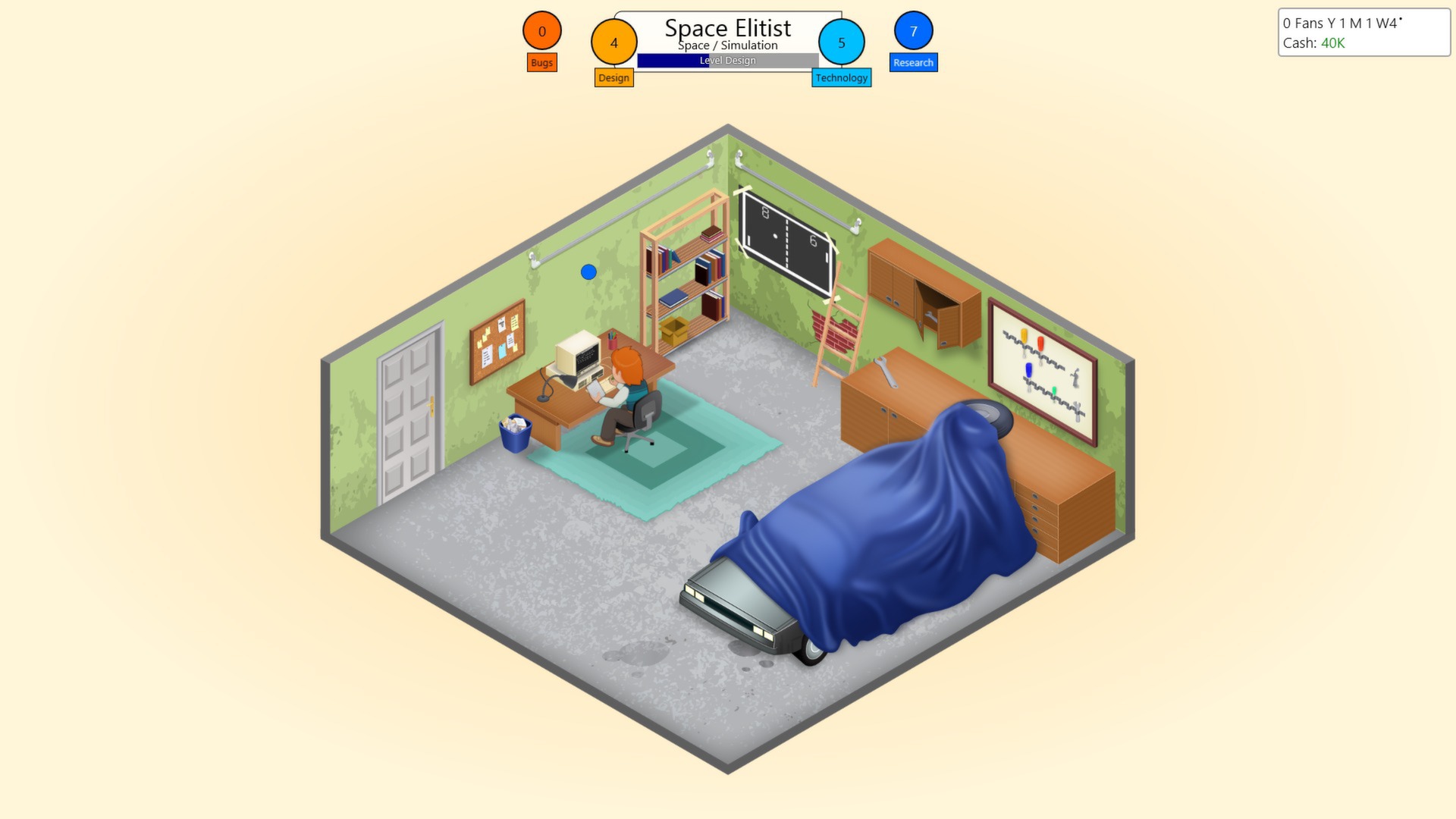
Your company begins in a small garage office during the 1980s, reflecting the early days of real‑world game studios. The initial focus is on creating simple games that introduce core mechanics and basic design principles.
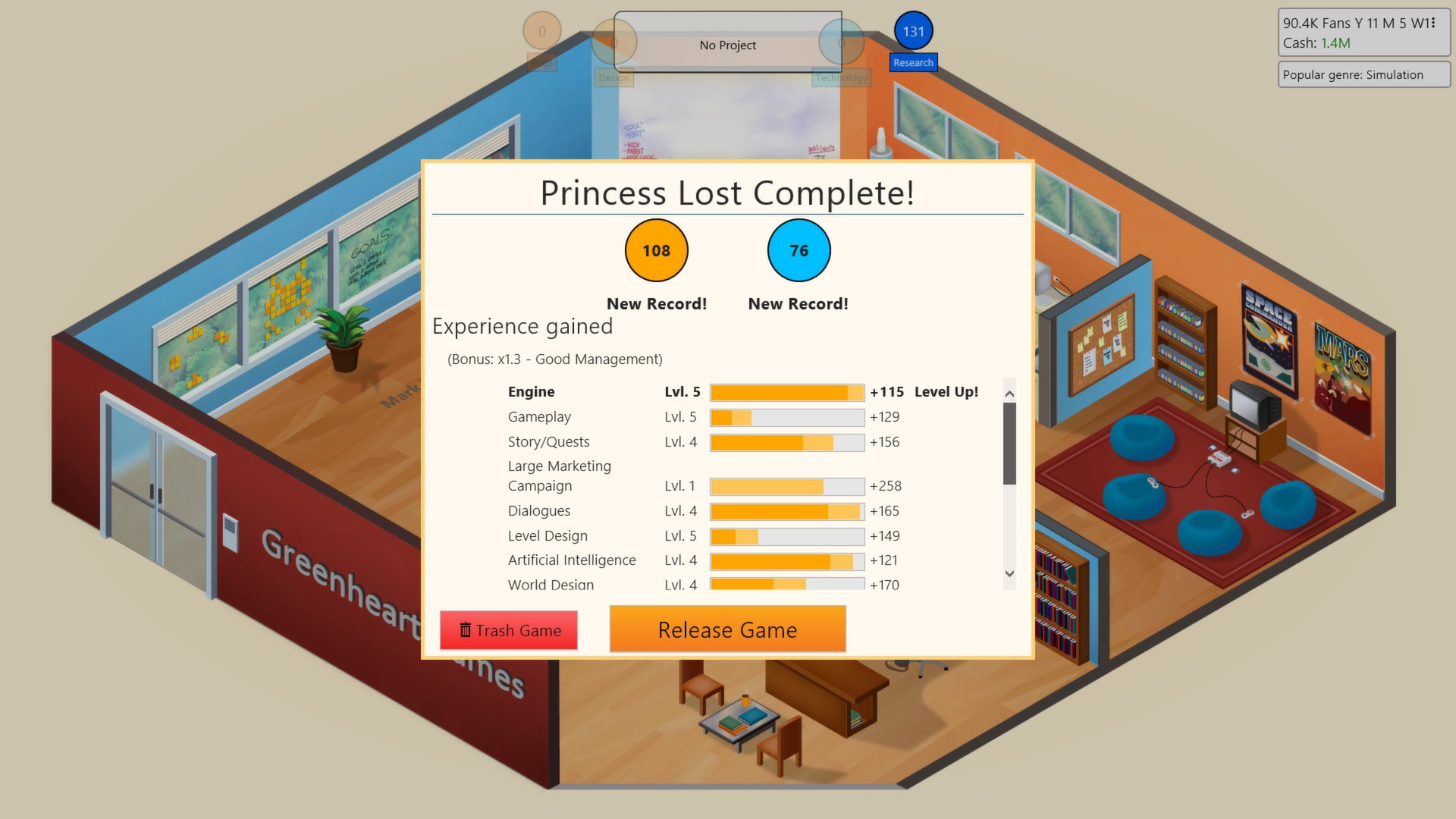
Early releases generate experience points, which unlock new development options and eventually allow you to build your first custom game engine. This progression mirrors the historical growth of the industry from humble beginnings to larger operations.
- Prioritize releasing a few solid titles early to accumulate experience quickly.
- Balance spending on marketing versus development to maximize early profits.
02 / THE GUIDE
Game Development Decisions
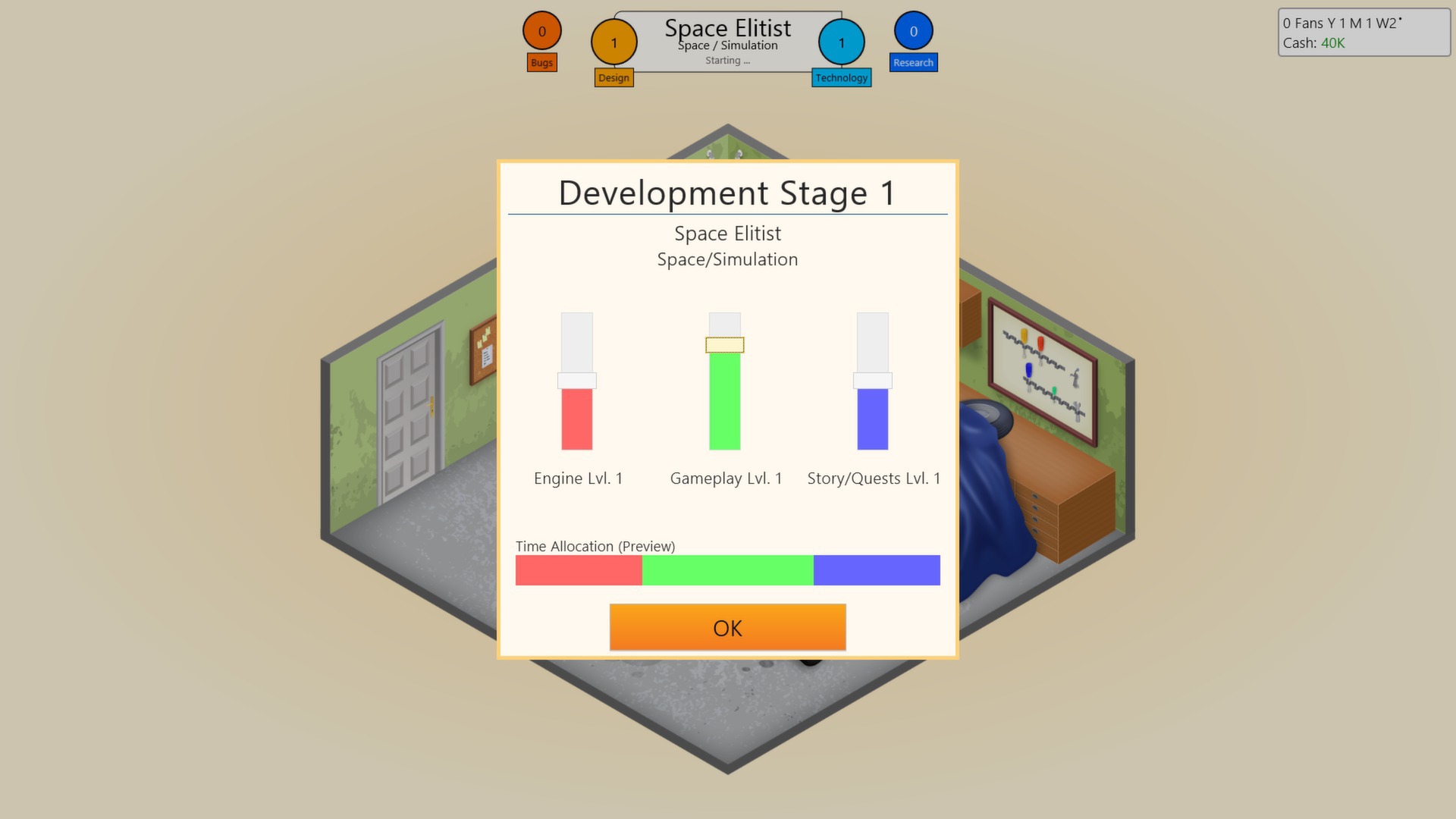
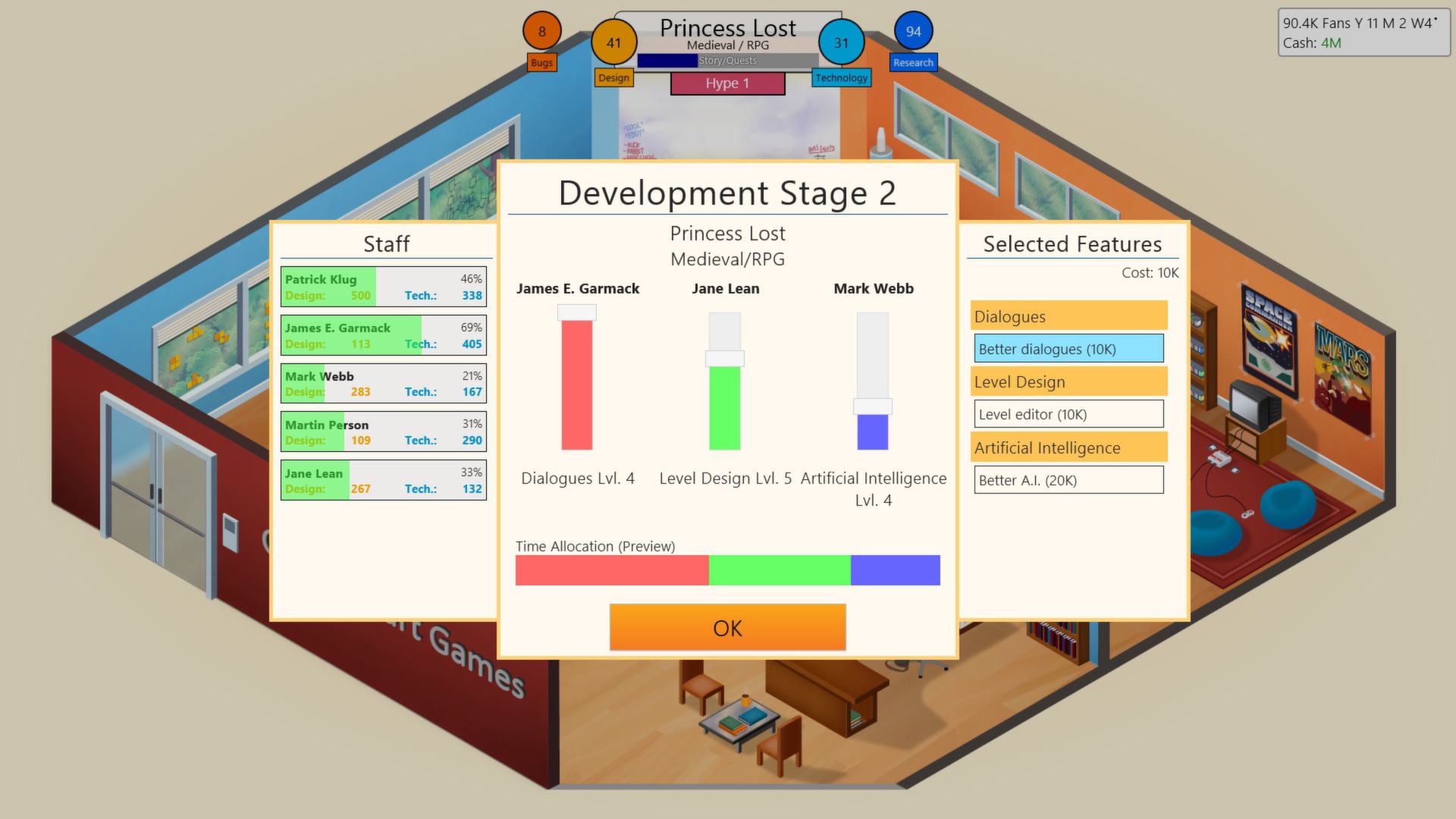
During each development cycle you choose which aspects to emphasize, such as gameplay, graphics, or quests. These choices directly affect the final rating and commercial success of the title.
The system rewards thoughtful allocation of resources, encouraging you to consider market trends and player preferences when shaping your game’s focus.
- Review past game reports to see which features resonated with players.
- Experiment with different focus mixes to discover profitable niches.
03 / THE GUIDE
Company Growth and Staffing
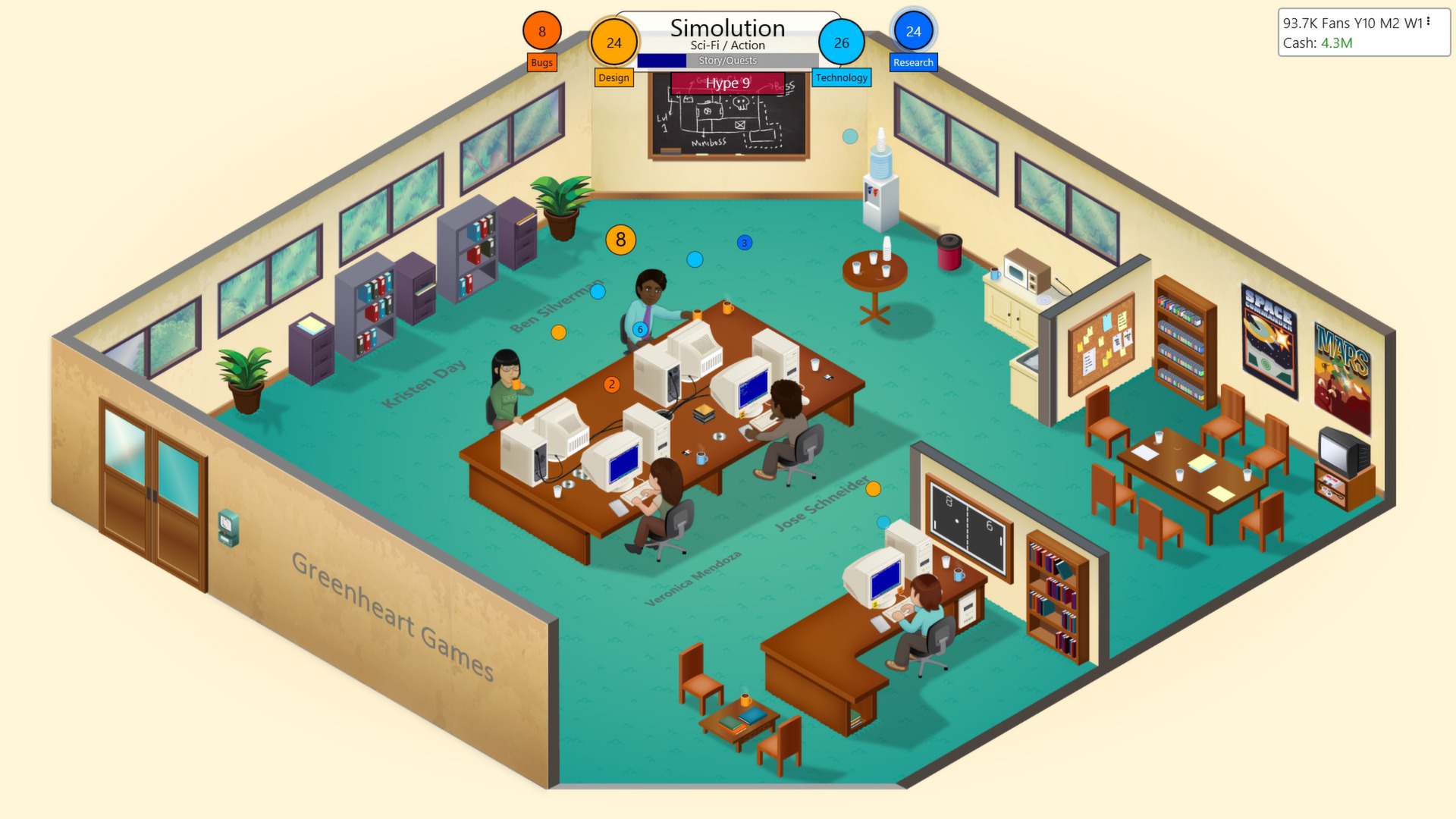
After a series of successful releases you can relocate to a larger office, providing space for a world‑class development team. Hiring and training staff unlocks advanced options and larger project scopes.
Managing a growing team introduces new challenges, as you must balance workload, morale, and deadlines to deliver hit games without overextending resources.
- Invest in staff training to improve overall development efficiency.
- Monitor employee morale to prevent productivity drops.
04 / THE GUIDE
Research, Technologies, and Engines
Researching new technologies expands your toolkit, allowing you to create custom game engines tailored to specific genres or platforms. These engines can give your titles a competitive edge in the market.
Continued research also opens secret labs and industry‑changing projects, providing long‑term strategic advantages for seasoned studios.
- Prioritize research that aligns with upcoming market trends.
- Allocate budget to engine development early for later flexibility.
05 / THE GUIDE
Community, Modding, and Translations
The game includes Steam Workshop support, enabling players to create and share mods. Community translations are available for German, Spanish, French, Portuguese (Brazil), Russian, Czech, Swedish, Dutch, and Italian via the in‑game menu.
These features foster a vibrant player community, extending replayability and allowing fans to tailor the experience to their language and creative preferences.
- Explore community mods for fresh gameplay ideas.
- Contribute translations to help non‑English speakers enjoy the game.
COMMUNITY
Player discussion