 GameWiki

GET YOUR BEARINGS
About For the Fatherland: Chronicle of Park Chung-hee
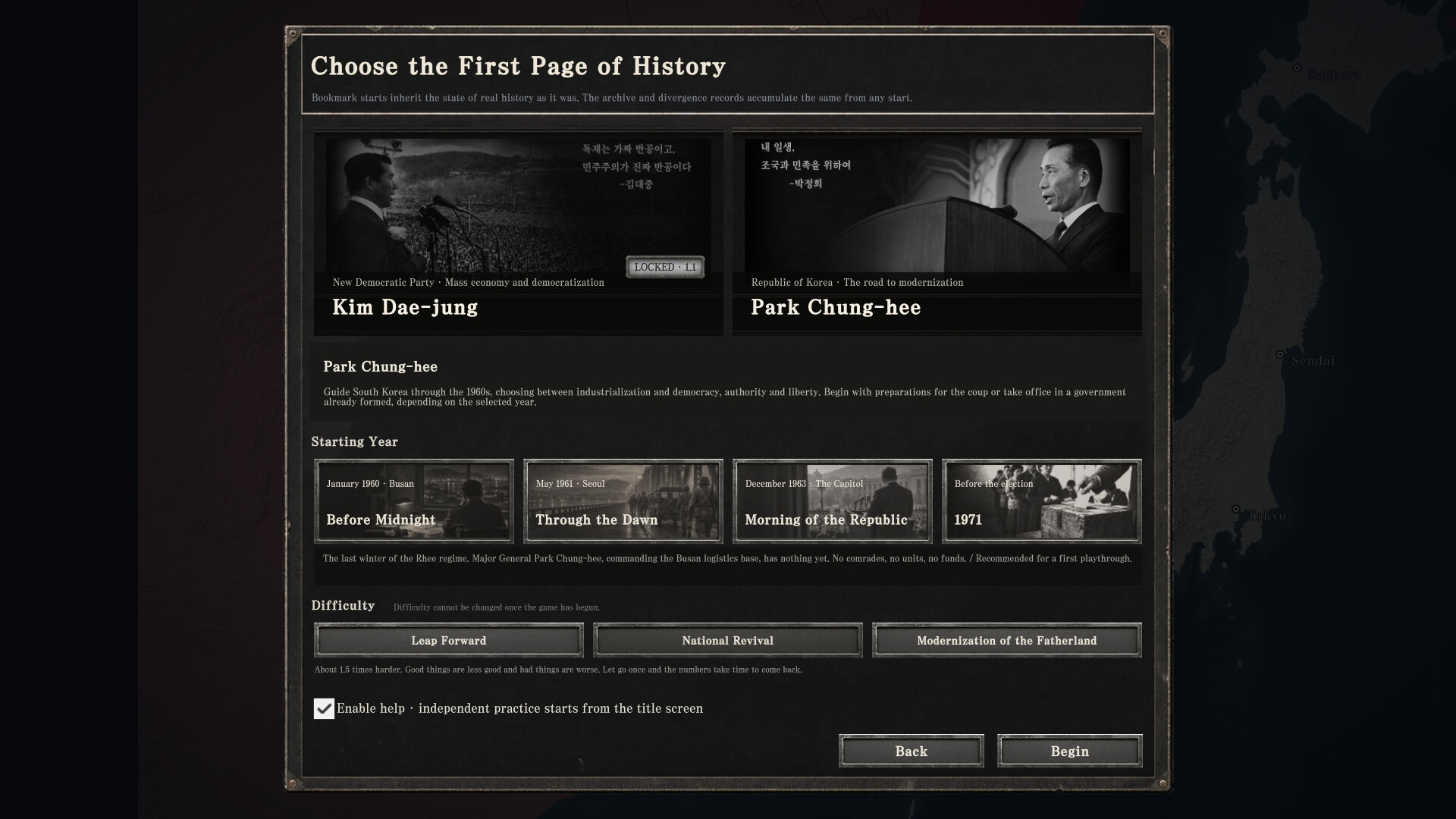
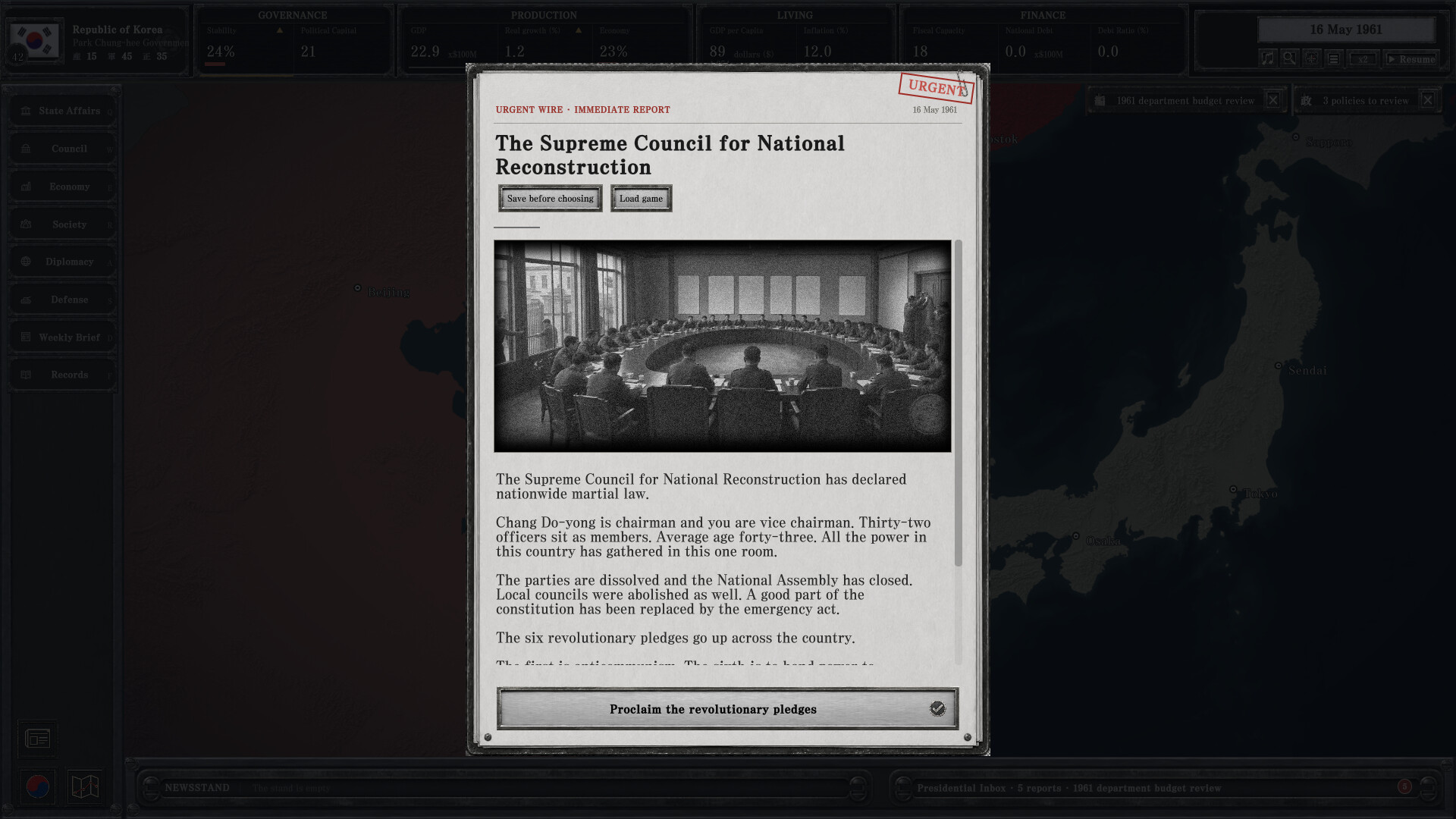
Set in early 1960s South Korea, the game puts you in the shoes of an Army major general navigating the turbulent aftermath of President Rhee’s downfall. You must rally troops, manage finances, evade counter‑intelligence and decide the fate of the nation as the May 16, 1961 coup looms.
Every choice branches into alternate histories, from successful authoritarian rule to democratic reforms or even a complete withdrawal. The title blends political simulation with strategic planning, offering a sandbox of “what‑if” scenarios that reflect the era’s economic and social pressures.
01 / THE GUIDE
Historical Setting
The narrative begins in January 1960, after the rigged March 15 election that kept President Syngman Rhee in power. Student protests erupt, leading to the April 19 uprising that forces the player to abandon an initial coup plan.
From that point until the early hours of May 16, 1961, you operate as a major general tasked with gathering support, securing funds, and reaching the Han‑river Bridge to execute a new coup.
- Observe how the timeline of real events influences the urgency of each decision.
- Compare the depicted economic hardships with the game’s resource management mechanics.
02 / THE GUIDE
Decision Branches
Every major decision creates multiple narrative branches, affecting political institutions, the economy, and the ultimate outcome. The game tracks each turning point and presents it in a chronicler’s record at the end.
Players can experience up to twenty‑four distinct endings, ranging from a failed coup before dawn to a prolonged rule into the 1970s, depending on the paths taken.
- Experiment with different policy choices to see how they reshape the ending.
- Use the chronicler’s record to identify which branches led to the most favorable outcomes.

03 / THE GUIDE
Government Institutions
The game models several bodies: the Supreme Council for National Reconstruction, Economic Planning Board, Ministry of Finance, National Assembly, and Judiciary. Each offers distinct levers such as funding, legislation, or constitutional amendment.
Interacting with these institutions lets you pour money into plans, cut taxes, draft bills, or rewrite constitutional articles, directly influencing public sentiment and stability.
- Balance fiscal policies with legislative support to avoid public resentment.
- Consider how constitutional changes might affect later institutional interactions.
04 / THE GUIDE
Endings
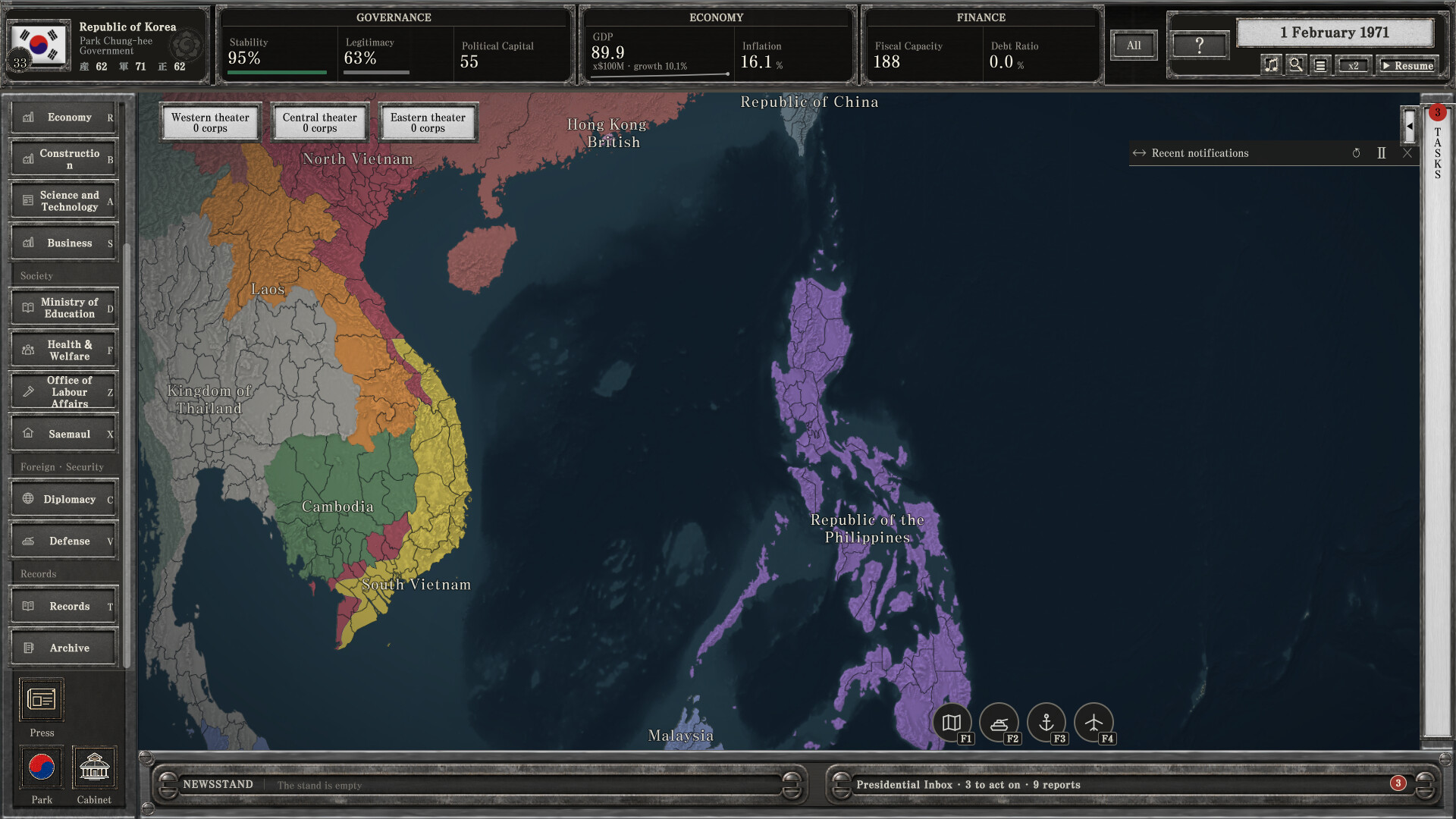
The game offers twenty‑four possible conclusions, including a successful coup, a democratic election in 1963, economic collapse, or a voluntary exit in 1971. Each ending reflects the cumulative impact of your strategic and political choices.
Some endings reference historical events such as the Yushin Constitution or the October 26 night, showing how alternate histories can mirror or diverge from real outcomes.
- Track which institutional actions lead toward authoritarian versus democratic endings.
- Note the cost of choices that result in loss of life, as they carry a matching price.
05 / THE GUIDE
Accessibility Features
The title includes Adjustable Text Size, Camera Comfort, Custom Volume Controls, Adjustable Difficulty, Mouse Only Option, and Playable without Timed Input, allowing players to tailor the experience to their needs.
Save Anytime and Steam Cloud let you pause and resume across sessions, while the Single‑player mode ensures you can progress at your own pace.
- Use Adjustable Difficulty to experiment with more complex political scenarios.
- Enable Mouse Only Option if you prefer precise navigation without additional input devices.

COMMUNITY
Player discussion