 GameWiki

GET YOUR BEARINGS
About Factorio
Factorio is a factory-building game in which mining, smelting, assembly, transport, research, and defense become parts of one connected system. The important early transition is from crafting each item by hand to maintaining a production line that continues working while you solve another problem. A small automated supply of useful components usually supports progress better than a large collection of machines waiting for inputs.
This wiki concentrates on a readable foundation for an ordinary factory. Exact recipes, equipment, and long-term objectives depend on the game version, installed mods, and whether you are playing with Space Age. Use the in-game recipe information for quantities, then apply the same diagnostic habit: follow a missing product backward until you find the first constraint that actually needs attention.
01 / THE GUIDE
Build the first complete production chain
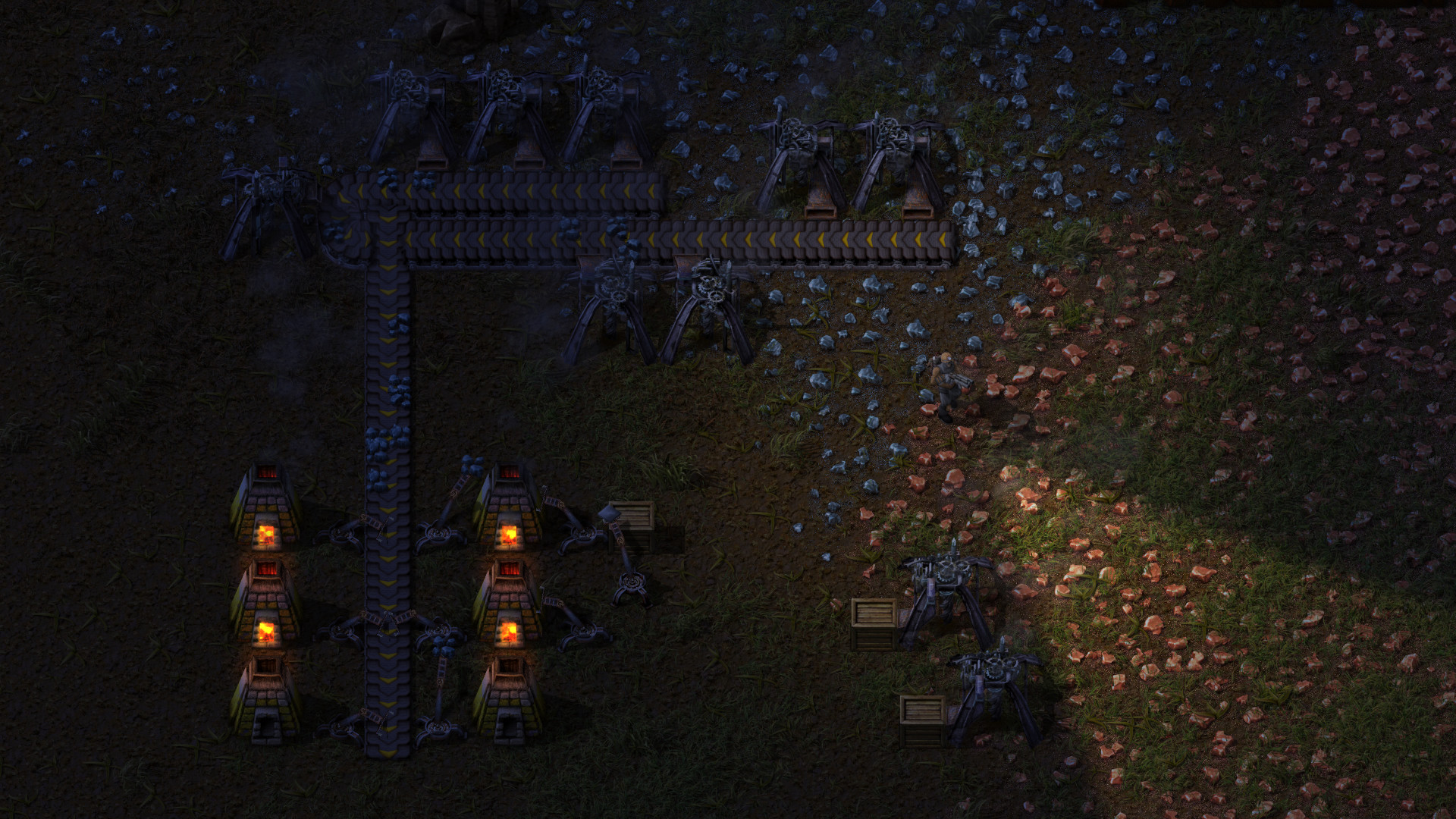
Connect an ore supply to smelting, then deliver the resulting plates to an assembling machine that produces something you repeatedly need. Inspect every handoff: a mining drill may be working while the furnace has no fuel, or a finished plate may have no inserter moving it onward. Judge the chain by its final output rather than the number of buildings placed.
Reserve room beside the first line for another machine, an additional belt, and a walking path. You do not need a perfect permanent layout before beginning automation. A compact test line teaches the recipe and its transport requirements; once it works, reproduce the arrangement where expansion will be easier to understand.
- Automate a frequently used building material before a decorative expansion.
- Inspect inserter direction and pickup reach at every handoff.
- Leave access to the machines you expect to troubleshoot.
02 / THE GUIDE
Read belts, buffers, and missing ingredients
A backed-up output and an empty input tell different stories. If the final belt is full, the next consumer may be absent or unable to keep up. If an assembler repeatedly waits for one ingredient, trace that ingredient upstream through its belt, splitter, furnace, and mine. Adding another assembler at the end does not increase the missing input.
Use the production statistics and machine status to distinguish a temporary startup delay from a sustained shortage. Storage can hide an imbalance while a buffer fills or drains, so watch a line over several production cycles. Limit stockpiles that consume materials needed elsewhere, especially when a new science recipe begins competing with your construction supplies.
- Start diagnosing at the product you actually need.
- Check both belt lanes before rebuilding the whole line.
- Compare sustained production with consumption after buffers settle.
03 / THE GUIDE
Keep electricity and fuel ahead of expansion
Open the electric network display when machines slow down across several unrelated production lines. Check whether the supply is sufficient and whether every intended area belongs to the same connected network. One missing pole connection can look like a broken recipe, while a factory-wide shortage requires a broader response than replacing an inserter.
Steam generation depends on a complete water, fuel, boiler, and engine chain. Automate its fuel supply and inspect it after adding a large group of consumers. Later power systems introduce different constraints; solar production, for example, changes with daylight, so storage and a plan for the dark part of the cycle matter alongside the peak daytime figure.
- Check the network graph before adding another large production block.
- Protect the fuel delivery that keeps the factory operating.
- Verify overnight supply when relying on solar power.
04 / THE GUIDE
Make science and defense sustainable
Choose research for the next factory problem rather than unlocking everything without using it. Labs need the required science packs delivered together, and each new pack introduces another production dependency. Establish a modest, steady supply first. Expanding research capacity only helps when the upstream factory can maintain the complete set of inputs.
On worlds with hostile creatures enabled, pollution and expansion make security part of production planning. Watch the map, identify vulnerable mining and power areas, and provide ammunition or another appropriate defense before extending far from the starting base. Repair access and replacement supplies belong in that plan; a wall alone does not replenish a turret or restore a damaged power connection.
- Read the full science pack requirement before expanding labs.
- Keep construction supplies available while science consumes shared materials.
- Inspect exposed resource outposts after expanding production.
05 / THE GUIDE
Introduce trains with a complete transport job
Start a railway by defining what it carries, where it loads, where it unloads, and how it receives fuel. Make the first scheduled delivery work before adding traffic to the same tracks. Leave loading buffers and room for an entire train at its intended waiting positions so a stopped train does not unintentionally obstruct a junction.
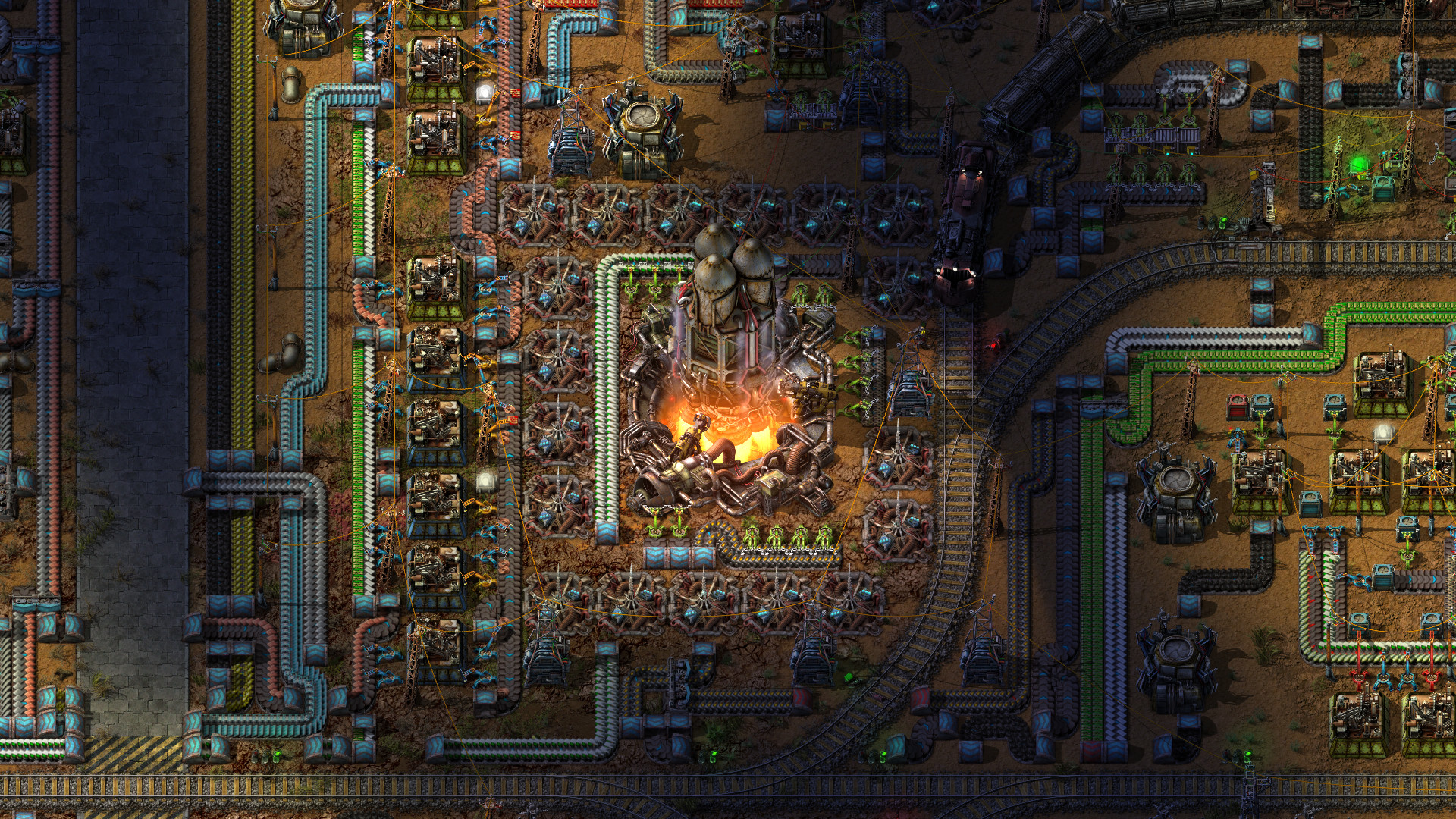
Rail signals divide track into blocks; chain signals help a train evaluate whether it can continue through a connected sequence. Inspect the colored block visualization with a signal in hand and check signal direction when the train reports no path. Learn a simple junction before copying a complex blueprint whose train length and traffic assumptions do not match your factory.
- Choose a standard train length before sizing stations.
- Automate refueling as part of the first route.
- Leave the exit of a junction clear for a complete train.
COMMUNITY
Player discussion