 GameWiki
GET YOUR BEARINGS
About Dealer's Life
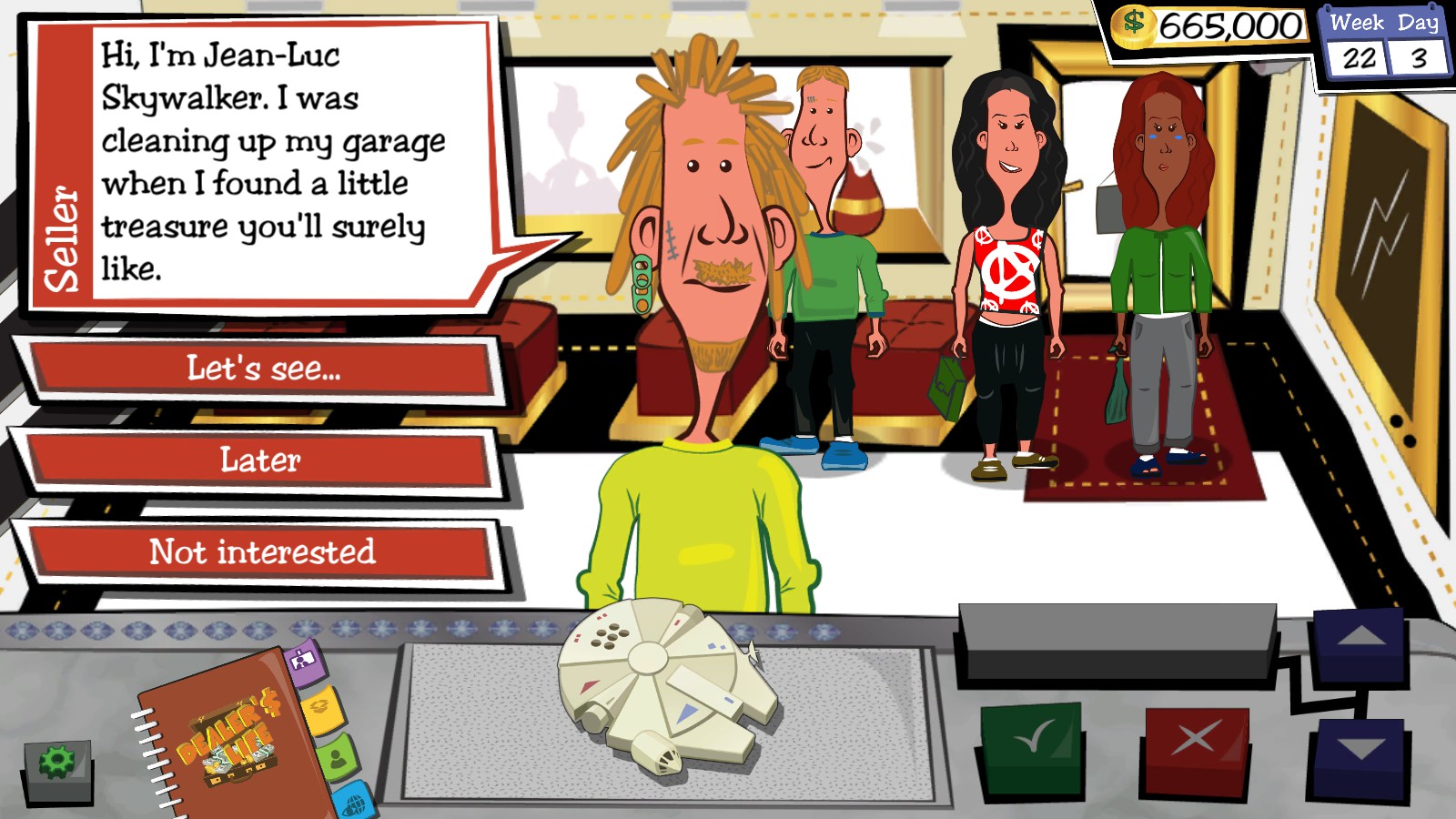
Dealer's Life is a single‑player tycoon simulation where you run a pawn shop, buying and selling items through a procedurally generated customer base. The game relies on a Trade Engine that hides real values, forcing you to estimate worth using your own competence.
Thousands of unique customers appear with distinct psychological traits, and every negotiation can end in acceptance, counter‑offers, rejection, anger, or a final offer. Reputation, random events, and skill development shape how risky or lucrative each deal becomes.
01 / THE GUIDE
Trade Engine & Negotiation
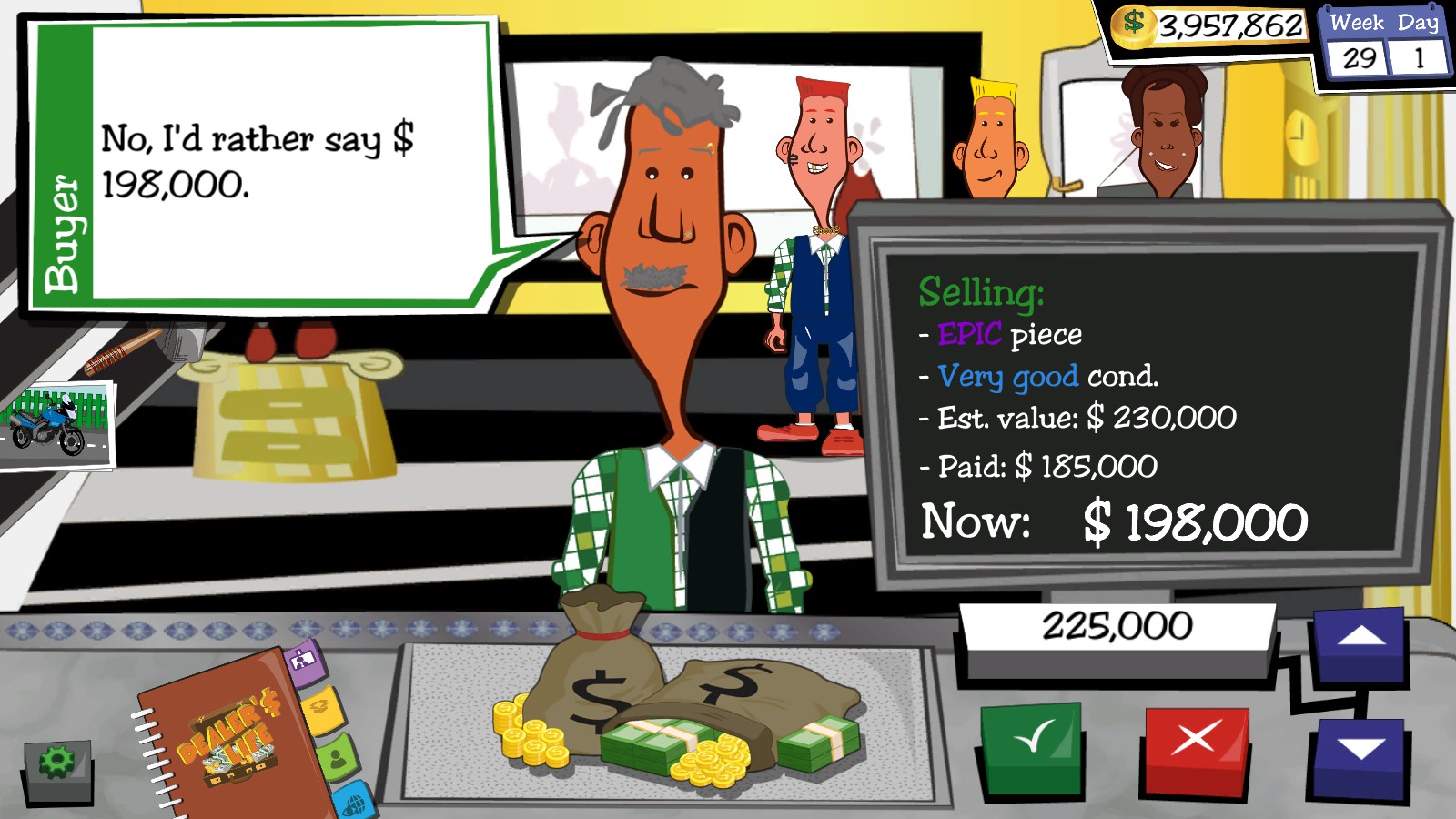
The Trade Engine determines each exchange based on the player’s offer, the item’s hidden real value, and the customer’s psychological profile. No explicit value is shown, so you must rely on instinct and competence to gauge worth.
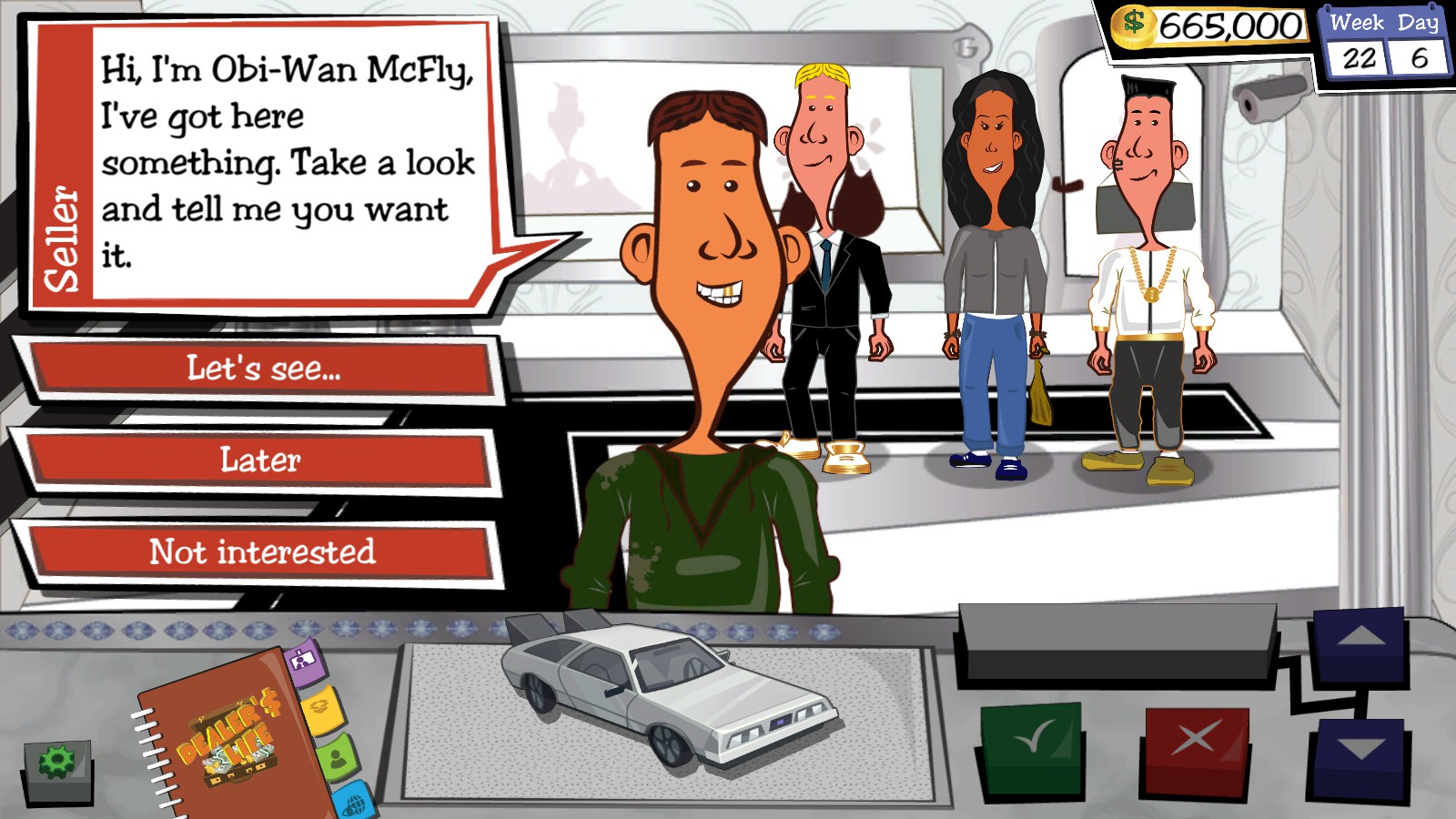
Customers may counter, accept, reject, become angry, or issue a final offer, all reacting to how your proposal compares to their perceived value. These outcomes are not scripted but emerge from the combination of offer and traits.
- Observe how small changes in your offer affect the customer's reaction to refine your instinct.
- Compare similar items across different customers to spot patterns in perceived value.
02 / THE GUIDE
Customer Psychology & Traits
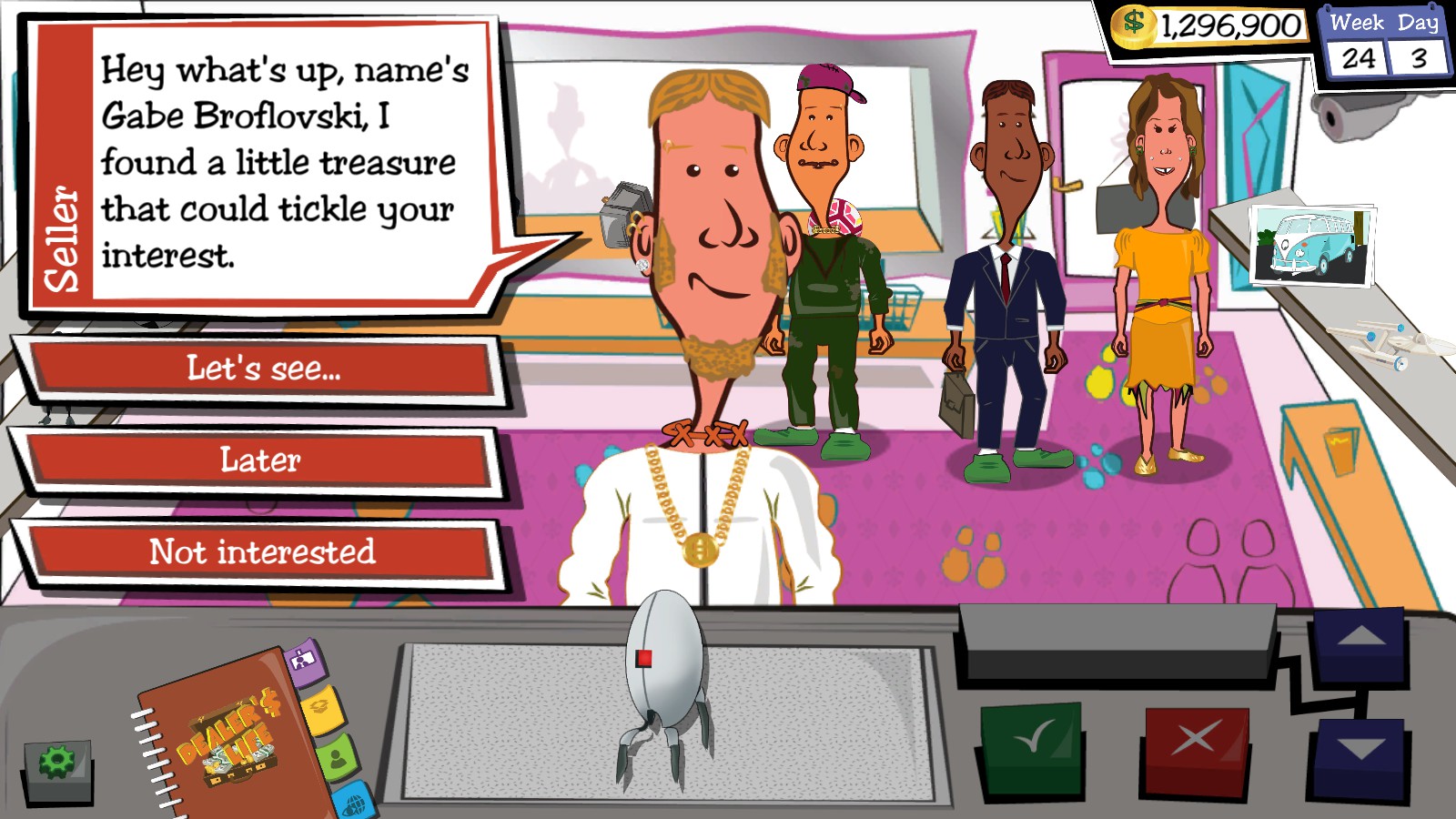
Each customer carries a set of psychological traits that influence their negotiation style and are reflected in their appearance. Traits dictate whether a client is more likely to accept, bargain, or become hostile.
Because traits are procedurally generated, you will encounter thousands of distinct behaviors, making every encounter unpredictable and requiring you to adapt your approach each time.
- Take note of visual cues that hint at a customer’s temperament before proposing a price.
- Adjust your tone to match the observed confidence or anxiety of the buyer.
03 / THE GUIDE
Skills & Competence System
Your character gains experience that improves competence, allowing better estimation of an item’s hidden value and detection of counterfeits. Skill growth also unlocks psychological abilities such as persuasion.
Higher competence reduces the chance of costly mistakes, while persuasion abilities can tilt negotiations toward more favorable outcomes, giving you a strategic edge.
- Prioritize competence upgrades early to build a reliable valuation baseline.
- Experiment with persuasion after mastering competence to see its impact on deal terms.
04 / THE GUIDE
Reputation & Random Events
Your reputation influences random events that can alter the flow of the game, such as encounters with risky characters or opportunities tied to past choices. Reputation is built through successful deals and ethical or cunning actions.
These events can present both benefits and hazards, reflecting the consequences of your decisions, like scamming someone who later turns out to be a buddy of the local mafia, or failing to spot a fake item.
- Track how each major decision affects your reputation score over time.
- Weigh the immediate profit of a risky deal against potential future event penalties.
05 / THE GUIDE
Platform Features & Accessibility
Dealer's Life runs on Windows with single‑player mode, Steam achievements, trading cards, cloud saves, leaderboards, and family sharing. The game also offers partial controller support and custom volume controls, allowing play at your own pace without timed input.
These features let you tailor the experience to personal comfort while keeping progress synchronized via Steam Cloud, and enable competition through leaderboards.
- Enable custom volume controls to balance audio cues during negotiations.
- Use Steam Cloud to keep your pawn empire safe across installations.
COMMUNITY
Player discussion