 GameWiki
GET YOUR BEARINGS
About China: Mao's legacy
Set in the aftermath of the Cultural Revolution, *China: Mao's Legacy* places you at the helm of the People’s Republic from 1976 to 1985. You must navigate a nation emerging from turmoil while the Cold War reshapes global power. The game blends political, economic, and diplomatic simulation, letting you decide whether China follows the Soviet line, aligns with the United States, or forges an independent path. Your choices influence both domestic stability and the world’s late‑20th‑century trajectory.
01 / THE GUIDE
Historical Setting
The title situates the player in 1976, when the Cultural Revolution has ended and Mao Zedong’s health is failing. This period marks a transition from radical campaigns to a more pragmatic governance approach. The backdrop includes the Cold War’s new phase, offering a volatile international environment that frames every domestic decision. The game’s timeline runs until 1985, covering the early reform era.
- Observe how the description emphasizes the shift from chaos to reconstruction; consider that as a narrative guide.
- Compare the 1976 start point with later years to gauge the impact of early choices on later events.
02 / THE GUIDE
Political Decision‑Making
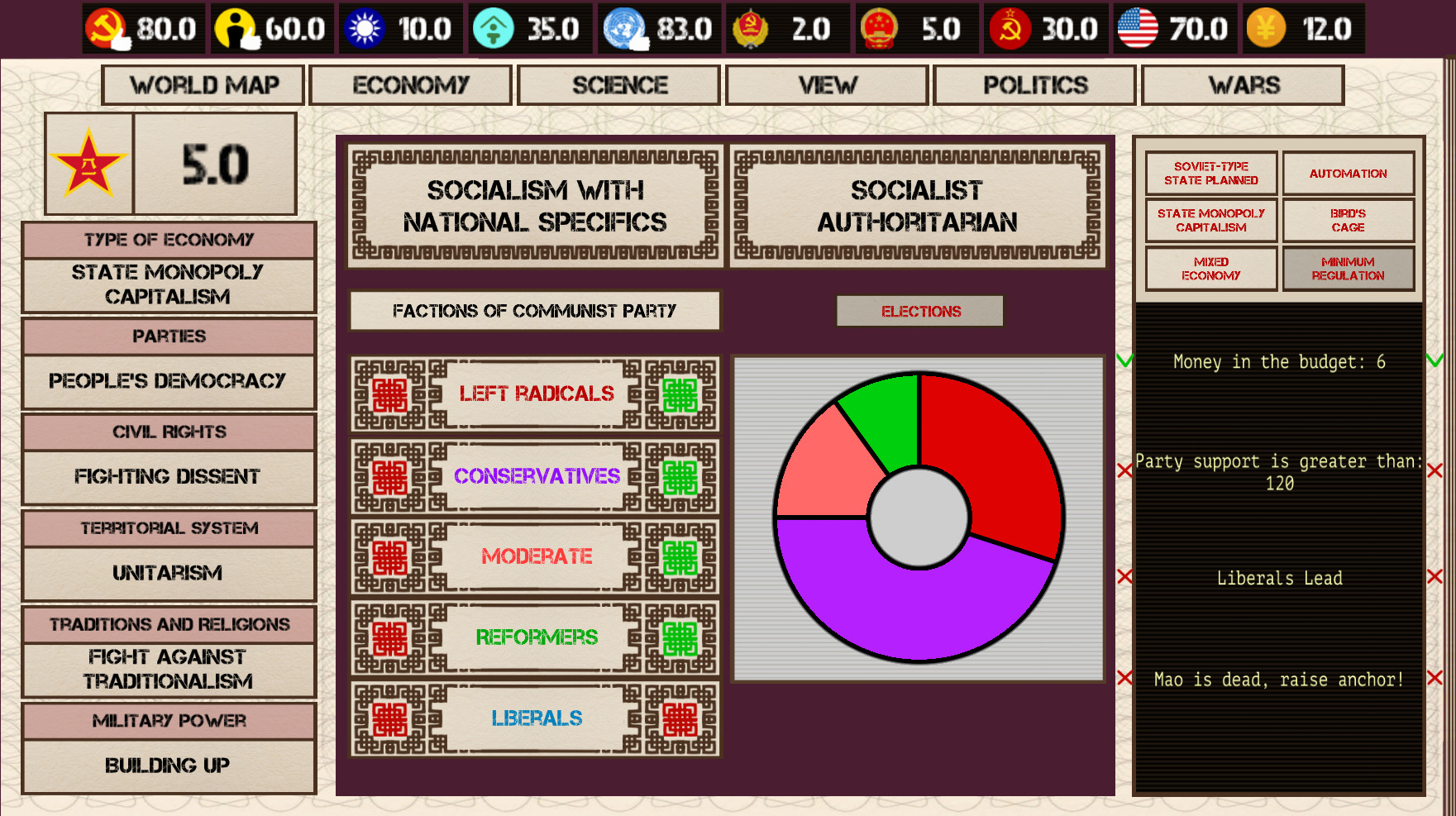
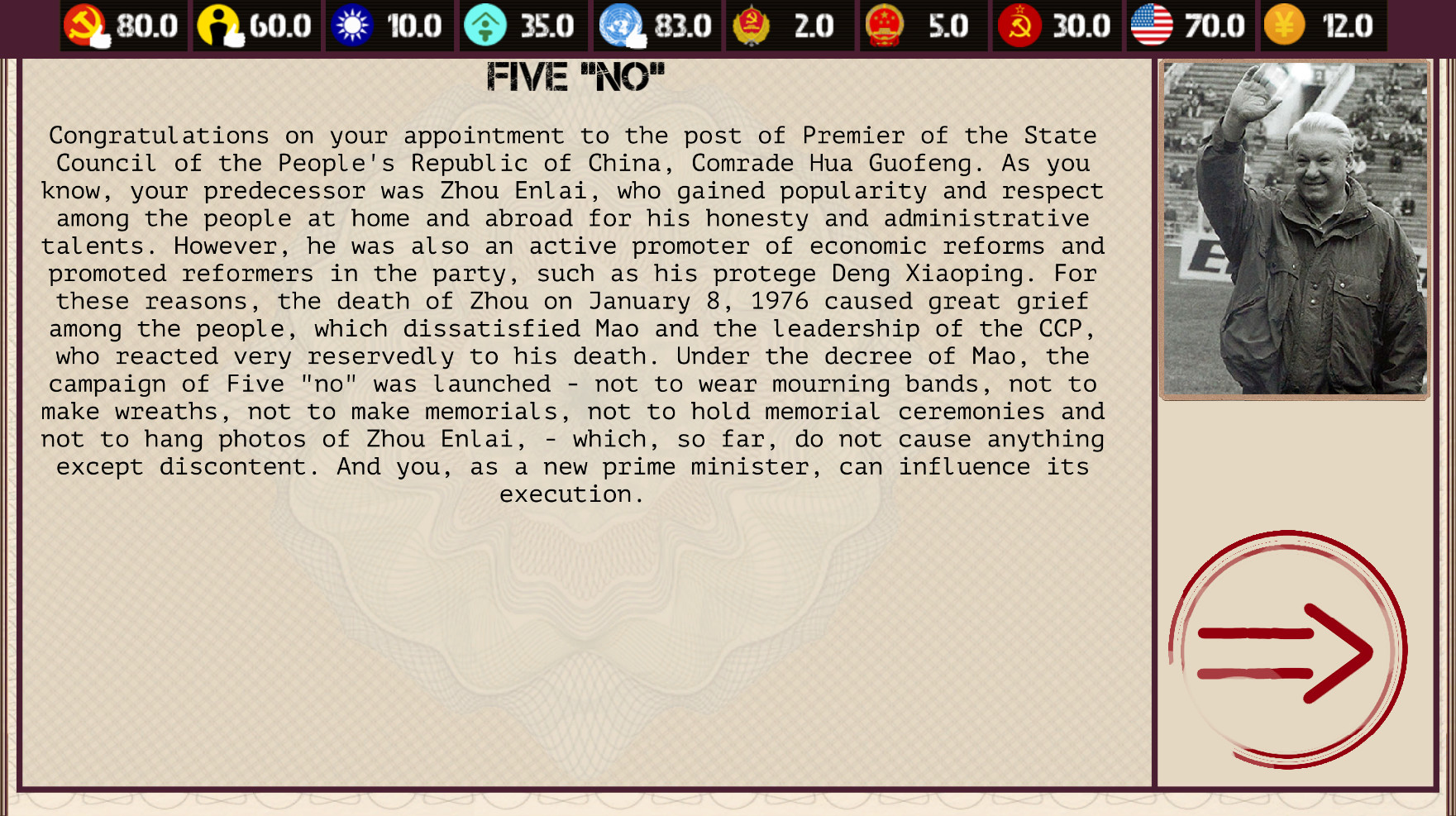
Players must watch over the Party, where politicians plot and conspire for higher positions. Allies and enemies can emerge from within the Communist Party, affecting leadership stability. The description notes that your actions will determine the world by the end of the XX century, linking internal politics to global outcomes.
- Track which party members gain influence; their rise may signal upcoming internal shifts.
- Balance ambition with stability to avoid destabilizing the Party’s hierarchy.
03 / THE GUIDE
Economic Management
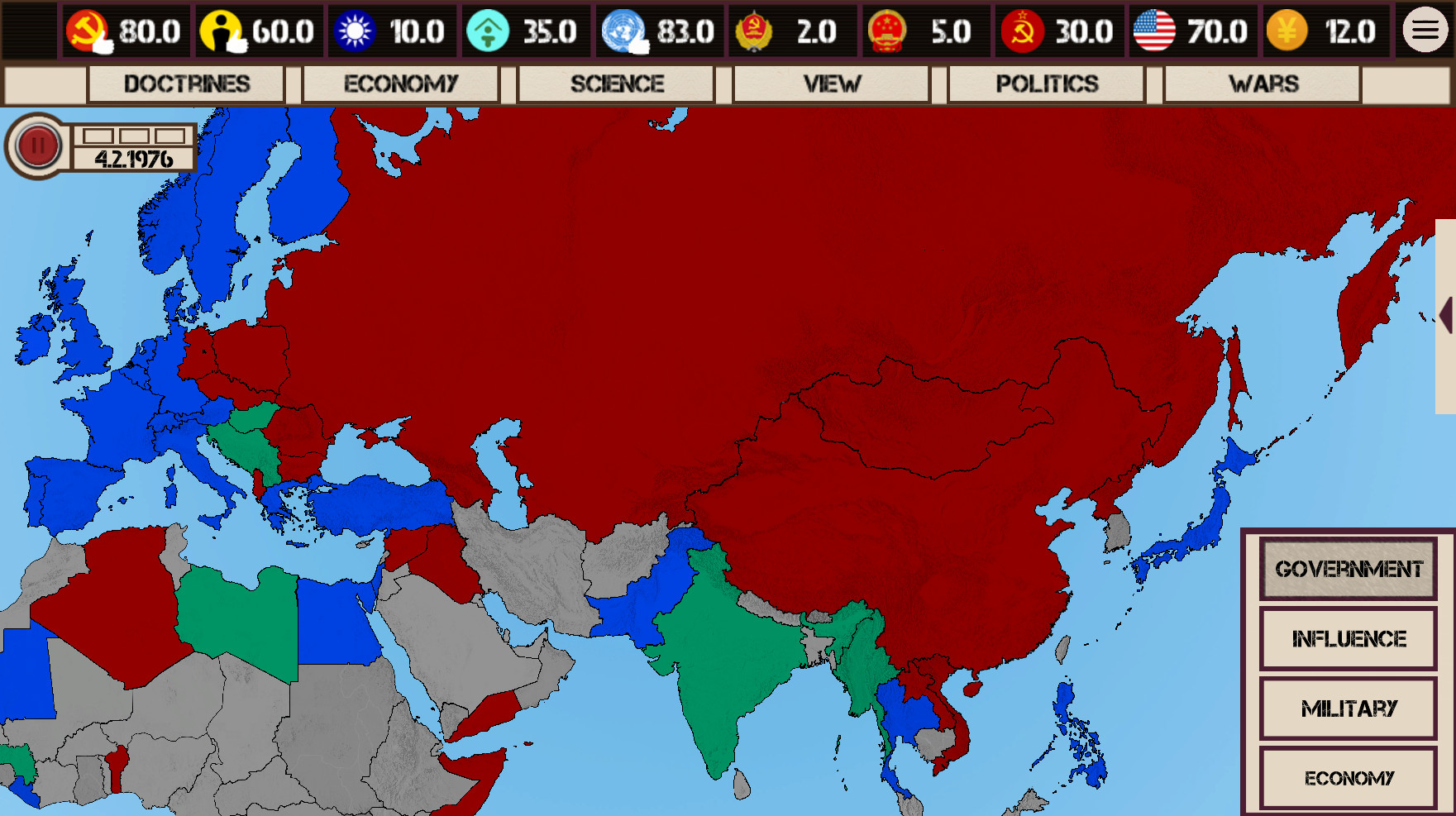
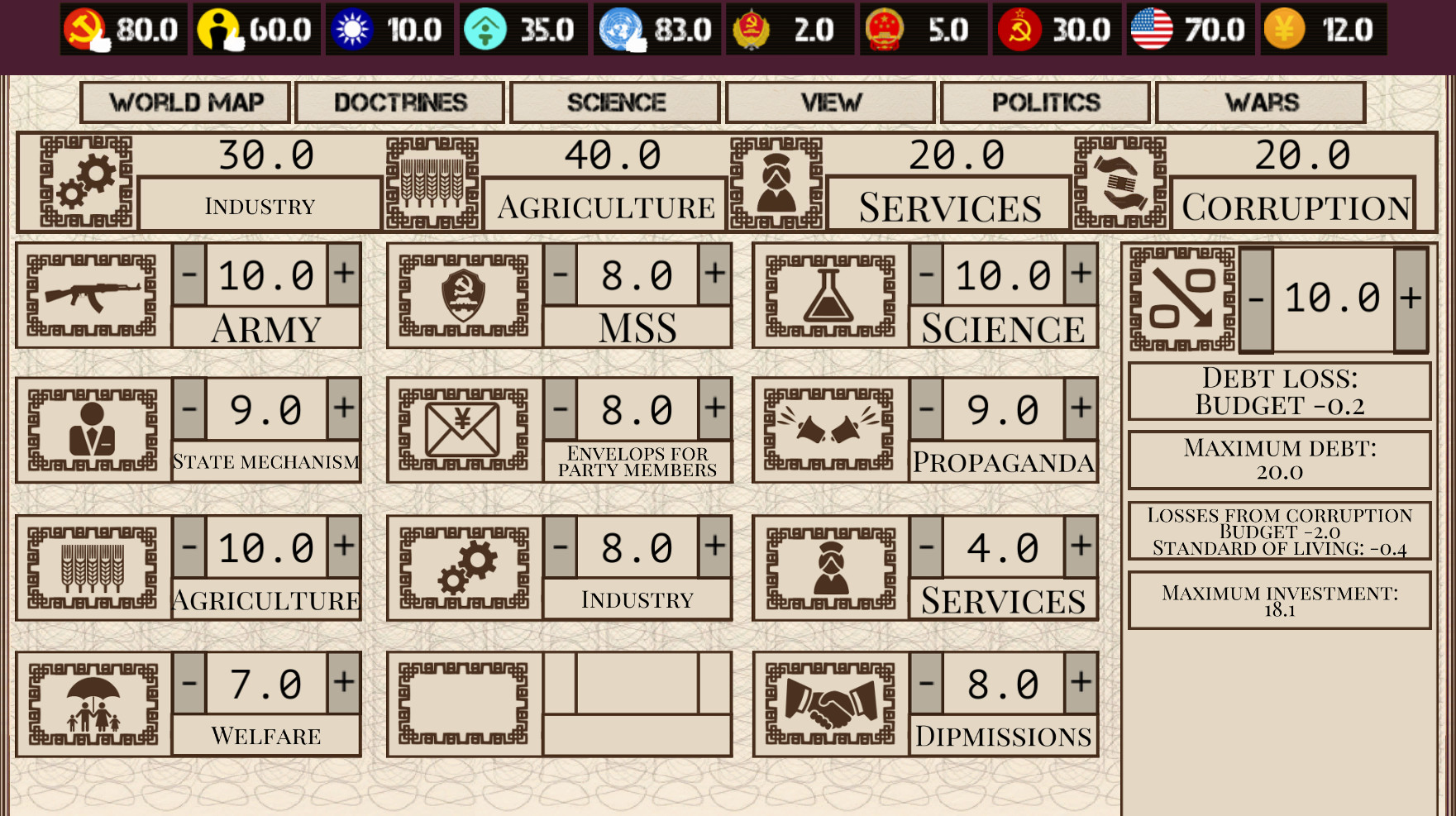
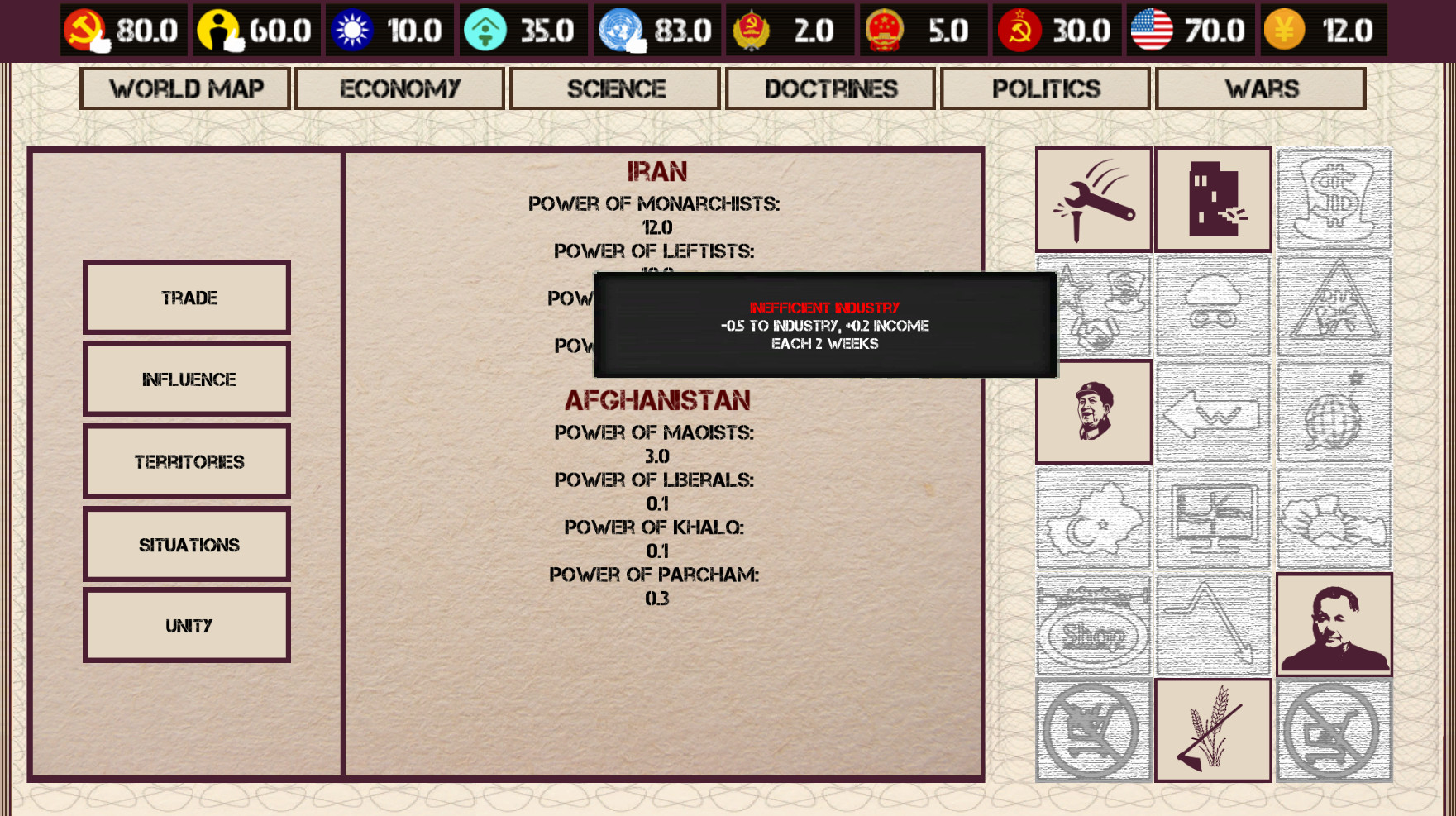
The game offers a choice between a strong planned economy, market reforms, or an automated state plan. Investors from around the world may be invited, reflecting a potential opening to foreign capital. These options let you shape China’s economic future, whether pursuing communist ideals or embracing market mechanisms.
- Consider the long‑term implications of inviting foreign investors versus strict planning.
- Compare the outcomes of market reforms with those of a fully automated state plan.
04 / THE GUIDE
International Relations
Players can restore ties with the USSR, compete for leadership in the socialist camp, align with the USA, or pursue an independent foreign policy. The Cold War context provides multiple diplomatic pathways. Expanding influence across Asia and reaching toward Europe are presented as strategic opportunities within the game’s world.
- Map out potential allies early; the description highlights both Soviet and American options.
- Weigh regional expansion against global diplomatic goals to maintain balance.
05 / THE GUIDE
Party Intrigue
Internal conspiracies are a core element; fellow party members may become helpful allies or deadly enemies. Managing these relationships influences both policy implementation and personal security. The description underscores that political plots can affect the nation’s direction, making intrigue a strategic layer.
- Identify which party figures support your chosen policies; they can become reliable allies.
- Monitor rival factions to anticipate potential betrayals.
COMMUNITY
Player discussion