 GameWiki

GET YOUR BEARINGS
About Children of a Dead Earth
Children of a Dead Earth is a space‑warfare simulation that builds every ship, weapon and propulsion system from real‑world equations. The game models physics, engineering and orbital dynamics with the same formulas used in textbooks and NASA tools, delivering a scientifically rigorous experience.
Players can follow a single‑player campaign that chronicles a solar‑system‑wide conflict, or use a sandbox to design and test vessels. The title includes Steam Workshop support for sharing creations and lists Steam Cloud and Family Sharing as available platform features.
01 / THE GUIDE
Scientific Realism
All technologies—from nuclear thermal rockets to railguns—are implemented using equations taken from engineering and physics textbooks and white papers. Efficiency, mass, power usage and heat dissipation are calculated from these validated formulas, so each component behaves like its real counterpart.
Material properties and spectra are also derived from actual data, meaning lasers, armors and other systems react according to genuine physical characteristics. This forces players to consider authentic trade‑offs such as thrust‑to‑weight ratios and cooling limits.
- Compare your ship’s thrust and mass against real launch‑vehicle data for realistic performance expectations.
- Match laser pump bands to the emission spectra of the chosen excitation gas.
02 / THE GUIDE
Campaign Mode
In Campaign you assume the role of an admiral and progress through a storyline that follows the solar system’s descent into total war. The narrative spans every planet and the space between, presenting a structured series of battles.
The mode is single‑player, allowing you to command fleets and make strategic decisions while respecting the realistic ship designs you create. Steam Cloud is listed among the game’s available platform features.
- Prototype ship designs in sandbox before committing them to campaign missions.
- Plan fleet composition early to match the varied planetary environments encountered later.
03 / THE GUIDE
Orbital Mechanics
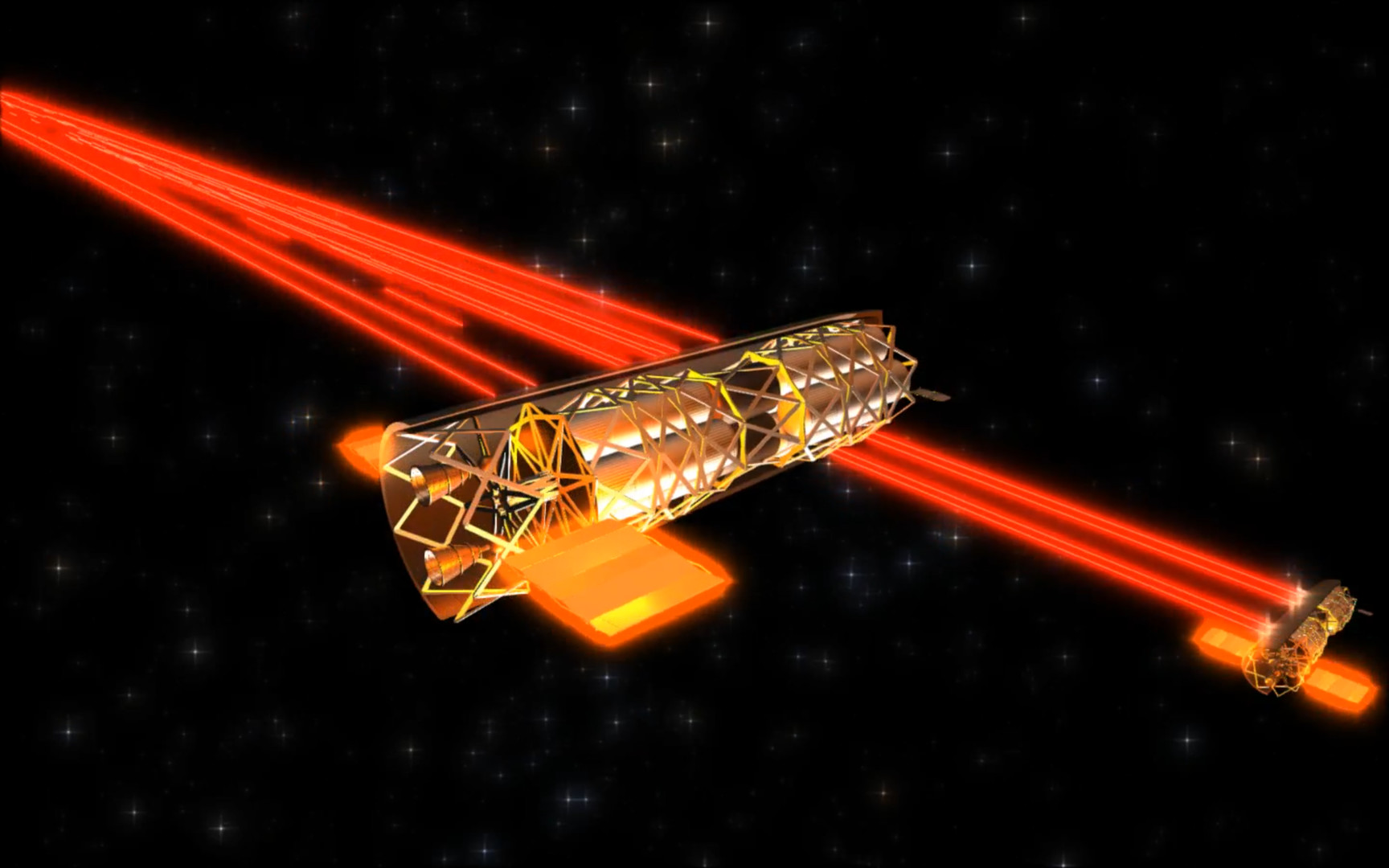
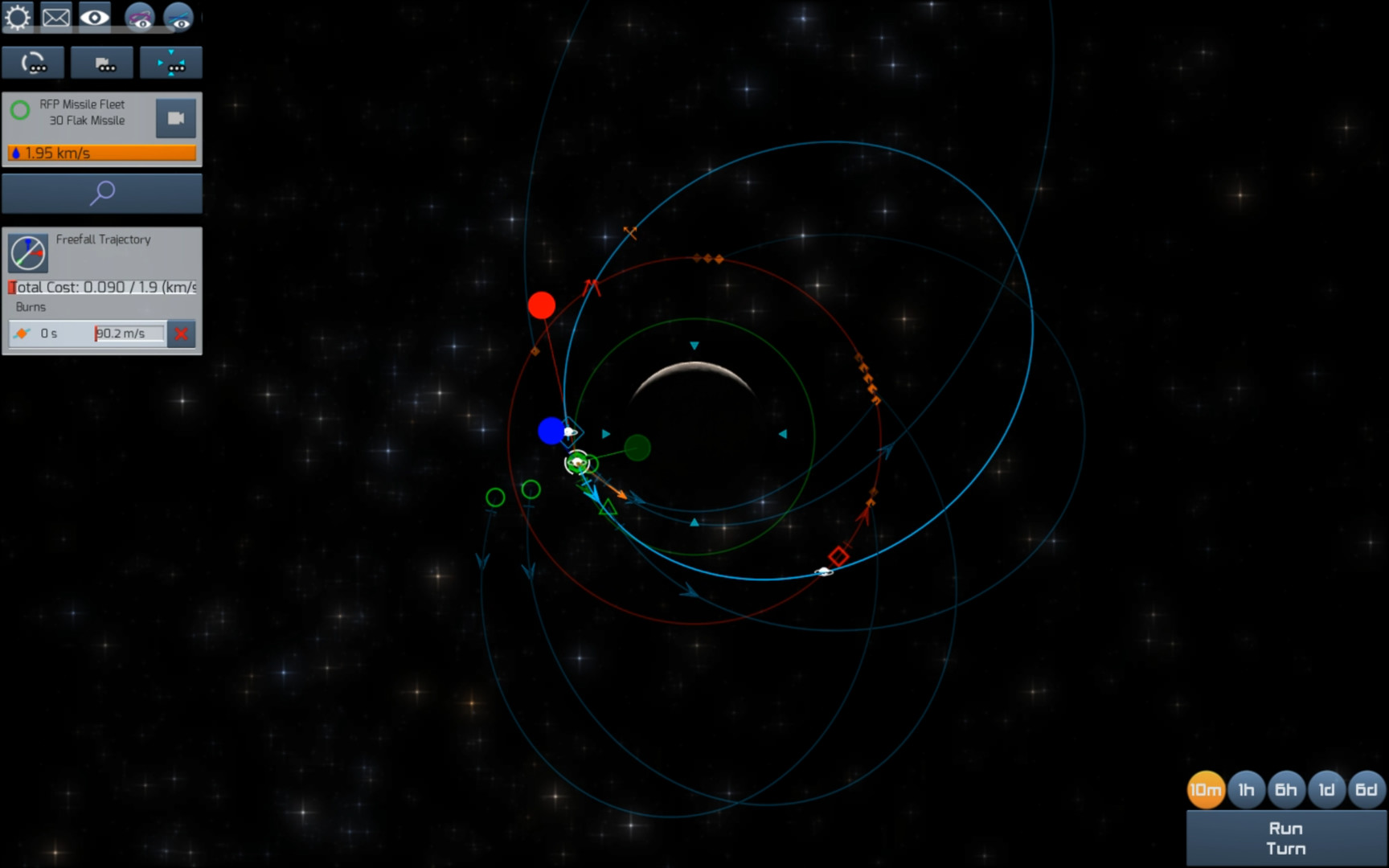
The game uses an N‑Body simulator comparable to the one NASA employs for trajectory planning. Hyperbolic orbits, Lagrange points and orbital perturbations are all accurately reproduced.
Ships can station‑keep, enter free‑falling perturbed paths, or execute complex transfers, all governed by true gravitational physics. Delta‑v budgets and transfer windows therefore become critical planning elements.
- Use the N‑Body simulator to plan transfers before committing to long‑range maneuvers.
- Consider Lagrange points as fuel‑efficient staging locations when moving fleets across large distances.
04 / THE GUIDE
1:1 Scale Solar System
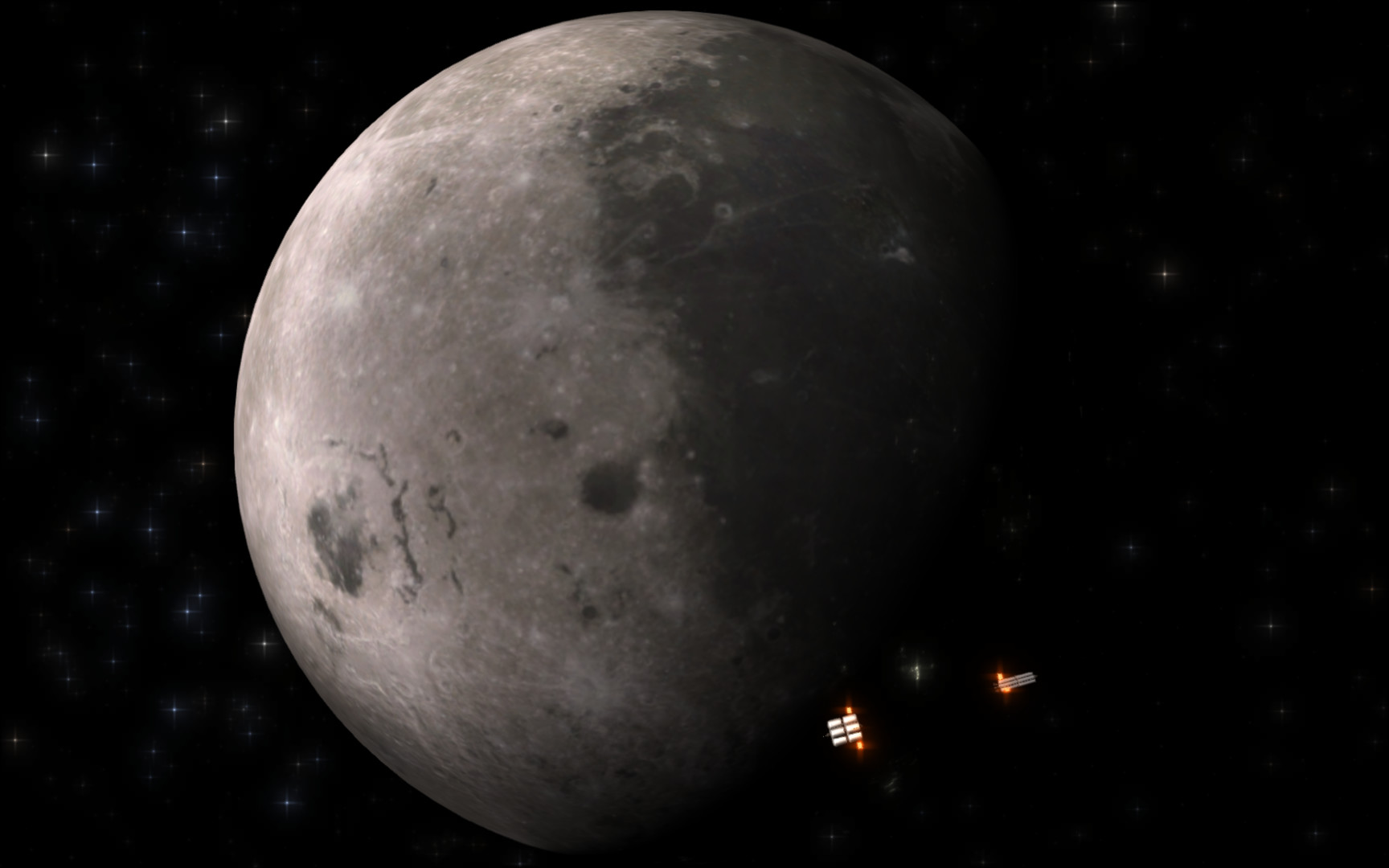
The entire solar system is modeled to true scale: planet, moon and asteroid sizes match reality, and the distances between them are proportionally vast. This scaling also affects orbital speeds, especially in high‑gravity zones.
Because of the scale, traveling between worlds requires realistic propulsion and timing, mirroring actual interplanetary travel challenges. Visual navigation can feel daunting, reinforcing the educational aspect of the simulation.
- Remember the solar system is modeled completely to scale when estimating travel times before launching a mission.
- Use moons or asteroids as intermediate staging points to reduce overall journey distances.
05 / THE GUIDE
Freeform Ship Design
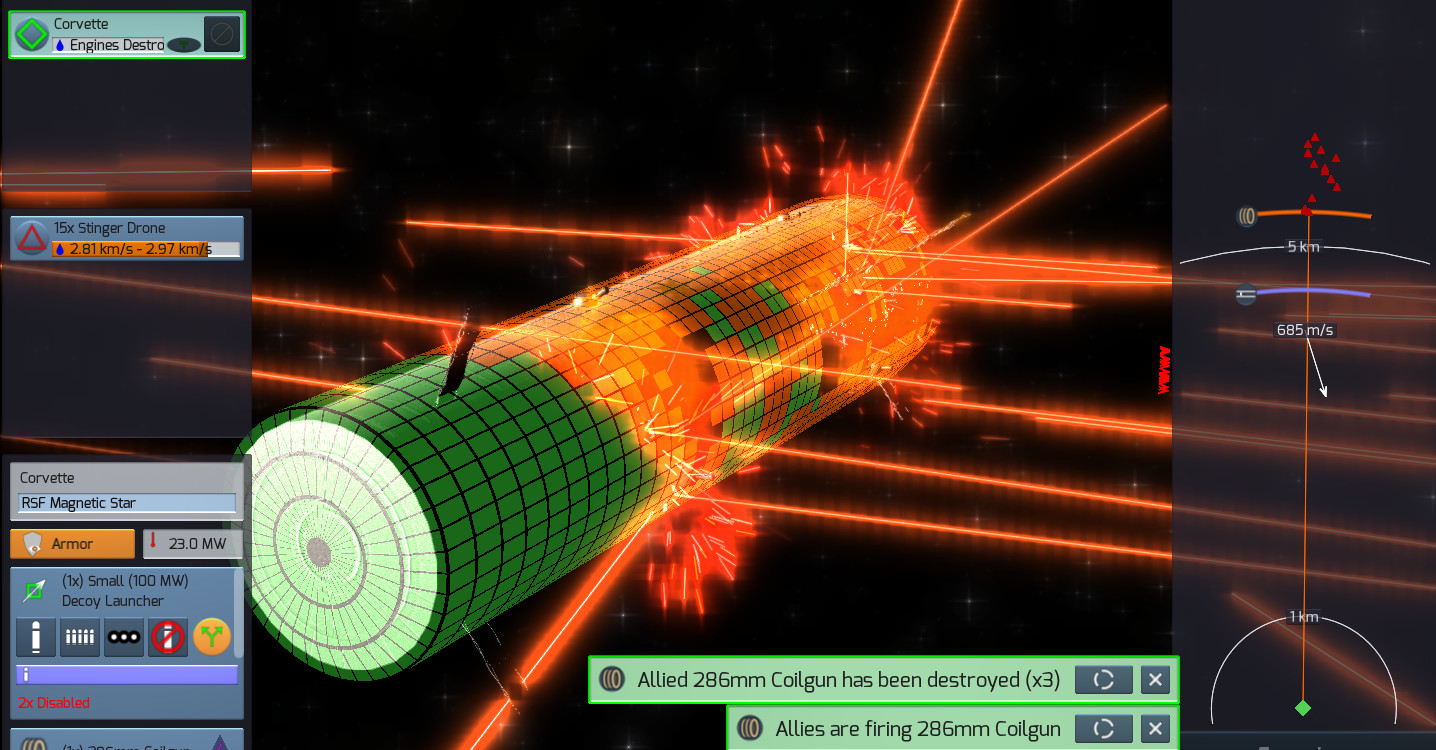
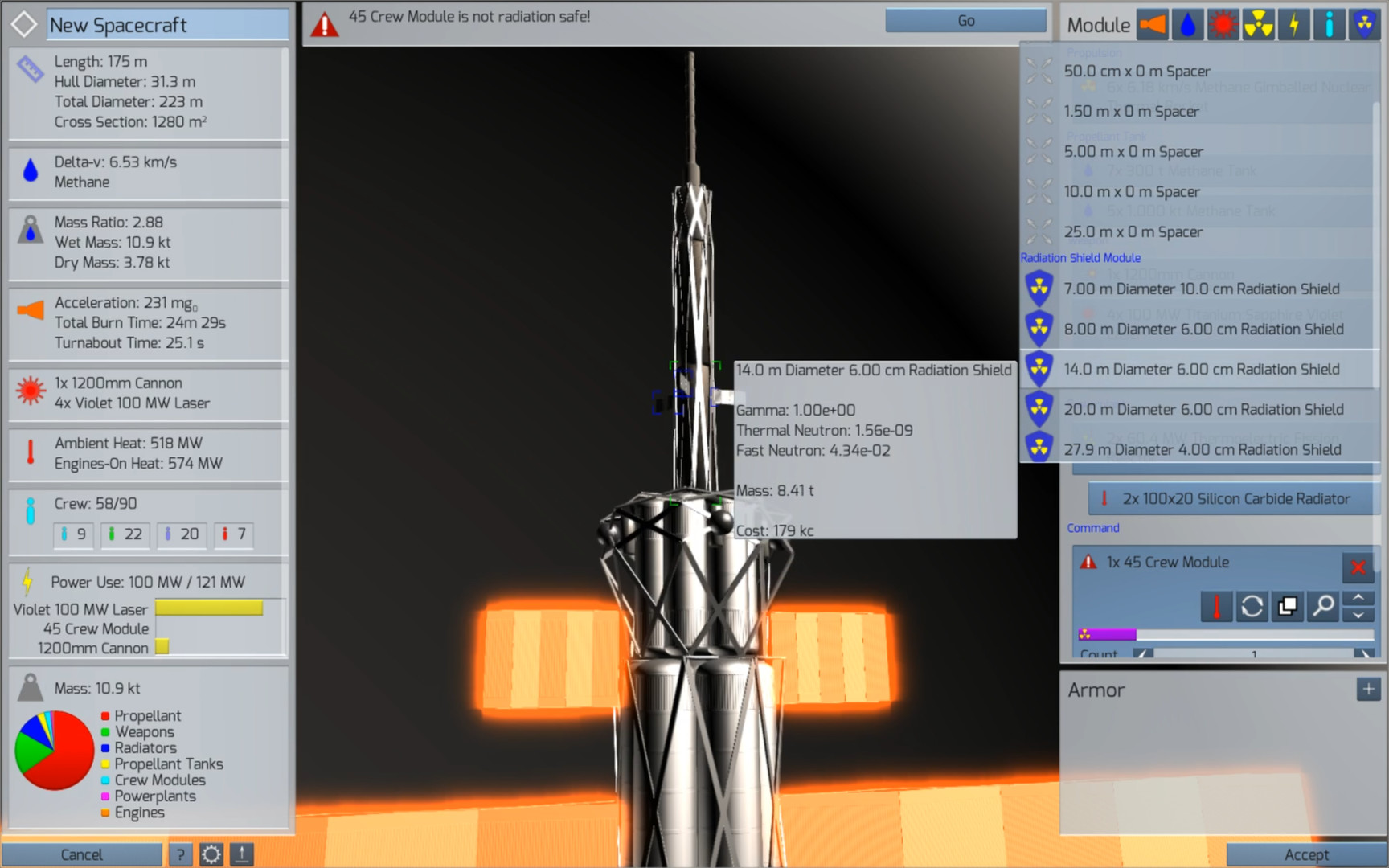
Players build spacecraft from rockets, propellant tanks, weapons, powerplants, radiators and crew modules, then wrap them with armor layers or Whipple shields. Every component’s mass, inertia and delta‑v are calculated in real time.
Granularity extends to nozzle length, bipropellant mixture ratios, railgun armature dimensions and more, with immediate feedback on performance metrics. The engine also supports black‑box creation of speculative technologies for modders.
- Iterate nozzle geometry and propellant mix to fine‑tune exhaust velocity for specific mission profiles.
- Balance armor thickness against added mass to keep maneuverability acceptable in high‑gravity orbits.
COMMUNITY
Player discussion