 GameWiki

GET YOUR BEARINGS
About Car For Sale Simulator
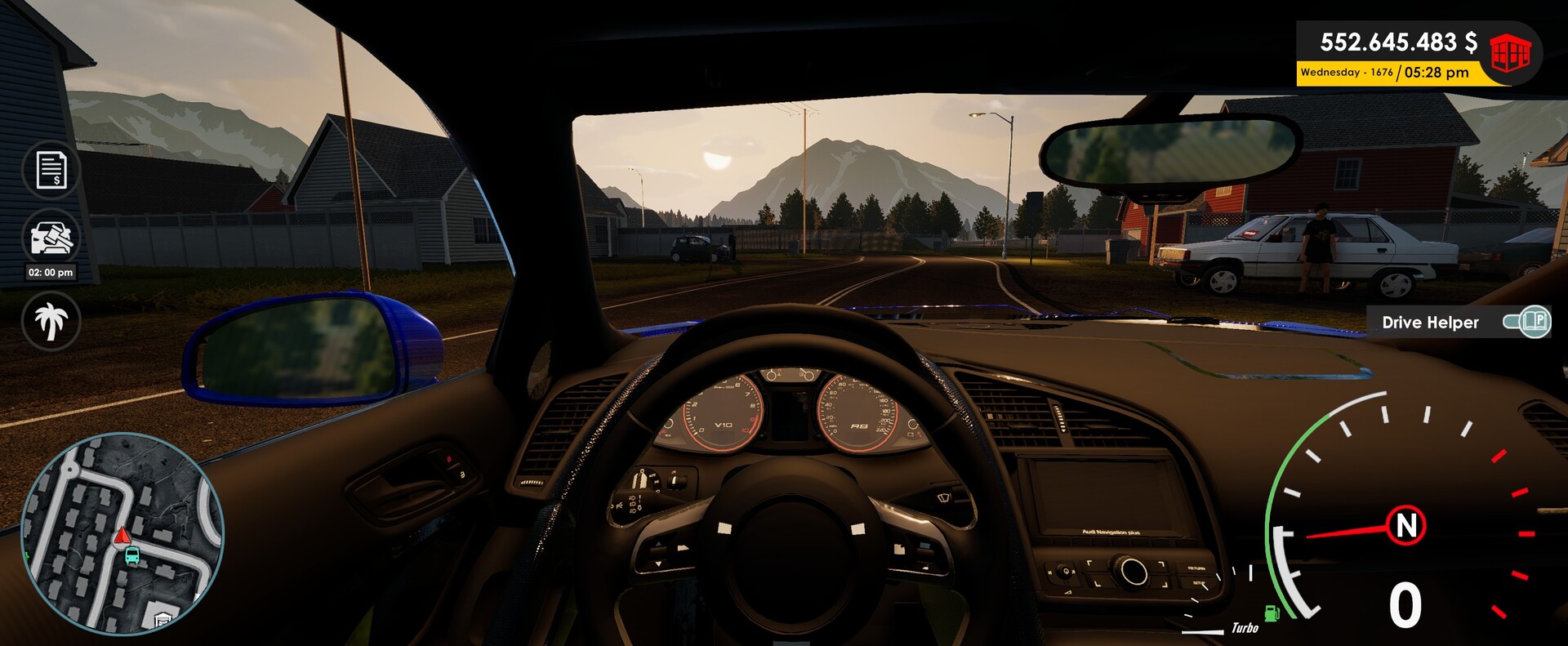
Car For Sale Simulator puts you in charge of a modest vehicle shop and challenges you to grow it into the city’s biggest dealership. You start with a limited budget, a small office, and a handful of used cars and motorcycles to buy, repair, and sell.
The game blends vehicle trading with business management, offering an expanding city map, dealership upgrades, a personal collection option, and systems for inspection, taxes, and banking. Every purchase, repair, and negotiation directly influences your financial growth.
01 / THE GUIDE
Exploring the Market
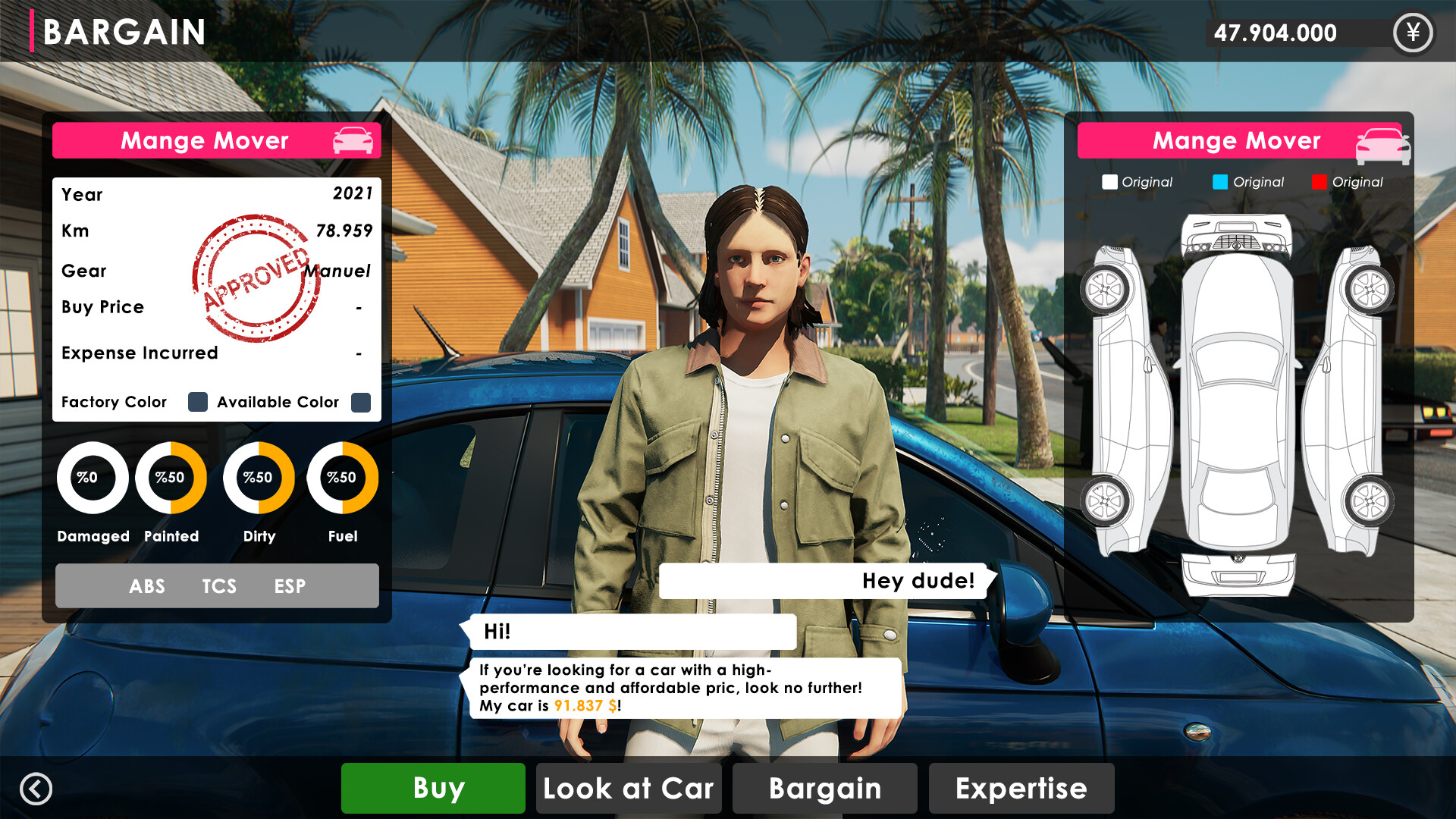
You travel to car markets and neighborhoods to locate used vehicles. Each listing shows a price, condition, and profit potential, letting you compare options before deciding which inventory to acquire.
Sellers may conceal problems; you can request an inspection report to reveal hidden issues or accept the risk and trust the seller’s word. The choice affects purchase cost and later repair expenses.
- Check multiple listings to gauge realistic market prices before making an offer.
- When a vehicle’s condition is unclear, request an inspection report to avoid unexpected repair costs.
02 / THE GUIDE
Motorcycle Integration
The business expands beyond cars, allowing you to buy, ride, restore, and sell 15 different motorcycles. Motorcycles add a new vehicle class that can be displayed alongside cars in your dealership.
After restoration you may sell a motorcycle for profit or keep it in a personal collection, giving you flexibility in how you allocate resources between inventory and personal assets.
- Diversify purchases between cars and motorcycles to spread risk across vehicle types.
- Consider keeping a restored motorcycle if its resale value is lower than the restoration cost.
03 / THE GUIDE
Repair and Customization
Purchased vehicles often need repairs, maintenance, fuel, washing, repainting, and part upgrades before they become profitable. Each action costs money, so you must weigh the expense against potential resale value.
Not every expense guarantees a return; calculating a vehicle’s post‑repair value and comparing it to total investment helps you avoid overspending and stay profitable.
- Prioritize repairs that directly increase resale value, such as engine work or bodywork.
- Track repair costs against expected sale price to keep profit margins healthy.
04 / THE GUIDE
Negotiation with Customers
Customers visiting your dealership will make offers for the vehicles you display. You can accept, reject, or counteroffer, aiming to raise the final sale price.
Improving your negotiation skill unlocks better purchase prices and more profitable sales, making people‑skills as important as vehicle knowledge.
- Start counteroffers slightly below your target price to give room for negotiation.
- Observe patterns in customer offers to anticipate their maximum willingness to pay.
05 / THE GUIDE
Business Expansion
You begin with a limited budget and a small office. Reinvest earnings to upgrade the dealership, increase capacity, and display more vehicles at once, moving toward a larger lot.
Managing bank transactions, taxes, and other financial responsibilities becomes necessary as you grow; each successful sale brings you closer to building the city’s largest dealership.
- Allocate a portion of profits to dealership upgrades before buying new inventory.
- Monitor tax obligations regularly to avoid unexpected deductions.



COMMUNITY
Player discussion