 GameWiki

GET YOUR BEARINGS
About Balatro
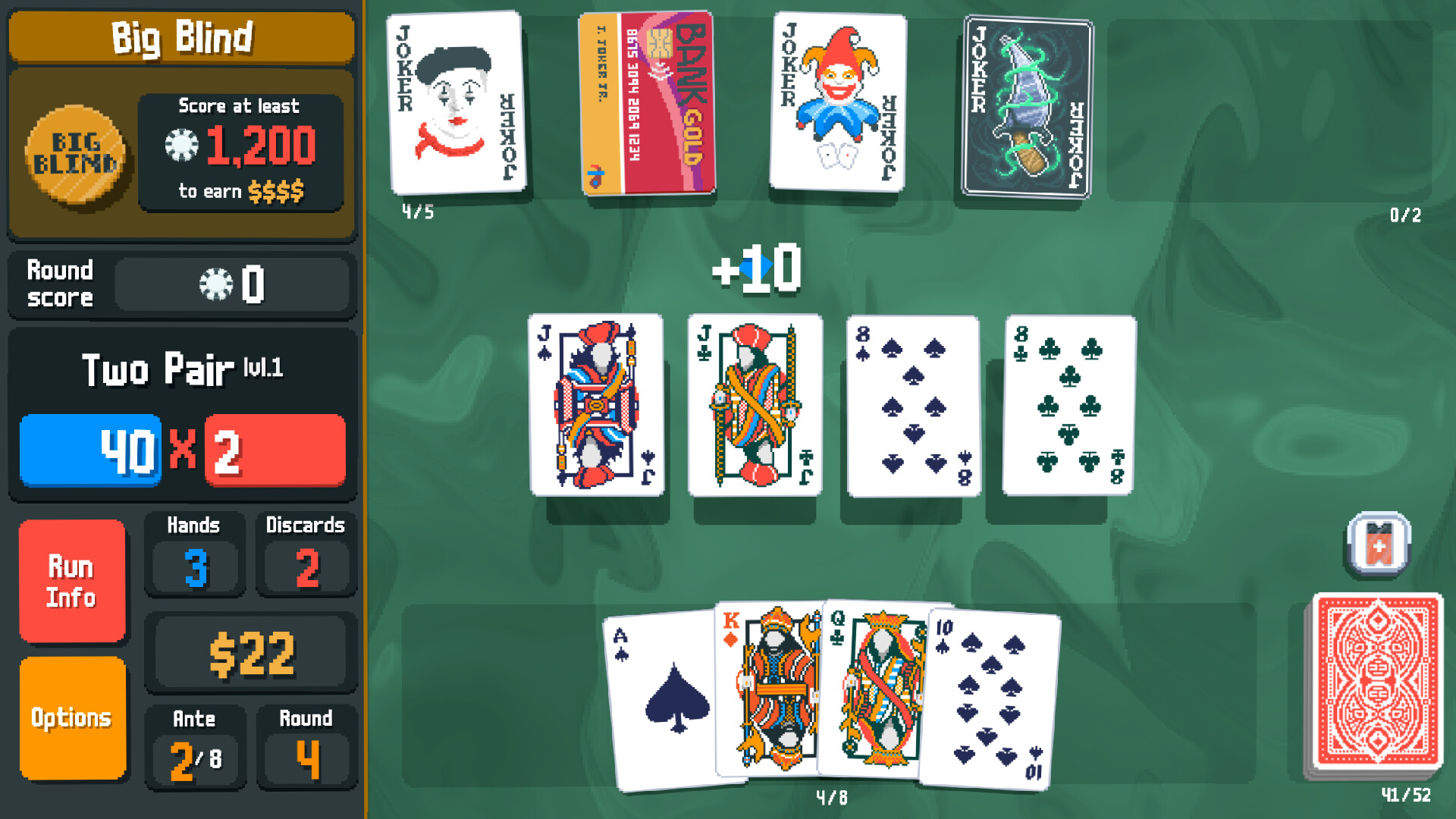
Balatro uses poker hands as the input for a roguelike scoring engine. You are trying to reach a Blind's chip target with a limited number of hands and discards, while Jokers and consumables reshape what those hands are worth. Knowing ordinary poker is helpful, but winning depends on the cards and effects your run has actually assembled.
A dependable run balances immediate scoring, future growth, and the money required to buy improvements. This wiki explains those three needs through practical decisions: choosing an early hand plan, reading Joker effects, manipulating the deck, spending in the shop, and preparing for Boss Blind restrictions before they force an emergency rebuild.
01 / THE GUIDE
Hands, discards, and Blind targets
A normal Ante contains a Small Blind, Big Blind, and Boss Blind. Each challenge asks you to reach its target before exhausting your available hands. Check Run Info when a hand category is unfamiliar, and compare the hand you can reliably draw with the stronger-looking hand that requires most of your discards to find.
Discards are a consistency tool. Before using one, decide which cards you are trying to keep and what replacement would materially improve the hand. A powerful combination is not useful if the deck cannot supply it often enough. Early scoring help can buy time to refine the deck instead of forcing a fragile strategy from the first shop.
- Read the Blind target before selecting cards.
- Use Run Info to confirm hand categories.
- Keep a fallback hand when chasing an uncertain draw.
- Judge your score against the next target, not only the current one.
02 / THE GUIDE
Jokers: connect chips, added Mult, and multiplying Mult
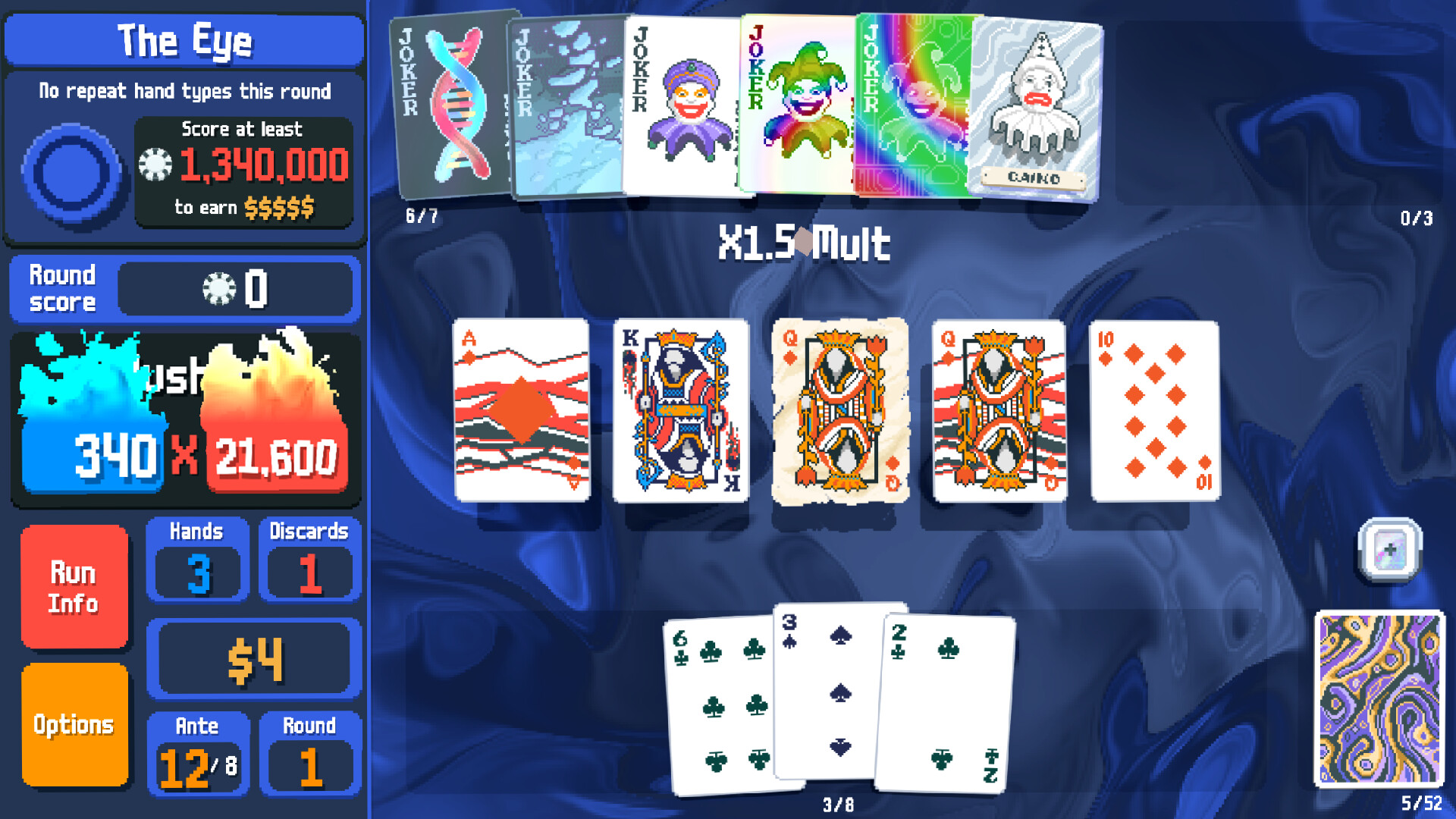
A scoring engine needs contributions that work together. Some effects add chips, others add Mult, and multiplying effects amplify the Mult already accumulated at their activation point. Read each description closely: a bonus restricted to a particular suit, hand, or card type does nothing when your actual play fails that condition.
Order can matter because effects resolve through the scoring sequence. For effects that allow it, adding Mult before multiplying it produces a different result from the reverse arrangement. Move Jokers deliberately and observe the score animation rather than assuming every effect is interchangeable. Keep an immediate scoring solution until a scaling replacement has actually become strong enough to carry the run.
- Identify what each Joker contributes to the current engine.
- Check conditions before buying an apparently large bonus.
- Inspect Joker order when your final Mult looks unexpectedly low.
- Replace weak support only after the new plan scores reliably.
03 / THE GUIDE
Shop economy: buy survival before speculative luxury
Money gives you future options, but saving every dollar is not useful if the next Blind ends the run. Evaluate a purchase by the problem it solves: immediate score, a repeatable income source, improved draws, or a scaling mechanism. A cheap purchase that fixes a missing scoring component can be more valuable than a rare Joker with no connection to your deck.
Rerolls are most useful when you can name what you need and still afford it afterward. Opening every pack or rerolling because the shop feels disappointing can leave an otherwise playable build unable to purchase the next meaningful improvement. Check your current interest and payout information in the game before deciding how much cash to keep.
- Estimate whether the next Blind is already covered.
- Keep enough money to buy the improvement you are seeking.
- Stop rerolling when the remaining budget cannot support a purchase.
- Compare an income Joker with the scoring slot it occupies.
04 / THE GUIDE
Deck editing, Planet cards, and consumable timing
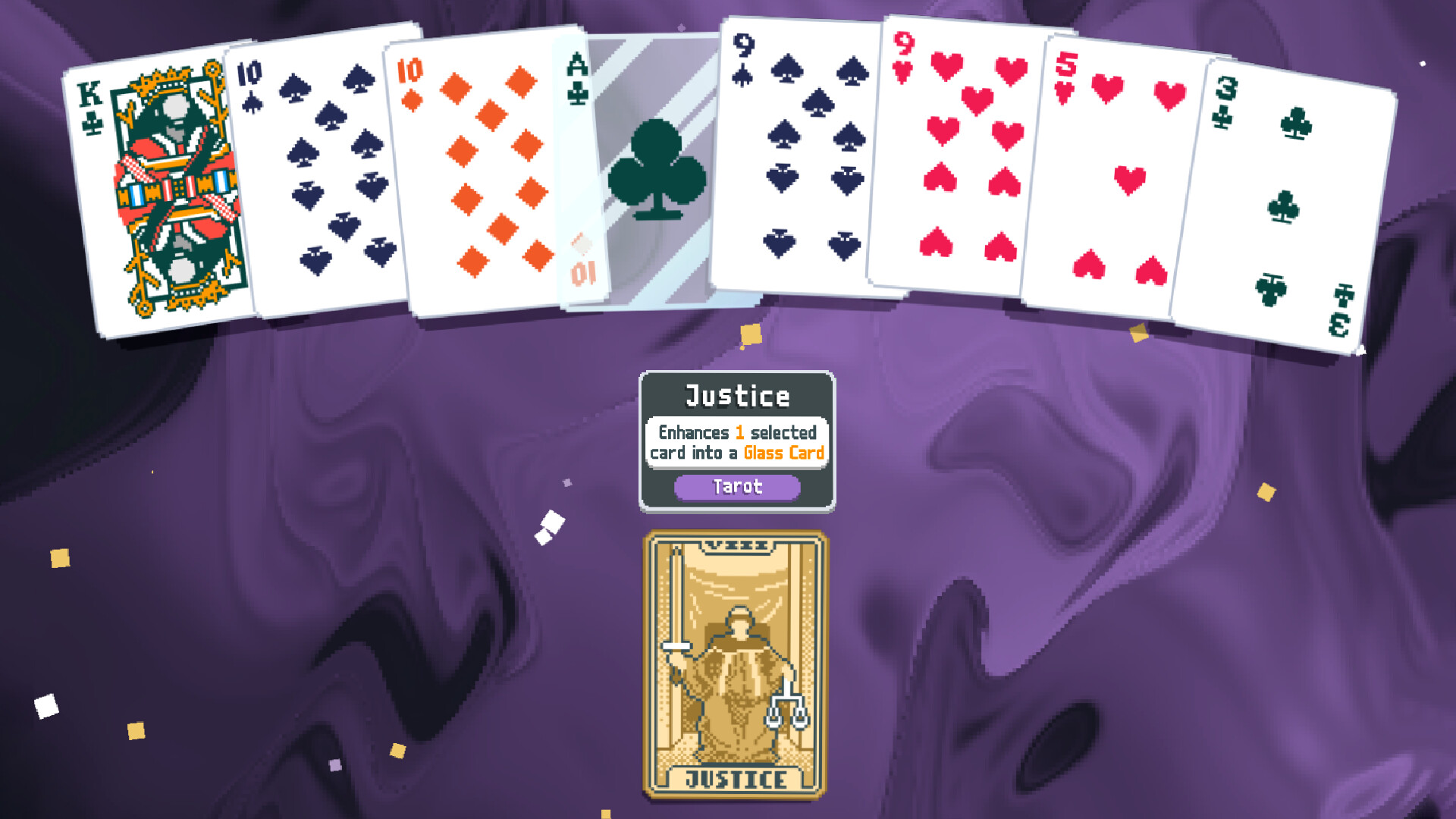
Planet cards improve hand categories, while Tarot and Spectral effects can alter cards or the run in other ways. These tools are strongest when they support a clear direction. If your Jokers reward a particular suit or rank, a relevant deck change improves the chance of activating that engine; adding unrelated cards may make the desired draw less consistent.
Keep track of the deck you now own, not the standard deck you started with. Use the deck view to examine remaining ranks and suits before an important discard. Consumables can also solve a short-term crisis, so decide whether holding one for a theoretical future combo is worth the risk of losing the current Blind without using it.
- Spend Planet upgrades on a hand you can actually play.
- Check remaining cards before committing to a narrow draw.
- Use deck edits to reinforce existing Joker conditions.
- Read a consumable fully before selecting its targets.
05 / THE GUIDE
Boss Blinds: read restrictions before the final shop
Boss Blinds change the problem through restrictions that can weaken a deck's usual routine. Read the upcoming Boss effect as soon as it is visible. A build that depends entirely on one suit, one hand type, or a specific opening should identify whether that dependency will remain available before spending its last money on more of the same.
Prepare an answer in advance: a second playable hand, additional raw scoring, better draw consistency, or an effect that addresses the restriction. Before playing, reread the Boss text and decide your first hand carefully. The standard victory target culminates in Ante 8, so a successful build needs enough resilience to handle that final restriction as well as the rising chip requirements.
- Check the upcoming Boss before leaving each shop.
- Identify the one restriction that would disable your engine.
- Keep a usable alternative when your strategy is narrow.
- Review which component failed after a lost run.

COMMUNITY
Player discussion